What are the three types of bending machine? As an indispensable piece of equipment in sheet metal processing, bending machines are widely used across industries such as sheet metal fabrication, machinery manufacturing, automotive, home appliances, and architectural decoration. Their primary function is to apply pressure to induce plastic deformation in metal sheets under the action of dies, thereby achieving bending and forming into various shapes and angles. The variety of bending machines has also expanded significantly, evolving from the earliest mechanical models to hydraulic and servo-electric types. Each type exhibits distinct characteristics in structure, performance, and application scope. This article will provide a detailed overview of the three primary types of bending machines—mechanical bending machines, hydraulic bending machines, and CNC bending machines—from the perspectives of structure and drive mechanisms.
【2025/10/21】
CNC plasma cutting machine: Industry secret to increase production efficiency by 50% In metal processing, shipbuilding, rail transit and other industrial fields, production efficiency and cutting quality directly determine the market competitiveness of enterprises. The CNC plasma cutting machine, with its high efficiency, precision, and strong adaptability, has become the core equipment for improving production capacity in modern manufacturing industry. Data shows that the use of CNC plasma cutting technology can increase production efficiency by more than 50%, and the technical logic and process innovation behind it are worth exploring in depth.
【2025/10/21】
How to choose the right mechanical punch press? In modern metal processing and manufacturing, mechanical punch presses stand as indispensable core equipment. Renowned for their high speed, precision, and stability, they find extensive application across automotive manufacturing, electronics, appliance casings, hardware products, building materials, and more. Faced with a market flooded with diverse press models and specifications, selecting the most suitable mechanical punch press for specific production needs has become a focal concern for numerous enterprises. This article provides an in-depth analysis from multiple perspectives to assist in scientific selection and precise decision-making.
【2025/10/20】
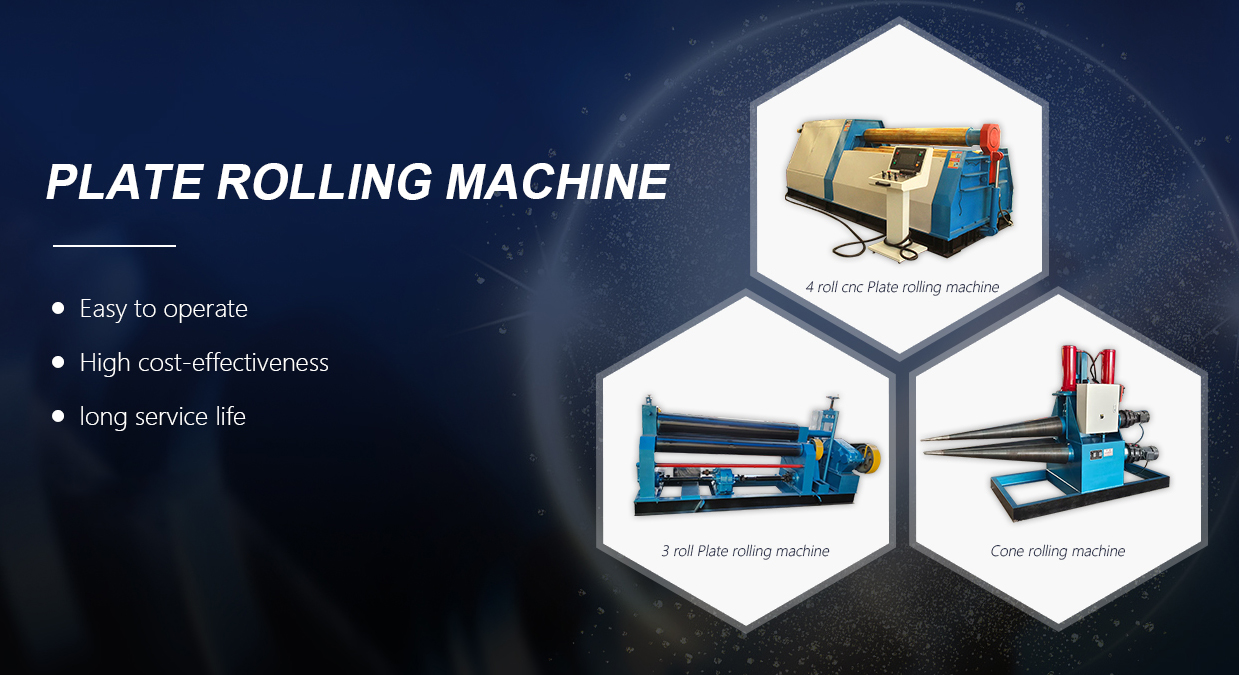
Are plate rolling machines easy to operate? In the field of modern metal forming, plate rolling machines serve as critical equipment widely used in manufacturing products such as storage tanks, pressure vessels, wind towers, pipelines, ships, and building components. With the digital and intelligent upgrades in manufacturing, the structure and control methods of plate rolling machines are continuously advancing, transitioning from traditional mechanical operation toward automation and intelligent control. So, for operators, are plate rolling machines easy to operate?
【2025/10/18】
How does a punching machine work? In modern metal processing manufacturing, the punching machine is an indispensable piece of equipment widely used across industries such as sheet metal fabrication, hardware, automotive, electronics, electrical appliances, home appliances, and aerospace. With its high efficiency, precision, and automation capabilities, it serves as the core machinery for performing metal stamping, forming, cutting, and drawing processes. So, how exactly does a punching machine operate? What are the underlying principles and processes? This article systematically explains the working process and key technical principles of punching machines.
【2025/10/17】
What is the process of cone rolling machine? In the modern metal processing industry, cone rolling machines, as highly efficient and precise equipment for forming conical sheet metal, are widely applied in fields such as pressure vessels, ventilation ducts, chemical equipment, machinery manufacturing, wind turbine towers, and building structures. With the intelligent and automated upgrades in manufacturing, the process flow of cone rolling machines not only signifies enhanced processing efficiency but also reflects a company's comprehensive capabilities in technology and quality management.
【2025/10/16】
What gas is used in plasma cutting machines? The commonly used gases for plasma cutting machines include nitrogen, oxygen, air, argon, and mixed gases of hydrogen and other gases. Different gases have different characteristics and are suitable for different cutting materials and requirements. The following will provide a detailed introduction to the application of various gases in plasma cutting machines.
【2025/10/16】
How to maintain a punching machine? Punching machines serve as indispensable equipment in the metalworking industry, widely used across sheet metal fabrication, hardware manufacturing, automotive production, and home appliance manufacturing. To maintain efficient operation, extend service life, and ensure production safety, daily maintenance and upkeep are critical. This article details scientific maintenance practices for punching machines, covering three key aspects: work preparation, operational precautions, and maintenance methods.
【2025/10/15】
Improving efficiency: How can CNC shearing machines optimize your sheet metal production line? By introducing a CNC shearing machine, automation, high precision, and flexible production of sheet metal cutting can be achieved, significantly improving production line efficiency. This is reflected in four aspects: improved machining accuracy, shortened production cycle, optimized material utilization, and improved overall equipment efficiency. As the core equipment of sheet metal processing, the technical characteristics of CNC shearing machine and the collaborative optimization of production line are the key to improving efficiency. The following analysis will be conducted from four dimensions: technological upgrading, process optimization, data-driven, and intelligent maintenance.
【2025/10/15】
What is the process of 4 roller plate rolling machine? 1. Working Principle of Four-Roller Plate Bending MachineThe four-roller plate bending machine primarily consists of four rollers. By rotating the rollers and adjusting pressure, it performs bending, straightening, and other processing operations on metal plates. Its working principle utilizes the friction between rollers to induce plastic deformation in the plate as it passes through, thereby achieving the desired processing effect.

 Address:Room 1202, Detaitang Building, No. 118 Huaguang Road, Zhangdian District, Zibo, Shandong
 WhatsApp:+8615653328535
 Wechat: +8615965331535
  E-mail:zs@sdsmachinery.com


