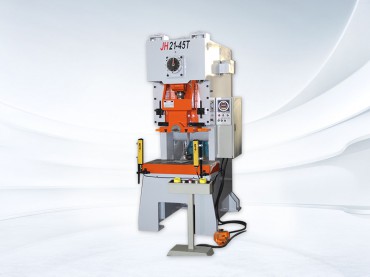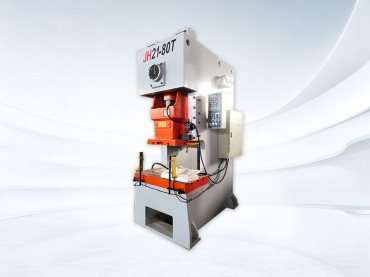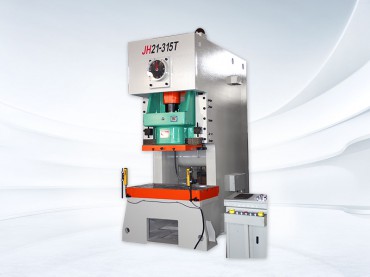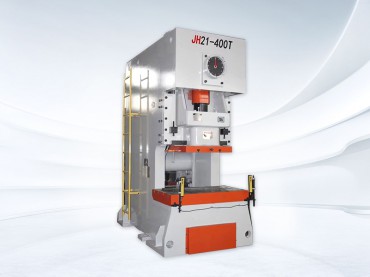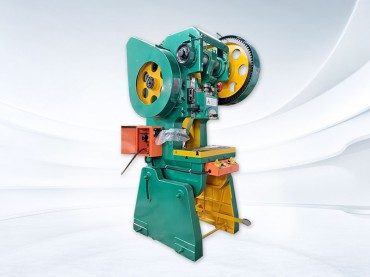
A CNC punch press is a machine tool that employs computer numerical control technology to precisely manipulate punching operations. Its primary tasks involve punching holes, cutting, flanging, and forming sheet metal.
During production, operators first programme and set the machining sequence on a computer. The CNC system then automatically controls the punch, executing high-speed, precise stamping along predetermined trajectories. This capability not only handles standard hole-making but also achieves complex shape cutting and perforation, significantly broadening the scope of machinable parts.
Compared to conventional punch presses, CNC punch presses offer the following distinct advantages:
- High efficiency: Automated operation reduces manual intervention, substantially increasing production capacity.
- Versatility: Multiple processes can be completed in a single setup, enhancing machining flexibility.
- High precision: Computer control effectively eliminates human error, ensuring product consistency.
Safety and standardisation are paramount during operation. Operators must strictly adhere to operating procedures, regularly inspect equipment condition, and promptly address potential hazards to ensure both equipment safety and smooth production.
The operational principle of CNC punch presses lies in the precise control exerted by a Computer Numerical Control (CNC) system. This system executes pre-programmed instructions, driving the machine's moving components (such as the spindle, cutting tools, and worktable) via servo systems to perform complex machining operations.
Specifically, the working principle of CNC punch presses can be broken down into the following steps:
- Programming: Developing machining programmes tailored to the workpiece requirements, typically using G-code or M-code.
- Input: Entering the programmed instructions into the CNC system via control panels, computers, or other input devices.
- Processing and Execution: The CNC system processes the input programme, converting it into specific motion control commands executable by the machine tool. These commands drive the moving components through the servo system.
- Monitoring and Feedback: During machining, various sensors continuously monitor the machine's operational status. Through feedback mechanisms, adjustments are made to ensure machining precision.
- Completion and Inspection: Upon completion, the operator conducts quality inspection to verify the workpiece meets predetermined standards.
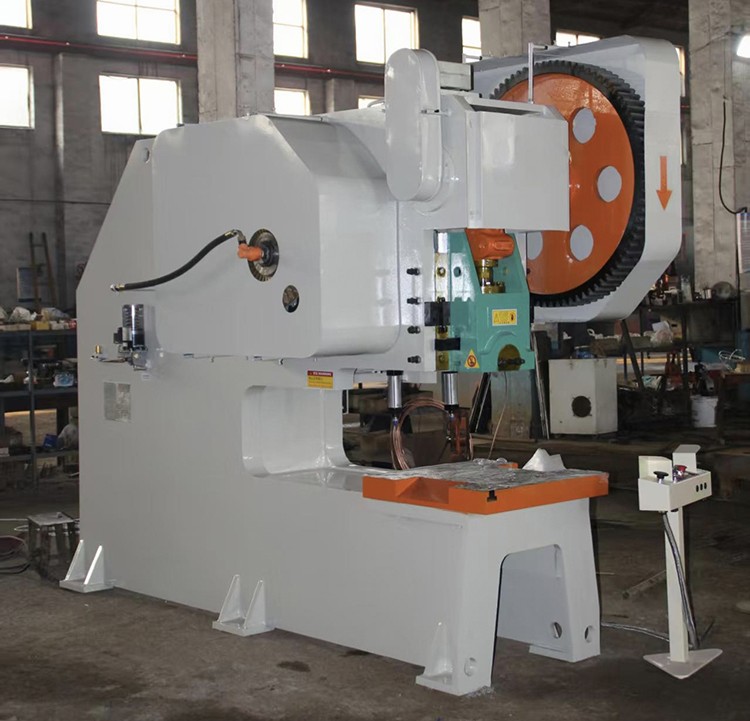
The practical operation of CNC punch presses comprises the following key steps:
The workpiece is secured to the worktable, and the operator calibrates the cutting tools—a fundamental step for ensuring machining precision.
Upon CNC system activation, the punch performs high-speed stamping along the programmed trajectory. During machining, cutting fluid or coolant is sprayed onto the workpiece and mould to reduce temperatures and prevent wear.
The system automatically corrects deviations based on sensor feedback, ensuring precise machining trajectories and force application. Concurrently, the equipment incorporates overload protection and emergency stop functions to prevent damage from abnormal conditions.
Upon process completion, the equipment prompts the operator to remove the workpiece. Dimensional and precision inspections are then conducted to verify product compliance with quality requirements.
- Automotive and Motorcycle Manufacturing: Employed for stamping body sheet metal components and engine parts.
- CNC punch presses, renowned for their high precision and efficiency, have become essential equipment in modern manufacturing with extensive applications:
- Home Appliance Industry: Widely utilised in producing components such as air conditioner casings, refrigerator back panels, and washing machine front panels.
- Electronics and Communications: Employed in manufacturing precision sheet metal components for enclosures, cabinets, and base station housings.
- Instrumentation and Metrology: Used to produce various precision stamped components.
- Construction and Decoration: Also applied in metal curtain walls, suspended ceilings, and related fields.
With their versatile processing capabilities, CNC punch presses play an irreplaceable role in enhancing product quality and production efficiency.
With continuous technological advancement, CNC punch presses are evolving towards greater intelligence, precision, and speed. Future models will feature heightened automation and smart capabilities while prioritising environmental considerations to meet market demands for non-toxic materials.
As a core piece of modern sheet metal processing equipment, CNC punching presses utilise computer numerical control technology to achieve automated, precise, and efficient punching operations. With technological progress, these presses not only hold a vital position in traditional manufacturing but will also play an increasingly significant role in future intelligent manufacturing systems.
Their continuous upgrading is propelling the manufacturing industry towards greater efficiency, higher precision, and more environmentally sustainable practices, providing robust equipment support for industrial development.
 Address:Room 1202, Detaitang Building, No. 118 Huaguang Road, Zhangdian District, Zibo, Shandong
 WhatsApp:+8615653328535
 Wechat: +8615965331535
  E-mail:zs@sdsmachinery.com