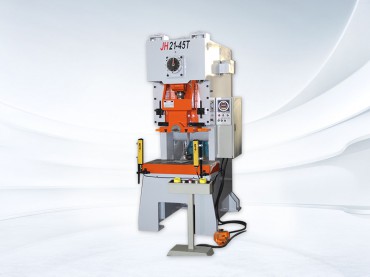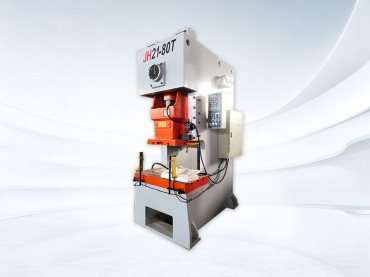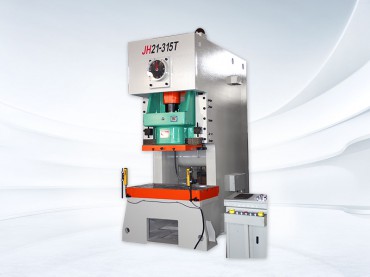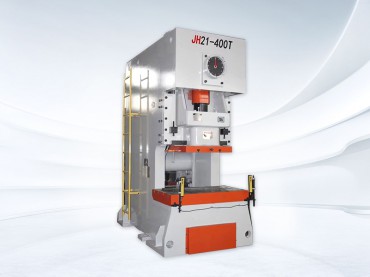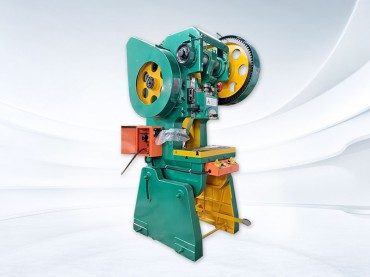
A punch press is a specialised mechanical device for metalworking, primarily employed for punching, forming, and shearing metallic materials. It utilises hydraulic or mechanical principles, where an upper punch strikes a workpiece positioned on a lower die, enabling processes such as rolling, compression, bending, stretching, and shearing to be performed on a designated workbench.
Punch press can be categorised into three types based on their drive mechanism: mechanical press brakes, hydraulic press brakes, and pneumatic press brakes.
(1) Mechanical Press Presses: These operate by an electric motor rotating a cam, which drives the punch downward via connecting rods to perform operations such as punching holes or embossing.
(2) Hydraulic Presses: Hydraulic presses utilise hydraulic power for processing. Their operating principle involves a hydraulic system formed by three main components (pump, hydraulic cylinder, and control valve). This system delivers fluid into the hydraulic cylinder, causing the punch to descend and compress the material being stamped.
(3) Pneumatic Presses: Pneumatic presses utilise compressed air for processing. Its operating principle involves a pneumatic cylinder driving components such as connecting rods and punches to perform operations like punching holes and embossing characters.
Punch presses achieve material forming through stamping operations using dies. This encompasses various processing methods including blanking, bending, drawing, hot forging, warm forging, and cold forging. For instance, automotive body panels and aerospace components may be fabricated using presses.
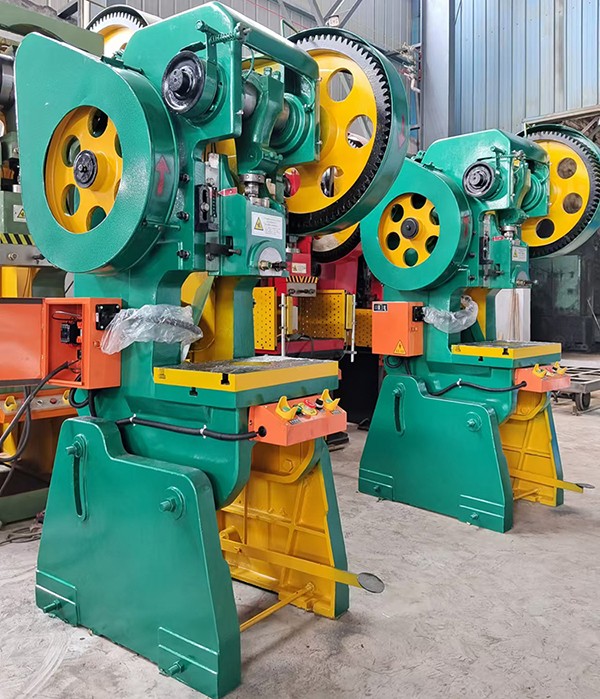
Modern presses typically incorporate automatic feeding systems with error detection, pre-cutting, and pre-breaking mechanisms, enabling fully automated production. This reduces labour costs while substantially increasing output efficiency.
The slide adjustment mechanism of presses enables fine-tuning with accuracy down to 0.1mm. Furthermore, advanced presses incorporate imaging and control systems capable of automatically locating graphics and performing die-cutting, thereby enhancing processing precision and consistency.
Different punch press types cater to varied processing requirements. For instance, crank-type presses are widely employed across diverse stamping applications due to their straightforward construction and precise determination of lower stroke position. Conversely, screw-type, rack-and-pinion, link-type, and cam-type presses, with their unique structures and functions, are suited to specific processing scenarios.
Their primary application domains encompass the following areas:
Punch presses are indispensable processing equipment in automotive production, manufacturing diverse components such as bonnets and body panels. Given the industry's stringent demands for part precision and efficiency, these presses feature high automation levels and processing speeds.
Within electrical and electronic production, punch presses primarily fabricate precision components including switches, connectors, and enclosures. These components demand high dimensional accuracy and surface finish, placing stringent requirements on the processing capability and stability of the presses.
The aerospace industry imposes exceptionally high standards for material processing precision and quality. Presses meet these demands, being employed in the production of structural components and small fittings for aircraft and spacecraft.
Additionally, presses are utilised in other mechanical industries and for manufacturing everyday consumer goods.
Press brake operation does indeed carry inherent risks. Given the substantial impact forces generated during the stamping process, improper operation or equipment malfunction may result in injury to operators. Therefore, strict adherence to safety protocols alongside regular equipment maintenance and inspections are crucial measures for ensuring safe production.
When operating presses, personnel must strictly follow established protocols, including but not limited to: inspecting equipment condition prior to start-up and confirming all systems are functioning correctly before commencing work; refraining from placing hands within the stamping area during operation to prevent accidental injury; and conducting regular maintenance of dies and machinery to ensure optimal operational status.
To further enhance press operation safety, equipment such as photoelectric protection devices may be employed. These systems automatically halt machinery when operators enter the stamping zone, thereby preventing accidents.
In summary, the press represents a vital metalworking apparatus, having become an indispensable production tool in modern industry. Should you have any interest in presses, please contact us. We shall recommend suitable machinery and provide quotations.
 Address:Room 1202, Detaitang Building, No. 118 Huaguang Road, Zhangdian District, Zibo, Shandong
 WhatsApp:+8615653328535
 Wechat: +8615965331535
  E-mail:zs@sdsmachinery.com