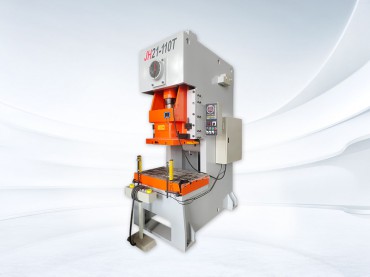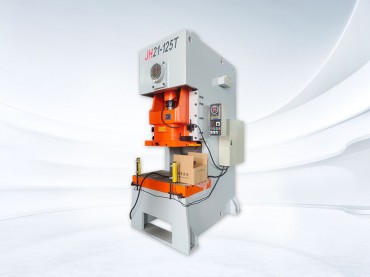
Pneumatic punch presses, as stamping equipment powered by compressed air, have seen widespread adoption in recent years across metal processing, electronic component manufacturing, and light industrial production. Compared to traditional mechanical and hydraulic punch presses, they offer distinct advantages in safety, environmental friendliness, and operational convenience, though certain limitations also exist. This article provides a comprehensive analysis of pneumatic punch presses based on their strengths and weaknesses, incorporating real-world application scenarios.
- No hydraulic oil leakage: The pneumatic system uses air as its medium, eliminating contamination risks from hydraulic oil leaks to the environment and workbenches. This makes it particularly suitable for industries with high cleanliness requirements, such as food, pharmaceuticals, and electronics.
- Fire and explosion prevention: Compressed air is non-flammable, reducing fire and explosion hazards. It is suitable for flammable and explosive environments.
- Fewer Components: Primarily composed of cylinders, solenoid valves, and air tubes, pneumatic punch presses feature simpler construction than hydraulic punch presses with lower failure rates.
- Easy Maintenance: Eliminates the need for hydraulic oil replacement or oil circuit cleaning. Routine maintenance involves only checking air supply pressure and lubrication status, reducing maintenance costs by 30%-50%.
- High-frequency punching: Pneumatic punch presses achieve ram speeds of 100-800 strokes per minute (depending on model), ideal for mass production of small components like electronic parts and connectors.
- Short-stroke advantage: Pneumatic punch presses significantly outperform hydraulic punch presses in short-stroke applications (e.g., under 10mm).
- Adjustable Punching Force: Flexible control of punching force by regulating air supply pressure (typically 0.4-0.8MPa), accommodating varying material thicknesses (e.g., 0.1-6mm metal sheets).
- Rapid Die Change: Simplified structure reduces die change time to 10-20 minutes, ideal for multi-variety, small-batch production.
- Operating noise ≤75dB: Without hydraulic pump roar, noise levels are significantly lower than hydraulic punch presses (typically above 85dB), meeting occupational health standards.
- Low standby energy consumption: Compressed air is used only during punching, with near-zero energy consumption during standby, saving 20%-30% on electricity costs over extended use.
- Controllable compressed air costs: If the facility already has an air compressor, the operating costs of pneumatic punch presses can be further reduced.
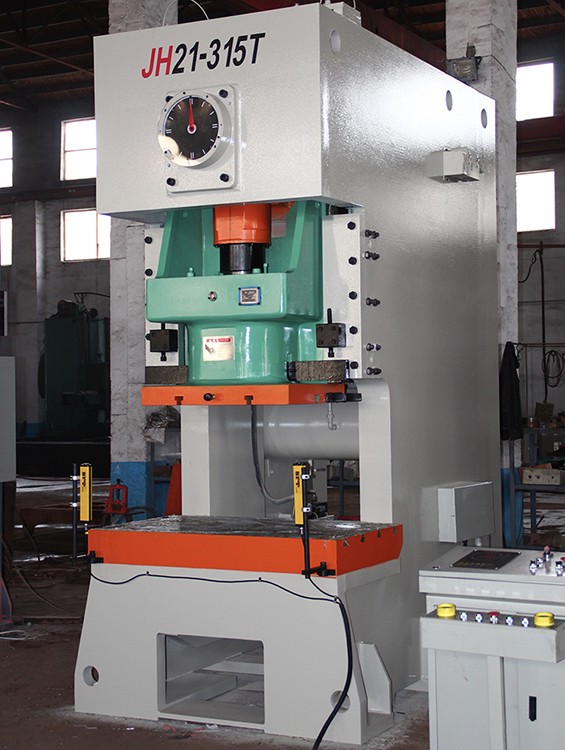
- Low tonnage: Standard pneumatic punch presses typically have a punching force ≤50 tons, making them unsuitable for high-strength materials (e.g., thick steel plates, stainless steel) or processes requiring high tonnage (e.g., automotive panel drawing).
- Solution: Requires hydraulic booster units or servo-driven punch presses, increasing cost and complexity.
- Pressure Fluctuations: Unstable air pressure causes punching force variations, affecting precision (e.g., hole diameter deviation, increased burrs).
- Solution: Requires pressure-stabilizing air tanks and precision regulators, increasing system costs.
- Short-stroke design: Pneumatic punch presses typically have short ram strokes (generally ≤200mm), unsuitable for long-stroke processes (e.g., large-part pressing, deep drawing).
-Comparison: Hydraulic punch presses offer strokes exceeding 1 meter, providing greater adaptability.
-Elastic Deformation: The compressibility inherent in pneumatic systems causes ram speed to decrease during the final stage of movement, potentially affecting stamping consistency.
- Improvement Measures: Designs incorporating high-rigidity frames and anti-rotation guide rods can enhance precision but increase manufacturing costs.
- Precision Pneumatic Components: Achieving high-precision, high-speed pneumatic punch presses requires imported cylinders, solenoid valves, etc., potentially bringing initial investment close to hydraulic punch presses.
- Cost-Effectiveness Scenarios: Suitable for enterprises prioritizing speed and cleanliness over high punching force requirements.
Characteristic
Pneumatic Punch Press
Hydraulic Punch Press
Stroke Force
≤50 tons (standard models)
Up to several thousand tons
Speed
Fast (suitable for high frequency)
Slower (but longer stroke)
Precision
Moderate (affected by air pressure)
High (stable hydraulic system)
Cost
Low initial cost, simple maintenance
High initial cost, complex maintenance
Environmental Friendliness
No oil contamination, low noise
Potential hydraulic oil leakage, high noise
Suitable Applications
Light-duty applications: electronics, home appliances, hardware
Heavy-duty applications: automotive, aerospace, heavy machinery
Pneumatic punch presses are widely used in stamping various metal materials such as steel plates, aluminum sheets, and copper plates. They play a vital role in industries like automotive manufacturing, hardware production, and home appliance manufacturing. Furthermore, with ongoing technological advancements, pneumatic punch presses are expanding into processing lighter and thinner materials such as plastics and composites.
Pneumatic punch presses offer safety, environmental friendliness, simple structure, high speed, and low maintenance costs, making them an ideal choice for electronics, home appliances, hardware, and similar industries. However, limitations such as restricted punching force, slightly lower precision, and significant dependence on air supply prevent them from fully replacing hydraulic or servo punch presses. Therefore, enterprises should evaluate material composition, thickness, and process complexity when selecting stamping equipment to determine suitability for pneumatic punch presses. With ongoing advancements in pneumatic technology, future models will become more intelligent and precise, playing an increasingly vital role in meeting demands for energy efficiency, environmental sustainability, and high-efficiency production.
 Address:Room 1202, Detaitang Building, No. 118 Huaguang Road, Zhangdian District, Zibo, Shandong
 WhatsApp:+8615653328535
 Wechat: +8615965331535
  E-mail:zs@sdsmachinery.com