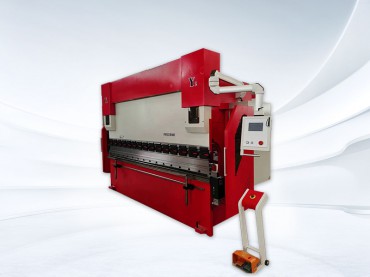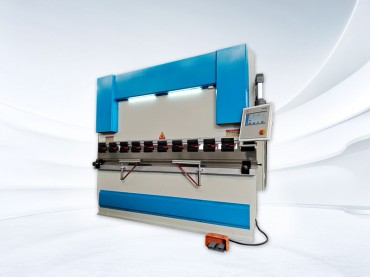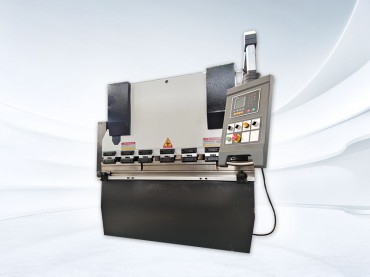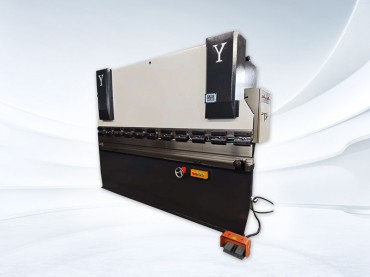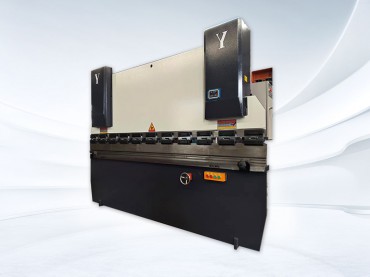
A bending machine is a specialised piece of equipment designed for bending sheet metal and thin plates, finding widespread application in metal forming, sheet metal fabrication, construction, automotive, aerospace, and household appliance industries. Its fundamental structure typically comprises a frame, worktable, and clamping mechanism, enabling the application of pressure to induce plastic deformation in the sheet material, thereby achieving the desired angle or shape.
In conventional bending machines, electromagnetic clamping and mechanical force constitute the primary clamping methods. Within modern manufacturing, hydraulic bending machines have progressively become the industry standard due to their high efficiency, precision, and substantial tonnage capacity.
Hydraulic bending machines primarily consist of a frame, ram, hydraulic system, worktable, dies, and control system. Their operation relies on the hydraulic system pressurising oil via a pump, driving the cylinder piston to move the ram vertically, thereby achieving sheet metal bending and forming.
The specific workflow is as follows:
(1) Hydraulic Drive: Upon motor activation, the hydraulic pump pressurises and delivers fluid to the cylinder, driving the piston downward.
(2) Die Positioning: Select appropriate upper and lower dies (e.g., V-shaped lower die, punch upper die) based on sheet thickness and bending angle. The backgauge mechanism ensures precise sheet positioning.
(3) Bending Formation: The ram descends to the preset position, causing plastic deformation of the sheet metal within the dies to achieve the required angle.
(4) Return and Reset: Upon release of the set pressure, the ram ascends and resets under hydraulic force, completing one bending cycle.
This method of power transmission via a hydraulic system enables hydraulic bending machines to deliver substantial tonnage pressure while maintaining high operational stability.
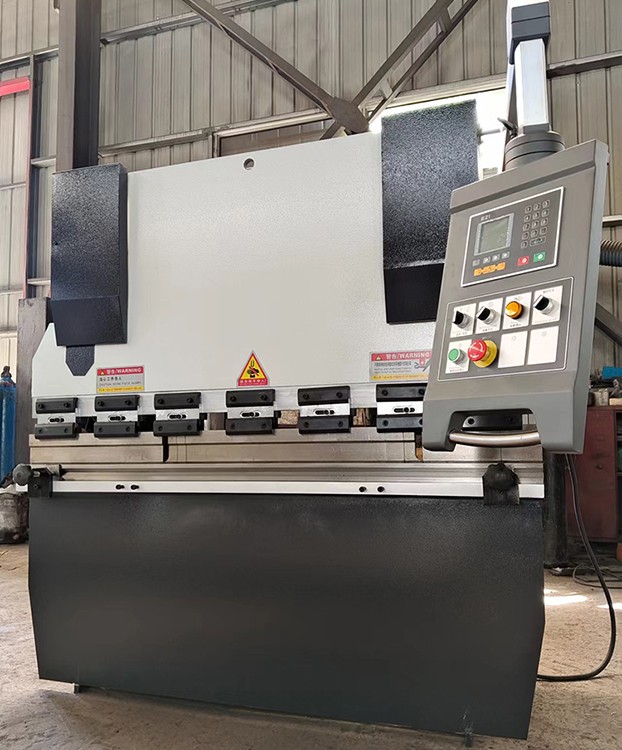
Their nominal force ranges typically span 100–6000 tonnes, far exceeding conventional mechanical bending machines (generally not exceeding 300 tonnes). Consequently, hydraulic bending machines effortlessly handle bending operations on thick plates and large-dimension workpieces.
Modern electro-hydraulic servo bending machines can control bending angle deviation within ±0.5°, with positioning accuracy reaching 0.001mm. Premium brands can execute complex curves and multi-process continuous bending.
The hydraulic system, employing variable displacement pumps coupled with accumulators, achieves approximately 30% greater energy savings compared to traditional fixed-displacement pump systems. Concurrently, reduced noise and energy consumption align with green manufacturing trends.
The hydraulic system applies controlled force to metal sheets during bending, precisely regulating both magnitude and uniformity to achieve the desired shape.
Compared to manual bending methods, hydraulic bending machines rapidly complete bending tasks, significantly boosting production efficiency.
The hydraulic system maintains relatively stable pressure and speed, ensuring a more consistent and reliable processing operation.
By swapping different dies, hydraulic bending machines can process metal sheets into various shapes, demonstrating strong adaptability.
When operating the hydraulic bending machine, ensure the workpiece is securely positioned between the upper and lower dies and maintained parallel to them. Under no circumstances shall die maintenance or adjustments be undertaken whilst the machine is in operation, to ensure safety. When pressing long or large workpieces, it is advisable for two or more operators to work together to prevent the workpiece from toppling over when pressure is released due to deformation under force.
Regularly inspect whether the strokes of both hydraulic cylinders are consistent during operation. Should inconsistencies be detected, promptly adjust or report for repair. Furthermore, if cylinder piston vibration occurs or the oil pump emits a screeching noise, air must be purged from the hydraulic circuit to ensure proper machine functioning. Closely monitor the oil level in the reservoir and maintain the working oil temperature below 45°C to safeguard machine performance and longevity.
Should any malfunction be detected in the control valve or safety valve, or if safety protection devices prove inadequate, operations must cease immediately. Adjustment valves and pressure gauges shall be calibrated and secured by qualified personnel to prevent machine failure due to operational errors. Throughout all operations, hands must never be inserted between the upper and lower dies to safeguard operator safety. Travel switches and safety protection devices require periodic inspection to ensure they remain in good working order, thereby guaranteeing reliable machine operation.
As a core piece of equipment in modern sheet metal processing, the hydraulic bending machine has become an indispensable tool in manufacturing due to its high precision, efficiency, and adaptability. It demonstrates formidable competitiveness across both traditional and emerging industries. With technological advancements and the development of smart manufacturing, its application domains will expand further, offering broader prospects for the global metalworking sector.
 Address:Room 1202, Detaitang Building, No. 118 Huaguang Road, Zhangdian District, Zibo, Shandong
 WhatsApp:+8615653328535
 Wechat: +8615965331535
  E-mail:zs@sdsmachinery.com