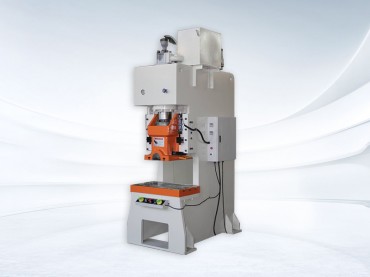
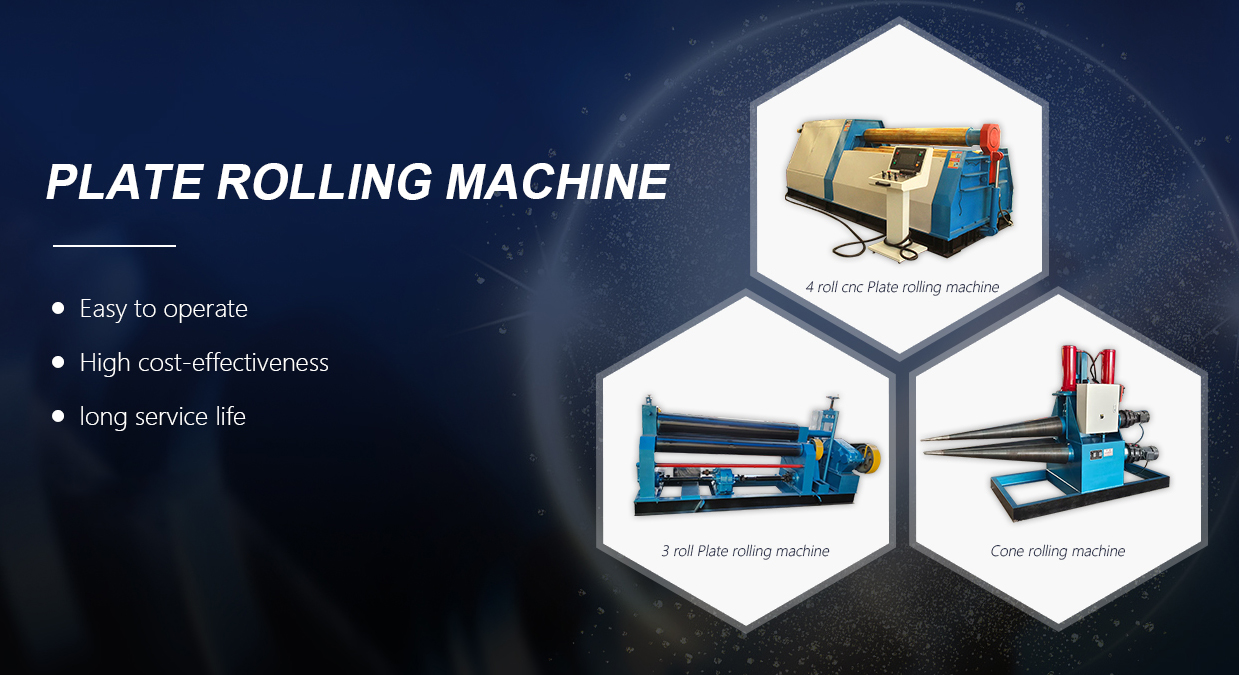
In modern manufacturing systems, metal forming equipment serves as the critical foundational machinery for achieving large-scale production and high-quality processing. Among these, hydraulic presses are widely utilized across multiple industries—including metal fabrication, automotive manufacturing, home appliance production, aerospace, and custom equipment manufacturing—due to their stable pressure output, flexible process adaptability, and high machining precision. As product structures grow increasingly complex and material varieties continue to expand, traditional mechanical presses are gradually revealing limitations in certain applications, while the scope of hydraulic presses continues to broaden.
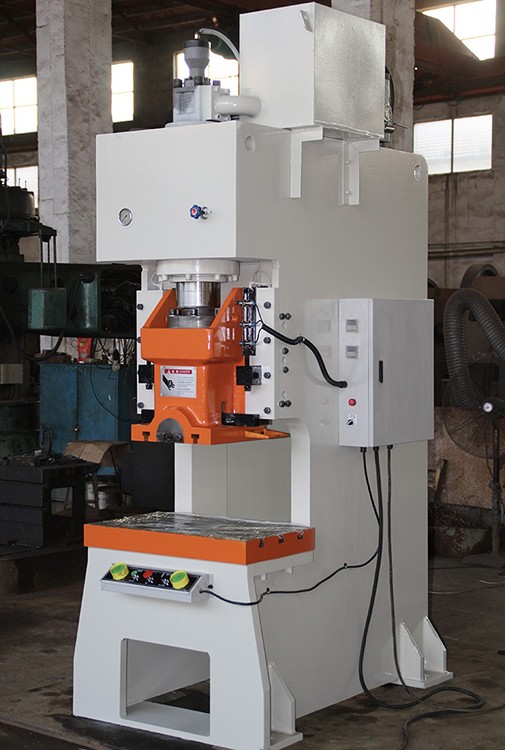
A hydraulic press is a machine that uses liquid as a transmission medium. Through a hydraulic system, it transfers power to the actuator to perform processing operations such as punching, forming, or press-fitting. Its working principle is based on the laws of hydraulic transmission, enabling it to deliver stable and controllable high pressure with relatively low energy consumption. Compared to mechanical presses, hydraulic presses offer advantages in pressure adjustment, stroke control, and process adaptability, making them particularly suitable for complex workpieces and multi-process machining requirements.
Hydraulic presses are extensively used for punching, blanking, drawing, and bending operations on sheet metals like steel, stainless steel, and aluminum. Their adjustable pressure capability allows adaptation to materials of varying thicknesses and strengths.
They deliver exceptional stability in processes demanding high forming precision and surface quality.
In automotive, home appliance, and container manufacturing, numerous components feature deep-drawn or complex curved surfaces. Hydraulic presses maintain constant pressure throughout the entire stroke, effectively reducing material cracking and springback, thereby improving finished product yield rates.
Hydraulic presses are commonly used for bearing press-fitting, bushing assembly, gear press-fitting, and similar operations. Their precisely controllable pressure effectively prevents part damage caused by overload.
For workpieces deformed after welding or machining, hydraulic presses can be employed for straightening and reshaping to restore dimensional and geometric accuracy. They find extensive application in equipment maintenance and remanufacturing.
In the home appliance industry, hydraulic presses are used for housing forming, inner tank stretching, and structural component stamping, enhancing product appearance consistency and assembly precision.
In automotive and construction machinery production, hydraulic presses process chassis components, structural frames, and reinforcement parts to meet stringent strength and safety requirements.
Owing to their high process flexibility, hydraulic presses excel in manufacturing non-standard parts and small-batch custom orders, demonstrating significant value in equipment fabrication and engineering projects.
The widespread adoption of hydraulic presses across industries stems primarily from these advantages:
- Stable pressure output with precise control;
- Flexible stroke and speed adjustment;
- Adaptability to diverse materials and processes;
- High processing safety;
- Suitability for complex forming and multi-step operations.
These strengths make hydraulic presses indispensable equipment in modern manufacturing systems.
Overall, hydraulic presses occupy a significant position in metal forming and industrial manufacturing due to their stable, reliable performance and broad applicability. Whether in mass production or customized processing, hydraulic presses deliver efficient, precise, and safe solutions. As manufacturing evolves toward high-end and precision-oriented directions, the application scope of hydraulic presses will continue to expand, further highlighting their value within modern industrial systems.
 Address:Room 1202, Detaitang Building, No. 118 Huaguang Road, Zhangdian District, Zibo, Shandong
 WhatsApp:+8615653328535
 Wechat: +8615965331535
  E-mail:zs@sdsmachinery.com