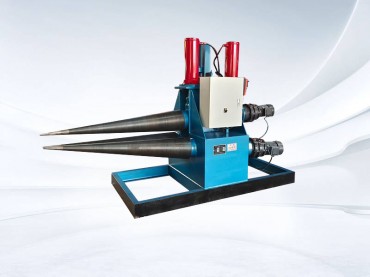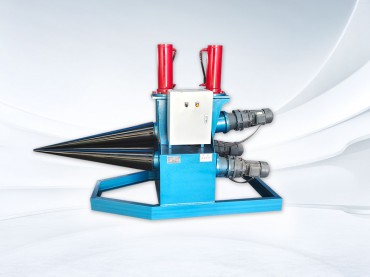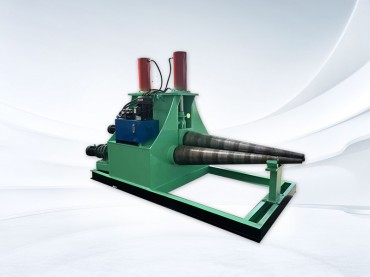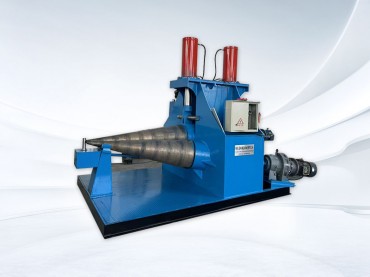
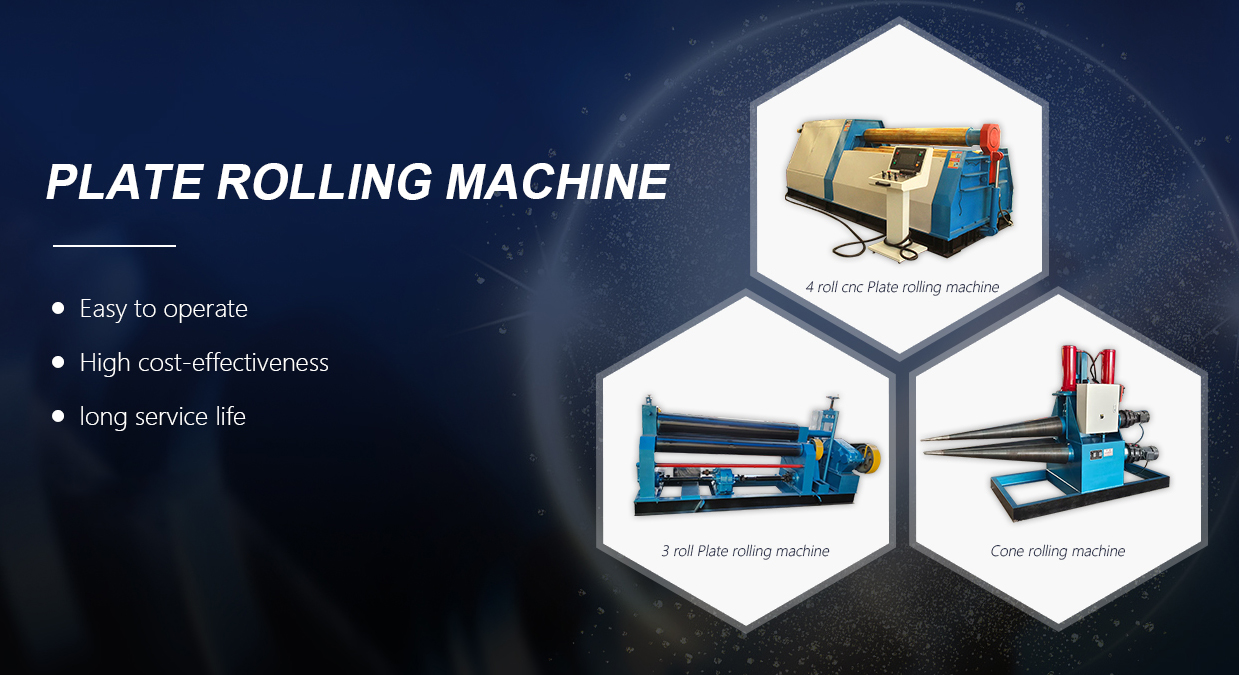
In the fields of pressure vessels, chemical equipment, environmental protection engineering, energy equipment, and heavy machinery manufacturing, conical workpieces represent a highly versatile category of structural components. As demands for manufacturing precision and production efficiency continue to rise, traditional segmented forming or manual rounding methods struggle to meet modern industrial requirements. It is against this backdrop that cone rolling machines have progressively emerged as the core equipment for forming conical plates.
So, what advantages does the cone rolling machine possess? Why has it secured a pivotal position among numerous metal forming devices? This article provides a systematic analysis from aspects including forming capability, machining precision, production efficiency, and application value.
The greatest advantage of the cone rolling machine lies in its specialized design for cone structures, enabling continuous rolling from flat plates to conical workpieces in a single operation. Compared to standard plate rolling machines, cone rolling machines offer superior stability in cone angle control, diameter transition, and sheet material handling.
This equipment finds extensive applications in: manufacturing conical sections for chemical vessels; producing conical components for cement and metallurgical equipment; constructing environmental dust removal systems; creating conical structures for petroleum and energy industries; and fabricating large steel structures and non-standard equipment.
Whether forming small or large taper angles, the cone rolling machine achieves excellent results.
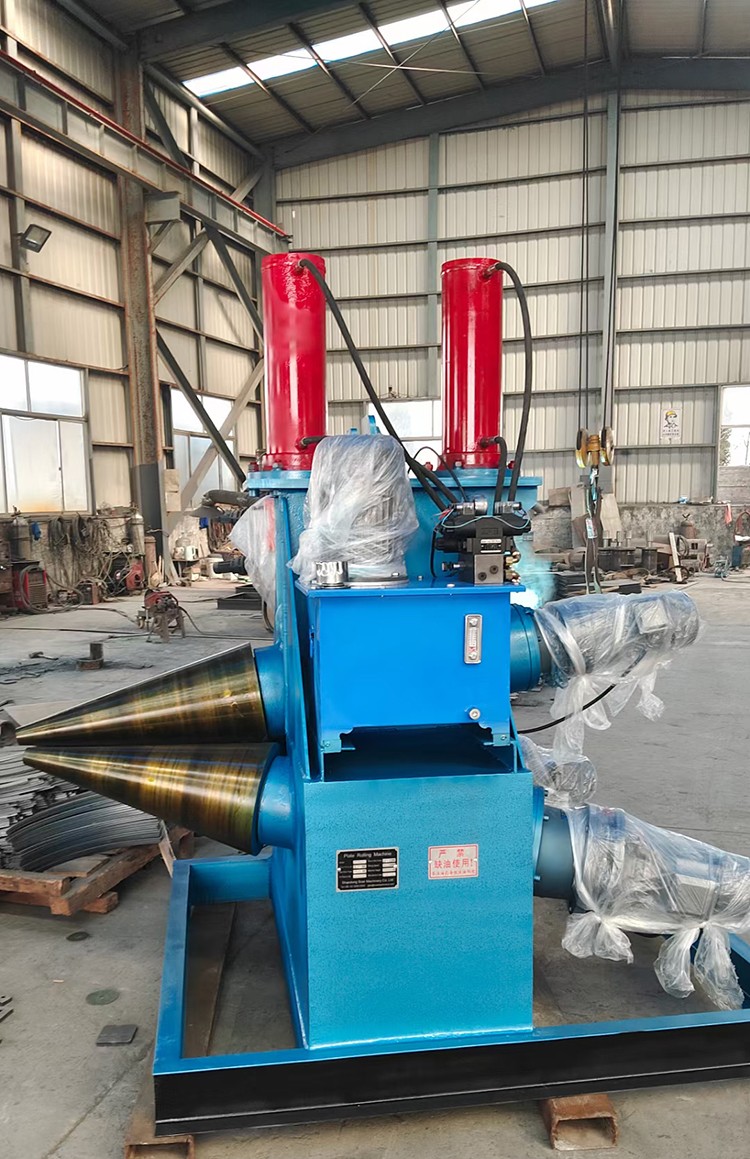
Taper consistency and roundness accuracy are critical metrics in cone fabrication. Through rational roller system design and adjustable compression methods, the cone rolling machine ensures uniform force distribution during plate rolling, effectively controlling taper angle deviations.
Its primary advantages include: precise upper and lower diameter dimensions, smooth taper transitions without visible creases, minimal springback after forming, and reduced rework requirements. High-precision forming not only enhances product quality but also creates favorable conditions for subsequent welding and assembly processes.
Compared to traditional segmented bending or manual shaping methods, cone rolling machines enable continuous rolling and one-machine forming, significantly shortening processing cycles.
Its advantages are particularly evident in batch production or manufacturing medium-to-large cones: it reduces multiple plate flipping and positioning times, lowers labor intensity, increases overall production cadence, and facilitates standardized and scaled production. For manufacturers pursuing stable delivery times and efficiency gains, cone rolling machines offer significant economic value.
Modern cone rolling machines typically feature high-strength frame structures and reliable transmission systems, capable of withstanding substantial forming loads. They are suitable for processing medium-thickness plates and even heavy-duty conical workpieces.
Structural advantages include: excellent machine rigidity for stable operation, high roller shaft strength with strong deformation resistance, and compatibility with various metal materials. While ensuring safety, the equipment's long-term operational stability also helps reduce maintenance costs.
In non-standard equipment and bespoke engineering projects, cone specifications often vary significantly. By adjusting parameters like roll spacing and compression depth, cone rolling machines adapt flexibly to diverse dimensions and cone angles.
This adaptability delivers distinct advantages in scenarios such as: multi-variety small-batch production, project-specific custom manufacturing, and specialized structural component processing.
Standardized forming with cone rolling machines improves product consistency and surface quality while minimizing human-induced errors. This positively impacts equipment manufacturers' brand image and helps meet high-end clients' quality demands. Consistent forming quality is often crucial for winning customer trust in international markets and engineering project competitions.
Overall, cone rolling machines have become indispensable equipment in cone structure manufacturing due to their strong forming capabilities, high processing precision, high production efficiency, and broad adaptability. As manufacturing evolves toward high-end and precision-oriented development, the application value of cone rolling machines will become increasingly prominent. For enterprises engaged in pressure vessels, environmental equipment, energy machinery, and non-standard mechanical manufacturing, the rational selection and configuration of cone rolling machines not only boosts production efficiency but also secures a competitive edge in the fiercely contested market.
 Address:Room 1202, Detaitang Building, No. 118 Huaguang Road, Zhangdian District, Zibo, Shandong
 WhatsApp:+8615653328535
 Wechat: +8615965331535
  E-mail:zs@sdsmachinery.com