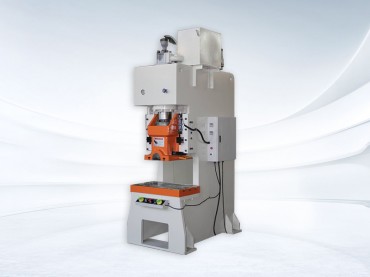
A hydraulic punch press is a machine that utilizes a hydraulic system to provide power for metalworking, widely applied in industrial fields such as metal forming, stamping, shearing, and drawing. Compared to traditional mechanical presses, hydraulic punch presses offer more stable, precise, and adjustable performance, making them suitable for processing complex shapes and workpieces with significant thickness variations. By transmitting force through hydraulic oil pressure, they achieve force amplification and precise control, resulting in greater impact force, higher production efficiency, and more flexible applicability.
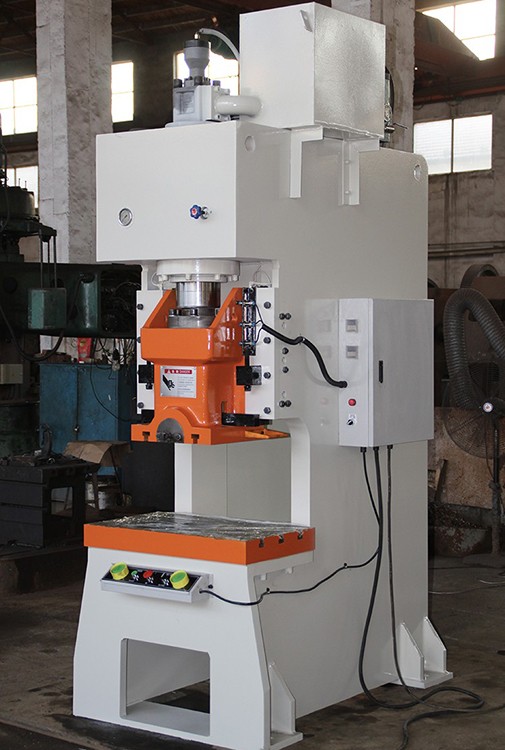
The operational principle of hydraulic punch presses is based on the characteristics of hydraulic systems, which deliver mechanical power and motion through fluid flow and pressure transmission. The core components are the hydraulic cylinder and hydraulic system. Hydraulic fluid flows through pipelines, regulated by hydraulic pumps and valves to control the vertical movement of the press. The specific workflow is as follows:
At the start of operation, the hydraulic pump delivers hydraulic fluid into the cylinder. The pump increases the fluid's pressure, which is then regulated by valves to enter the cylinder's two chambers. Once pressurized, the fluid within the cylinder forces the piston downward, driving the punch or die into contact with the workpiece.
The pressurized hydraulic fluid acts upon the piston inside the cylinder, causing it to move vertically. The direction of piston movement can be controlled by adjusting valves within the hydraulic system. The working stroke of the hydraulic punch press can be adjusted as needed to ensure uniform pressure is applied to the workpiece within the appropriate timeframe.
As the piston drives the punch downward, it contacts the die positioned beneath the workpiece. At this point, the hydraulic oil pressure is converted into mechanical force acting upon the workpiece, enabling processes such as stamping, forming, or cutting. Since the pressure of a hydraulic punch press is adjustable, operators can set the punching force according to different processing requirements to achieve the desired results.
After the punching operation is completed, the hydraulic system discharges the hydraulic oil through regulating valves, causing the piston in the hydraulic cylinder to return to its original position, ready for the next punching operation. The return process of a hydraulic punch press is also controlled by hydraulic oil pressure, ensuring high control precision.
The precise adjustability of both pressure and stroke enables high-precision machining, ensuring consistency and repeatability of workpieces. This is critical for high-precision processes such as punching, scoring, and forming.
Hydraulic punch presses deliver substantial processing force, making them suitable for thicker or larger workpieces. By adjusting hydraulic oil pressure, they adapt to diverse material thicknesses and stamping requirements, offering greater flexibility.
Parameters like stamping pressure, stroke, and speed can be customized to meet complex production demands. Compared to mechanical presses, hydraulic punch presses demonstrate superior adaptability, processing a wider range of materials and workpieces.
Thanks to their hydraulic systems, hydraulic punch presses typically operate with minimal noise and vibration, providing a smoother working environment. This makes them particularly suitable for quiet workplaces.
Hydraulic punch presses transmit energy through hydraulic fluid, resulting in minimal energy loss. Compared to the motor-driven systems of traditional mechanical presses, they are more energy-efficient. Since the hydraulic system does not require direct motor-driven mechanical components, it reduces mechanical wear and energy consumption, thereby enhancing energy utilization efficiency.
In automotive production, hydraulic punch presses are used to manufacture various metal stamped parts such as body components, doors, hoods, and window frames. Their high stamping capacity and adjustability make them essential equipment on automotive production lines.
Hydraulic punch presses manufacture diverse metal components for home appliances, including refrigerator shells, air conditioner casings, and washing machine frames. Their precise control over stamping pressure and stroke ensures parts with high accuracy and consistency.
In electronics manufacturing, hydraulic punch presses are employed for stamping and forming metal enclosures and connectors. Their high precision and stability ensure consistent quality in electronic casings.
Hydraulic punch presses are utilized in aerospace for stamping aircraft components, missile assemblies, and spacecraft hulls. Their formidable power and high-precision capabilities meet the stringent standards required for aerospace equipment production.
Hydraulic punch presses are extensively employed in metal fabrication plants for stamping, shearing, forming, and other processing techniques on various sheet metals. Their efficient and precise operation makes them widely applicable in sheet metal fabrication and metal product manufacturing.
Hydraulic punch presses have become indispensable equipment across multiple industries due to their superior operating principles, flexible adjustability, and robust stamping capabilities. Whether in automotive, home appliances, electronics, or aerospace sectors, these presses meet diverse processing demands with their high precision and efficiency. As hydraulic technology continues to advance, hydraulic punch presses will play an increasingly significant role in complex manufacturing processes, driving continuous innovation and progress in industrial production.
 Address:Room 1202, Detaitang Building, No. 118 Huaguang Road, Zhangdian District, Zibo, Shandong
 WhatsApp:+8615653328535
 Wechat: +8615965331535
  E-mail:zs@sdsmachinery.com