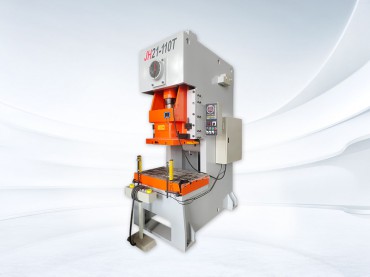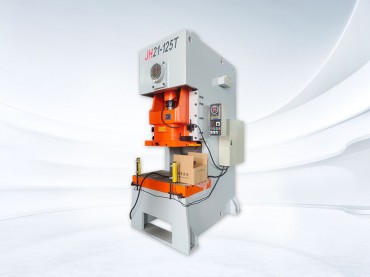
In the modern metal processing and manufacturing industry, punch press equipment serves as the core machinery for achieving metal forming, bending, stretching, and punching processes. Among these, pneumatic punch presses and hydraulic punch presses are currently the two most common types of stamping equipment. As production processes and product structures continue to evolve, enterprises increasingly prioritize efficiency, cost, quality, and long-term stability when selecting punch press equipment.
This article will conduct a comparative analysis based on working principles, performance characteristics, applicable fields, and cost factors to assist users in making more informed selection decisions.
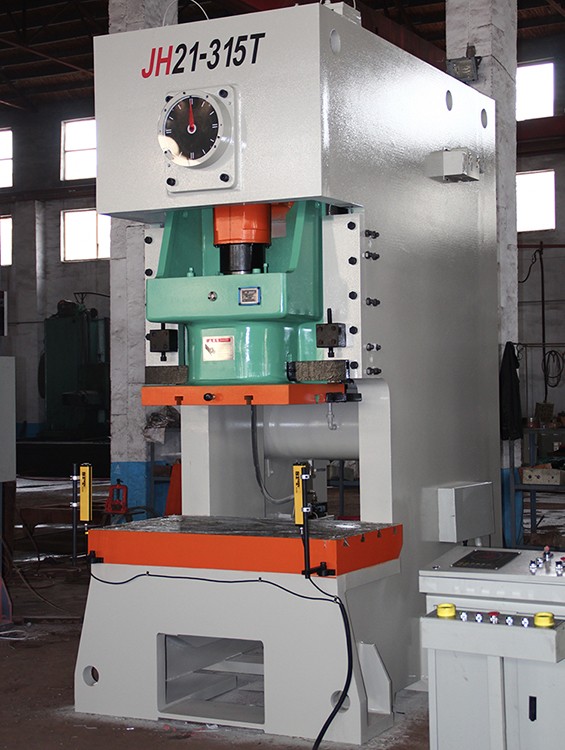
Pneumatic punch presses utilize compressed air as their power source, driving the ram through cylinders to perform stamping operations. During operation, air circulates and jets through the system, rapidly moving components up and down to execute processes like stamping, cutting, bending, and stretching.
- Core characteristics: Air-powered transmission enables rapid response and relatively simple structure.
Hydraulic punch presses utilize high-pressure hydraulic fluid within a sealed system to drive the cylinder, which in turn moves the ram for stamping operations. Their output force is stable and controllable, making them suitable for processes demanding precise pressure curves and high stamping accuracy.
- Key characteristics: smooth force delivery and high adjustability, suitable for high-precision and high-tonnage operations.
Pneumatic punch presses operate rapidly with fast pressurization and return speeds, making them ideal for continuous stamping tasks like electronic hardware components, small metal parts, and punching operations. They significantly boost output per unit time.
Hydraulic punch presses are slower than pneumatic ones but offer smoother stroke control, making them suitable for complex forming and deep drawing processes.
Pneumatic punch presses are more susceptible to fluctuations in air pressure, resulting in slightly lower stability. They are not recommended for applications requiring strict forming force control or deep drawing operations.
Hydraulic punch presses maintain pressure at any stroke position via hydraulic systems, ensuring exceptional forming consistency. They excel in processing large components, high-strength metals, and complex-shaped workpieces.
Pneumatic punch presses feature simple structures with minimal component wear, resulting in relatively low maintenance costs. However, their air circuits require clean, dry conditions to prevent power loss or operational inconsistencies.
Hydraulic punch press systems are more complex with numerous critical components in the oil circuit. Regular inspection of oil filters, seals, and hydraulic fluid cleanliness is essential to prevent leaks and pressure instability.
Pneumatic punch presses use air as the power source, eliminating oil leakage risks and maintaining a cleaner operating environment. Hydraulic punch presses may experience hydraulic fluid seepage if maintenance is inadequate, impacting the work environment and potentially increasing cleanup costs.
- Punching metal hardware
- Processing electronic components
- Forming small thin-sheet parts
- High-volume, fast-paced production lines
Typical industries include electronics manufacturing, home appliance accessories, lighting hardware, and small hardware products.
deep drawing of sheet metal; high-density metal stamping; forming large workpieces or molds with stringent quality requirements. Typical industries include automotive components, kitchen sink manufacturing, aerospace and rail equipment manufacturing.
Pneumatic punch presses feature lower equipment costs, simpler structures, and relatively lower energy consumption, making them a common choice for small and medium-sized enterprises. However, in scenarios requiring high-tonnage pressure or long-term stable output, pneumatic equipment may exhibit insufficient force or accelerated mold wear over time.
Hydraulic punch presses involve higher initial investment, and their hydraulic systems incur greater maintenance costs than pneumatic systems. Yet they deliver superior reliability in high-precision, high-pressure, and long-cycle operations, effectively reducing scrap rates and mold wear, resulting in more advantageous overall lifecycle costs.
There is no absolute superiority between pneumatic and hydraulic punch presses; the choice depends solely on suitability for current process requirements and cost strategies. For enterprises prioritizing efficiency, flexibility, and economical investment, pneumatic presses undoubtedly offer better value for money. Conversely, in high-demand, high-precision, and high-intensity processing fields, hydraulic punch presses demonstrate irreplaceable stability advantages.
If you are interested in punch press , please contact us. We will recommend suitable machines and provide quotations.
 Address:Room 1202, Detaitang Building, No. 118 Huaguang Road, Zhangdian District, Zibo, Shandong
 WhatsApp:+8615653328535
 Wechat: +8615965331535
  E-mail:zs@sdsmachinery.com