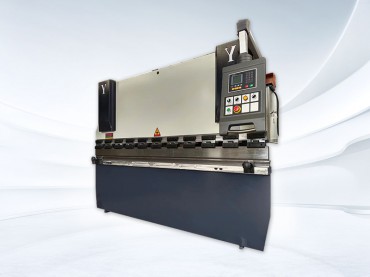
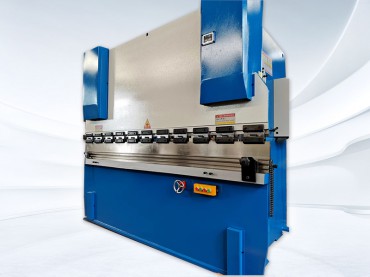
As the manufacturing industry increasingly moves toward automation and precision, sheet metal processing has found widespread application in sectors such as machinery manufacturing, automotive, construction, home appliances, and electrical equipment. After being cut, metal sheets typically require further processing—such as bending and forming—to become finished components. The hydraulic press brake is a crucial piece of equipment in this process.
Hydraulic press brakes utilize pressure generated by a hydraulic system to apply force to metal sheets via dies, causing the material to undergo plastic deformation into predetermined angles and shapes. Compared to manual bending equipment, hydraulic press brakes offer high force, a broad processing range, operational flexibility, and superior forming precision, making them widely used in various metalworking applications.
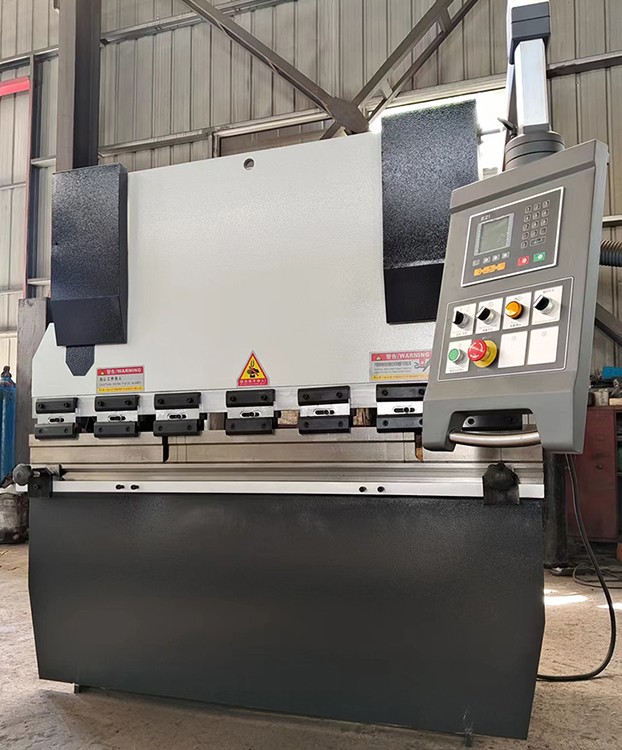
The fundamental purpose of a hydraulic press brake is to bend and form metal sheets. Through the relative movement of upper and lower dies, flat metal sheets are processed into workpieces with various angles and shapes. Depending on product design requirements, these machines can perform right-angle, acute-angle, and obtuse-angle bending, as well as complex sequential bending operations. By swapping in bending dies of different specifications, operators can achieve a wide variety of formed shapes.
For instance, a flat steel plate processed by a hydraulic press brake can be shaped into L, U, V, or Z configurations. These bent components are subsequently used in products such as machinery, architectural structures, electrical cabinets, and automotive parts.
2. Applications of hydraulic Press Brakes in Sheet Metal Processing
Sheet metal processing is one of the most significant application areas for hydraulic press brakes.
During sheet metal production, metal sheets typically undergo processes such as laser cutting, plasma cutting, or shearing before being formed by a press brake. For example, a laser-cut steel plate might need to be bent into a box-like enclosure; the hydraulic press brake can execute multiple bends at various angles according to the design specifications.
In mass production, press brakes enhance processing efficiency and ensure consistent dimensions and angles across multiple workpieces. Modern CNC hydraulic press brakes allow bending programs to be configured via the control system, enabling operators to process complex parts with greater ease. This is particularly significant for manufacturing enterprises that require high levels of processing consistency.
3. Applications of Hydraulic Press Brakes in Machinery Manufacturing
The machinery manufacturing industry requires a vast array of metal parts in various shapes; consequently, hydraulic press brakes are widely used in the production of mechanical equipment.
Components such as equipment housings, support frames, mounting plates, protective covers, bases, and various structural metal parts often require bending operations.
Large-scale machinery often involves large parts and thick metal sheets, necessitating substantial bending force. Hydraulic press brakes can deliver the required pressure based on equipment specifications, thereby accommodating sheets of varying thicknesses. By carefully selecting tooling and processing parameters, manufacturers can minimize the need for repeated adjustments and enhance production efficiency.
4. Applications of Hydraulic Press Brakes in the Construction Industry
The construction industry also relies heavily on bent metal components.
Items such as metal scaffolding, door and window components, decorative panels, roofing elements, and certain steel structural parts often require bending. Metal sheets are increasingly utilized in modern architecture; beyond possessing sufficient strength, these materials must often be bent into specific shapes to meet installation and connection requirements.
Hydraulic press brakes can process sheets of various specifications based on engineering blueprints, supporting the production of metal components for construction.
5. Applications of Hydraulic Press Brakes in Automotive Manufacturing
Automotive manufacturing is another key sector for hydraulic press brakes. The production process involves numerous metal components, many of which undergo cutting, stamping, and bending. Hydraulic press brakes are used to fabricate automotive repair equipment, auxiliary body structures, brackets, protective components, and other sheet metal parts.
In the automotive repair industry, press brakes are also used to fabricate and repair specific sheet metal components. Precise control over bending angles ensures that the finished parts meet design specifications.
6. Applications of Hydraulic Press Brakes in Electrical Equipment Manufacturing
Electrical cabinets, control boxes, power distribution boxes, and other metal electrical enclosures are typically constructed using bent sheet metal. For example, a flat sheet of metal can be cut and bent to form the side panels, doors, or main housing of an electrical cabinet. Hydraulic press brakes are capable of bending in multiple directions and at various angles, enabling the sheet metal to be formed into a stable enclosure structure. For electrical equipment manufacturers, bending precision directly impacts subsequent assembly processes; therefore, the stability and control accuracy of the equipment are crucial.
7. Advantages of Hydraulic Press Brakes
The widespread adoption of hydraulic press brakes is due to their specific characteristics.
First, the hydraulic drive system delivers substantial bending force, making it suitable for processing metal sheets of varying thicknesses.
Second, the hydraulic system operates smoothly, facilitating continuous bending operations.
Third, hydraulic press brakes offer great processing flexibility; by changing dies and adjusting parameters, operators can produce workpieces with diverse shapes and angles.
For machines equipped with CNC systems, operators can pre-program the bending process, thereby minimizing human error and boosting production efficiency. Furthermore, modern hydraulic press brakes can be integrated with equipment such as laser cutters and shearing machines to create a comprehensive sheet metal processing workflow.
As the manufacturing industry demands higher levels of processing efficiency, automation, and product precision, hydraulic press brakes are continuously evolving toward greater CNC integration, automation, and accuracy. For enterprises engaged in sheet metal bending, selecting the right equipment—based on factors such as material type, sheet thickness, bending length, production volume, and precision requirements—is fundamental to ensuring quality and efficiency. In essence, the core function of the machine is to use hydraulic force to shape flat metal sheets into the desired angles and forms, providing a stable and efficient forming solution for modern sheet metal manufacturing.

 Address:Room 1202, Detaitang Building, No. 118 Huaguang Road, Zhangdian District, Zibo, Shandong
 WhatsApp:+8615653328535
 Wechat: +8615965331535
  E-mail:zs@sdsmachinery.com