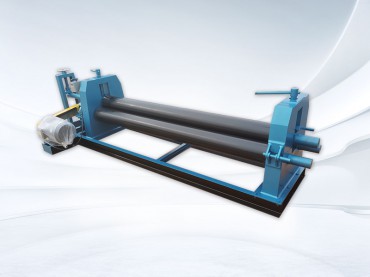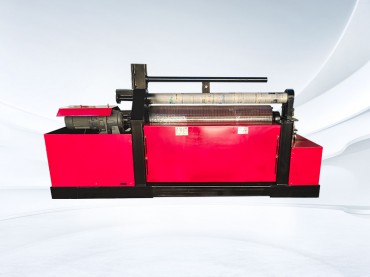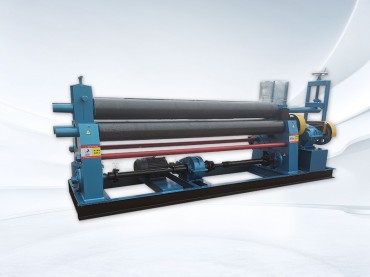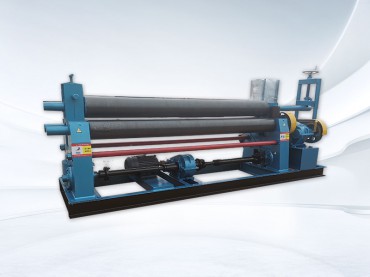
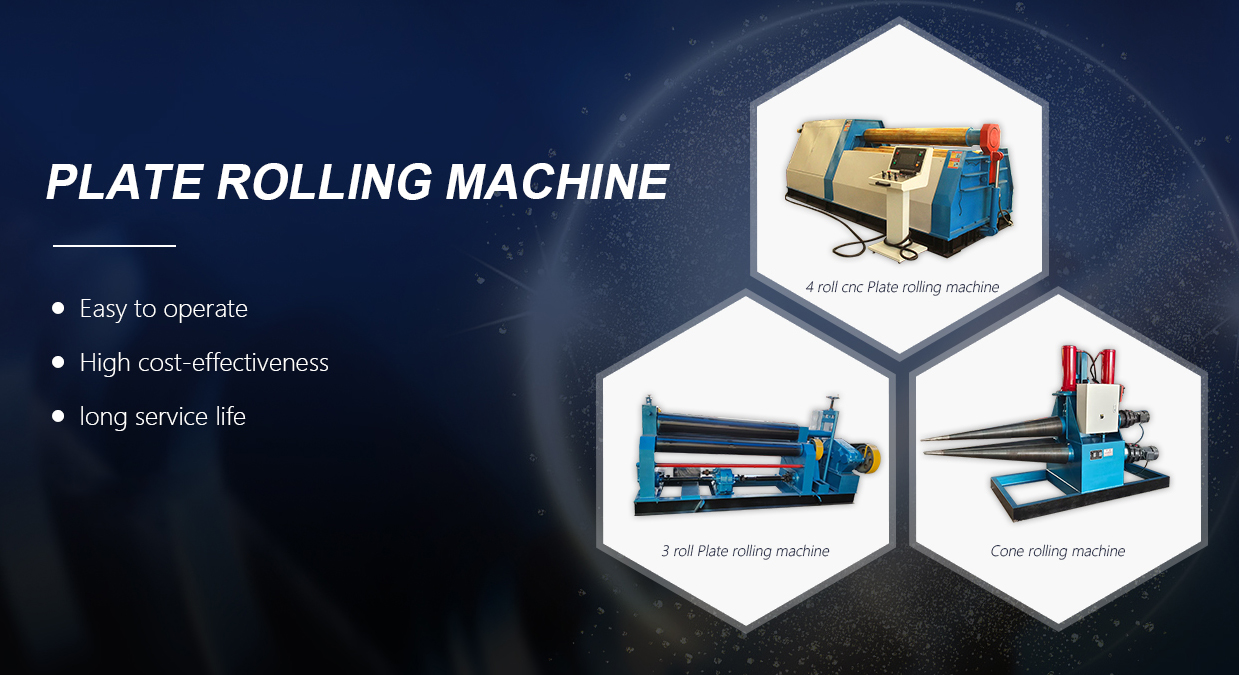
In modern industrial manufacturing, metal sheet processing technology is constantly developing, leading to an increasing demand for high-efficiency, high-precision forming equipment. Plate rolling machines, as an important type of metal processing equipment, are mainly used to process flat metal sheets into workpieces of various shapes, such as circles, arcs, and cones, through mechanical pressure. They are widely used in industries such as pressure vessels, boiler manufacturing, petrochemicals, shipbuilding, construction engineering, pipeline production, and machinery manufacturing.
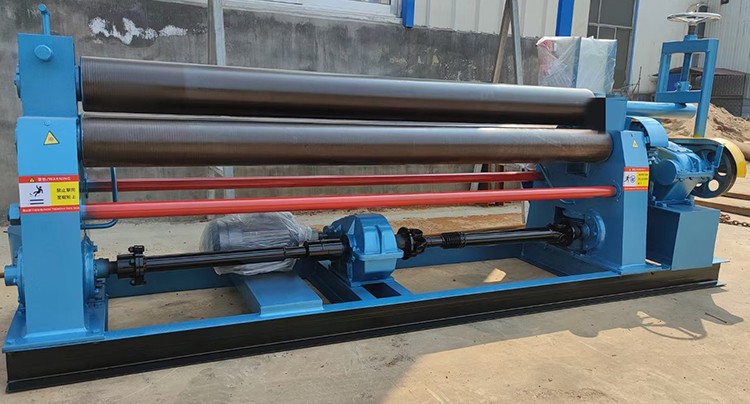
A plate rolling machine is a mechanical device that uses multiple rollers to continuously bend metal sheets. Depending on their structure and operating method, common plate rolling machines mainly include three-roll and four-roll plate rolling machines. During operation, the metal sheet is placed between upper and lower rollers or multiple rollers. Pressure is generated through a hydraulic system, motor drive system, or mechanical transmission system, causing the sheet to gradually undergo plastic deformation, ultimately forming the desired cylindrical, arc, or special curved surface structure.
Compared to traditional manual processing methods, plate rolling machines have advantages such as high processing speed, stable forming, convenient operation, and wide applicability. Especially in the manufacturing of large metal structures, plate rolling machines can effectively improve production efficiency and ensure the consistency of workpiece dimensions.
One of the main uses of plate rolling machines is to process flat steel plates into cylindrical structures. Many industrial equipment require cylindrical metal components during production, such as storage tanks, pressure vessels, reactors, and large pipelines. When manufacturing these devices, steel plates are usually cut to appropriate sizes, then bent and shaped using a plate rolling machine, and finally connected into a complete structure through welding. For example, in the petrochemical industry, oil storage tanks and chemical storage tanks are usually made of thick steel plates, and plate rolling machines can help manufacturers quickly roll the tank plates, improving production efficiency while ensuring good structural strength.
The pressure vessel industry has high requirements for the precision of metal plate processing because the equipment needs to withstand long-term pressure and complex working environments. Plate rolling machines can precisely process steel plates of different thicknesses to form circular structures that meet design requirements. In boiler manufacturing, boiler drums, steam pipes, and other large pressure components all require plate rolling. High-performance plate rolling machines can reduce plate deformation, improve processing accuracy, and provide a good foundation for subsequent welding and assembly. Hydraulic and CNC plate rolling machines, in particular, are increasingly widely used in the manufacturing of large pressure equipment due to their higher control precision.
Plate rolling machines are indispensable for the manufacturing of various industrial pipelines, transport pipelines, and large steel pipes. Steel plates processed by plate rolling machines can be formed into circular structures of different diameters, which are then welded into complete steel pipes. The demand for large pipelines is constantly increasing in oil transportation, natural gas transportation, water conservancy projects, and urban infrastructure construction. Plate rolling machines can adjust the rolling diameter and plate thickness according to production needs, meeting the pipe size requirements of different engineering projects.
Shipbuilding requires a large number of curved steel plates, such as hull shells, deck structures, and various reinforcing components. These parts typically have complex arc structures that are difficult to complete with ordinary processing equipment. Plate rolling machines can continuously roll steel plates to form curved surfaces that meet ship hull design requirements, improving shipbuilding efficiency. Large-scale plate rolling equipment can also process thicker steel plates to meet the needs of large ship production.
With the development of the modern construction industry, steel structure buildings are increasingly widely used. Many cylindrical structures, arched structures, and specially shaped steel components in buildings require processing by plate rolling machines. For example, rolled steel structure components are frequently used in stadiums, industrial plants, large bridges, and urban public buildings. Plate rolling machines can help manufacturing enterprises quickly produce various specifications of curved metal parts, improving the efficiency of building structure processing.
In the machinery manufacturing industry, many equipment shells, supporting structures, and functional components require plate bending processing. Plate rolling machines can process various metal materials such as carbon steel, stainless steel, and aluminum plates to meet the manufacturing needs of different machinery products. For example, rolled metal parts may be used in mining equipment, environmental protection equipment, agricultural machinery, and industrial production equipment.
Plate rolling machines have become an important piece of equipment in industrial production primarily due to their numerous advantages.
(1) Plate rolling machines offer high processing efficiency. Traditional manual bending methods are not only slow but also difficult to guarantee consistent processing, while plate rolling machines can quickly complete plate forming through mechanized operation.
(2) Plate rolling machines offer good processing precision. Modern hydraulic plate rolling machines and CNC plate rolling machines employ advanced control systems, which can more accurately control the movement of rollers and improve product dimensional accuracy.
(3) Plate rolling machines have a wide range of applications. They can process metal plates of different materials, thicknesses, and sizes according to different production needs, providing enterprises with more flexible production solutions.
For enterprises that need to mass-produce metal structural parts, plate rolling machines can not only reduce production costs but also reduce manual labor and improve overall production efficiency.
First, it is necessary to pay attention to the material and thickness of the plate being processed. Different models of plate rolling machines have different maximum processing capacities. If thicker steel plates need to be processed, a hydraulic plate rolling machine with a stronger load-bearing capacity should be selected. Secondly, the diameter and length of the workpiece need to be considered. Different industries have different requirements for product dimensions. For example, pressure vessel manufacturing may require large plate rolling equipment, while small and medium-sized plate rolling machines may be more suitable for general machining enterprises.
Furthermore, the degree of automation is also an important factor in equipment selection. With the development of intelligent manufacturing, more and more companies are choosing CNC plate rolling machines to improve production efficiency and reduce operational difficulty.
As global manufacturing continues to upgrade, plate rolling machines are also developing towards intelligence, high precision, and automation. In the future, more plate rolling machines will adopt CNC systems, automatic detection technology, and intelligent control technology to achieve more precise plate processing. At the same time, energy conservation and environmental protection will also become important directions for equipment development, reducing energy consumption and improving equipment operating efficiency through optimized power systems. For manufacturing enterprises, high-performance plate rolling machines are not only processing tools but also important equipment for improving production capacity and enhancing market competitiveness.
As an important piece of equipment in the field of metal sheet forming, plate rolling machines play an irreplaceable role in modern industrial manufacturing. Whether it's pressure vessels, petrochemicals, shipbuilding, or the production of building steel structures and machinery, efficient and reliable plate rolling processing technology is indispensable. By selecting the right plate rolling machine to meet their specific needs, companies can improve production efficiency, ensure product quality, and satisfy ever-changing market demands. With continuous technological advancements, plate rolling machines will continue to play a vital role in future industrial manufacturing, providing more advanced and efficient solutions for the global metal processing industry.
 Address:Room 1202, Detaitang Building, No. 118 Huaguang Road, Zhangdian District, Zibo, Shandong
 WhatsApp:+8615653328535
 Wechat: +8615965331535
  E-mail:zs@sdsmachinery.com