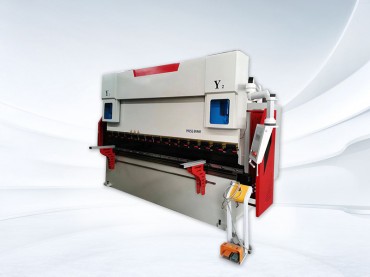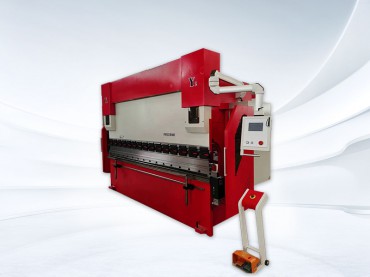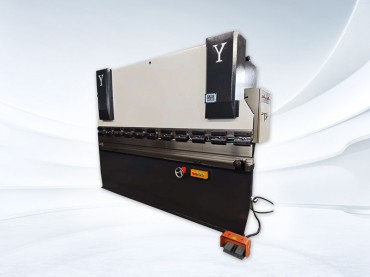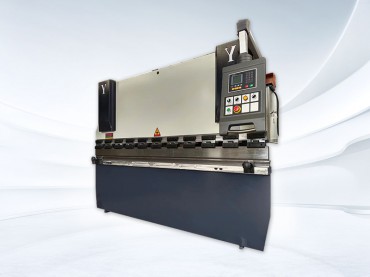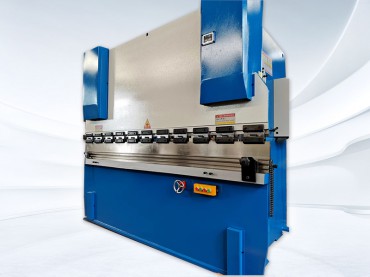
In the sheet metal processing industry, the press brake is a crucial piece of forming equipment, widely used in sectors such as machinery manufacturing, construction engineering, automotive parts, home appliance production, metal products, power equipment, aerospace, and general sheet metal fabrication.
With the advancement of manufacturing technology, press brake have evolved from early manual and mechanically driven models into hydraulic press brake, CNC press brake, electric servo press brake, and increasingly intelligent automated bending systems. Different types of press brake vary in terms of drive mechanisms, processing precision, production efficiency, automation levels, and application scope. Selecting the right equipment is critical not only for product quality but also for a company's production efficiency and long-term operating costs.
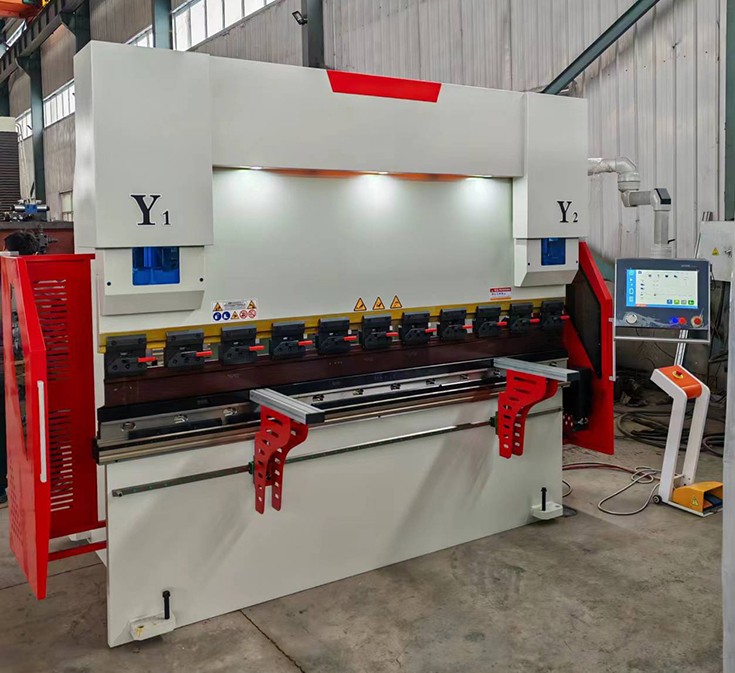
A press brake is a piece of equipment that uses pressure and tooling (dies) to bend and form sheet metal. It typically consists of a frame, a worktable, a ram (or slide), a hydraulic or drive system, a control system, and upper and lower dies. During operation, the sheet metal is placed on the lower die; the upper die applies downward pressure, causing the sheet to undergo plastic deformation at a predetermined location to achieve the desired angle and shape. By utilizing different dies and processing methods, press brake can perform a wide range of operations, such as right-angle bending, V-bending, U-bending, multi-angle bending, box bending, edge bending, and the forming of complex sheet metal parts.
Mechanical press brake represent one of the earliest types of bending equipment used in the metal processing industry. These machines typically rely on mechanical transmission mechanisms to generate force; a flywheel, gears, a crankshaft, or other mechanical structures drive the movement of the ram to bend the sheet metal.
Mechanical press brake are characterized by their traditional structure and reliance on mechanical systems for power transmission. They remain valuable in production environments where processing tasks are relatively fixed and product designs are simple.
The advantages of mechanical press brake lie in their straightforward structure and the availability of mature maintenance procedures. However, compared to modern hydraulic or CNC press brake, they offer limited flexibility and automation. For enterprises requiring frequent adjustments to bending angles or dimensions, or those manufacturing complex products, modern CNC equipment is generally more convenient. Therefore, mechanical press brakes are better suited for traditional processing scenarios where the production process is relatively fixed.
Hydraulic press brakes are currently a very common type of equipment in the sheet metal processing industry. They primarily utilize a hydraulic system to generate pressure, driving the ram (or slide) via hydraulic cylinders to perform the bending of metal sheets. Compared to traditional mechanical press brakes, hydraulic press brakes offer superior performance in terms of pressure control and processing versatility.
Depending on the equipment specifications, hydraulic press brakes can process metal sheets of varying thicknesses and lengths.
Key advantages of hydraulic press brakes include: stable pressure; robust processing capability; suitability for various sheet specifications; compatibility with different tooling; and a wide range of applications.
For general sheet metal processing enterprises, hydraulic press brakes offer excellent versatility. By changing tooling, they can execute bending operations for a wide variety of shapes. Hydraulic press brakes remain a vital component of industrial sheet metal production lines.
CNC (Computer Numerical Control) press brakes are modern processing machines developed by adding a CNC system to traditional bending equipment. The CNC system controls parameters such as ram position, backgauge position, bending angle, and other processing variables. Compared to standard press brakes, CNC models offer higher levels of automation and repeatability. Operators can configure processing programs based on product blueprints; once programmed, the machine can execute repetitive operations according to the set parameters.
CNC press brakes are particularly well-suited for: producing products with diverse specifications; high-precision sheet metal processing; multi-angle bending; batch repetition; and manufacturing complex parts.
Key advantages include high processing precision, rapid setup adjustments, and a high degree of automation. The control system allows for the adjustment of the backgauge position, thereby improving efficiency during product changeovers. Consequently, as modern manufacturing increasingly demands higher efficiency and precision, the adoption of CNC press brakes has become widespread.
For sheet metal processing companies handling a wide variety of orders and complex product designs, CNC press brakes are typically essential equipment.
Servo-electric press brakes are press brake that utilize a servo motor as the primary drive mechanism. Unlike traditional hydraulic press brakes, this type of equipment controls ram movement primarily through electric motors and mechanical transmission systems. With advancements in energy-saving and servo-control technologies, electric press brakes are increasingly attracting the attention of enterprises.
Servo-electric press brakes typically feature high control precision, rapid response speeds, and high energy efficiency.
They require little to no hydraulic oil during operation and offer robust automation capabilities. They hold distinct advantages for thin-plate processing and precision sheet metal manufacturing.
However, as different machines employ varying transmission structures, their suitability regarding material thickness and tonnage capacity differs. Therefore, selecting the right servo press brake requires considering specific factors such as material type, plate thickness, and bending length. As the concept of energy-efficient manufacturing gains traction, servo-electric press brakes are expected to see wider application in the field of precision machining.
Manual press brakes generally feature a simple structure and rely primarily on manual operation to bend metal sheets. They are suitable for processing thin plates, small workpieces, and simple bent components. Key characteristics include a straightforward design and a compact footprint. They offer practical value for maintenance workshops, small processing plants, and low-volume production scenarios.
Common features include relatively low equipment costs, simple operation, no need for complex control systems, and suitability for basic processing tasks. However, because they rely on manual labor, their processing efficiency and repeatability generally cannot match those of modern CNC press brakes. Consequently, manual press brakes are best suited for low-volume production and products with simple designs.
If a company primarily processes simple, thin sheet metal, a manual press brake or a small pneumatic press brake may suffice.
If a company needs to process a variety of metal sheets and handle a wide range of product specifications, hydraulic press brakes usually offer greater versatility.
If a company requires high-precision, multi-specification, and batch production, CNC press brakes typically offer significant advantages.
If a company prioritizes energy efficiency, precision control, and modern manufacturing methods, a servo-electric press brake is a strong option to consider. Therefore, the ideal press brake is one that meets your specific product processing needs while striking a reasonable balance between equipment cost, production efficiency, processing precision, and long-term maintenance.
(1) Determine the material to be processed: Different metals have varying strengths, requiring different bending forces.
(2) Determine the maximum sheet thickness: The machine's tonnage must meet actual processing requirements.
(3) Determine the maximum processing length: Processing large sheets requires a machine with a sufficiently long worktable.
(4) Consider processing precision: Standard equipment suffices for general sheet metal products, whereas precision products require a focus on the CNC system, backgauge accuracy, and the machine's repeatability.
(5) Consider production volume: High-volume production is generally better suited to highly automated equipment.
(6) Consider future business growth: If the company plans to expand its product range, a CNC press brake offering greater flexibility is a suitable choice.
With the advancement of smart manufacturing and automation technologies, future bending equipment will continue to evolve toward higher precision, automation, digitalization, energy efficiency, and intelligence.
For sheet metal processing enterprises, the key to selecting a press brake lies not in simply choosing the most expensive or feature-rich machine, but in making a comprehensive assessment based on material type, sheet thickness, processing length, product precision, production volume, and budget. Only by selecting a press brake that aligns with specific production needs can a company truly enhance processing efficiency while ensuring consistent product quality and long-term production benefits.
 Address:Room 1202, Detaitang Building, No. 118 Huaguang Road, Zhangdian District, Zibo, Shandong
 WhatsApp:+8615653328535
 Wechat: +8615965331535
  E-mail:zs@sdsmachinery.com