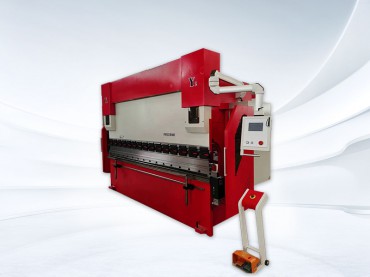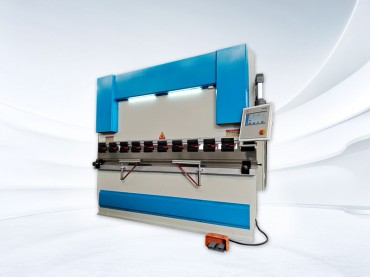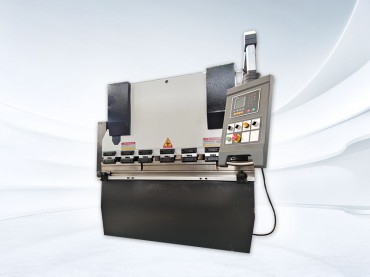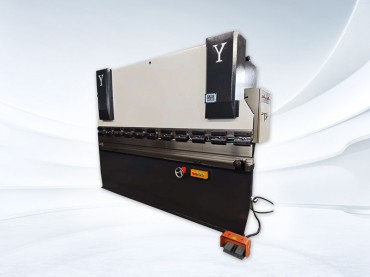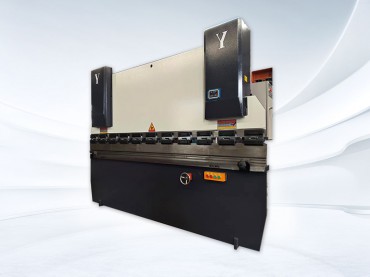
A hydraulic press brake primarily uses a hydraulic system to provide power for bending metal sheets. It mainly consists of components such as a frame, workbench, and clamping plate. The workbench is mounted on the frame and comprises a base and a pressure plate, which are connected via a hinge to the clamping plate. Additionally, the hydraulic press brake is equipped with a comprehensive hydraulic system and electrical system to achieve high-precision bending operations.
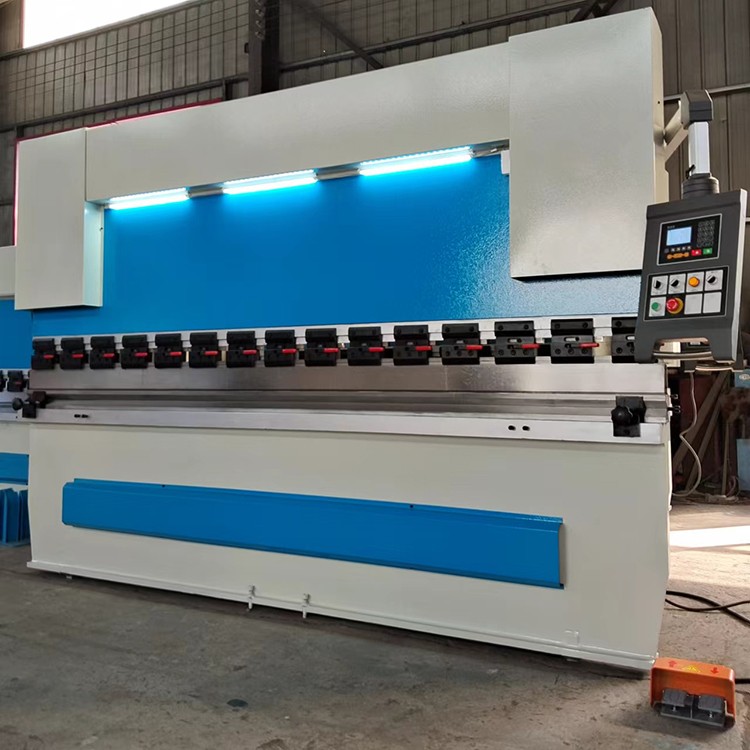
The working principle of hydraulic bending machines involves using a hydraulic system to drive the ram's vertical movement, thereby performing bending operations on metal sheets. Specifically, the hydraulic system controls the extension and retraction of the cylinder via a servo proportional valve, thereby driving the ram's upward and downward movement. The synchronised operation of the ram combines electronic scale signal feedback with the flow rate emitted by the servo proportional valve, which is controlled through a CNC system.
(1) First, connect the power supply, turn on the key switch on the control panel, and then press the oil pump start button. You will hear the sound of the oil pump rotating.
(2) Stroke adjustment: When using the bending machine, it is essential to adjust the stroke. A test run must be conducted before bending. When the upper die of the bending machine descends to the bottom, there must be a gap equal to the thickness of the sheet metal. Otherwise, it may damage the die and the machine. Travel adjustment can be done via electric rapid adjustment or manual fine-tuning.
(3) Selecting the bending slot width: Generally, choose a slot width eight times the plate thickness. For example, when bending 4mm-thick plate material, select a slot width of approximately 32mm.
(4) Rear stop adjustment typically includes electric rapid adjustment and manual fine-tuning, with the same method as a shearing machine.
(5) Press the foot switch to start bending. Unlike shearing machines, bending machines can be released at any time; releasing the foot switch stops the machine, and pressing it again continues the downward movement.
Hydraulic bending machines use a digital control system for operation, enabling precise control of bending angles and lengths, resulting in high bending accuracy. The bending accuracy of workpieces can reach 0.1 millimetres.
Hydraulic bending machines have fast processing speeds, enabling the completion of large quantities of workpiece processing in a short time, thereby improving production efficiency and speed.
Hydraulic bending machines have a long service life, with key components manufactured using high-quality materials, ensuring a service life of over 20 years.
Hydraulic bending machines have a simple manufacturing process, are easy to maintain and service, and can be modified and upgraded as needed to expand the machine tool's functionality.
Hydraulic bending machines can process metal sheets made of various materials, including copper, aluminium, steel, and iron, with a wide range of applications and high flexibility.
(1) Metal processing industry: In the manufacturing process of steel plates, copper, aluminium, and other metal products, hydraulic bending machines are used for precise cutting and bending of materials to meet efficient production requirements.
(2) Advertising manufacturing industry: When producing metal art letters, signs, and display items, hydraulic bending machines can precisely bend steel plates and other materials to meet design requirements.
(3) Mechanical Manufacturing Industry: In the production process of automotive parts and other mechanical components, hydraulic bending machines help shape materials to meet design requirements.
(4) Construction Industry: In the construction industry, hydraulic bending machines are used for the prefabrication of steel structural components such as bridge components, precisely completing material bending according to design drawings.
(5) Electronics industry and automotive industry: In the electronics industry, hydraulic bending machines are used to produce products such as computer cases and mobile phone casings; in the automotive industry, they are used to manufacture automotive body structural components, doors, and other parts.
(6) Shipbuilding: In shipbuilding, hydraulic bending machines are used for bending ship hull structures, relying on their precise operation to complete complex bending tasks.
In summary, hydraulic bending machines have a wide range of applications in the metal processing industry and offer numerous advantages, including high precision, high efficiency, and a long service life. Using hydraulic bending machines can improve production efficiency and product quality, reduce production costs, and give companies a competitive edge in the market.
If you are interested in hydraulic bending machines, please feel free to contact us, and we will recommend suitable machines and provide a quote.
 Address:Room 1202, Detaitang Building, No. 118 Huaguang Road, Zhangdian District, Zibo, Shandong
 WhatsApp:+8615653328535
 Wechat: +8615965331535
  E-mail:zs@sdsmachinery.com