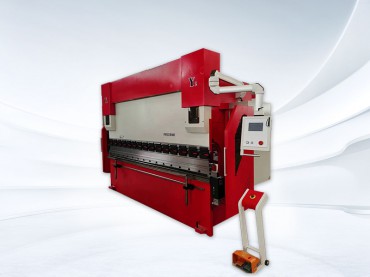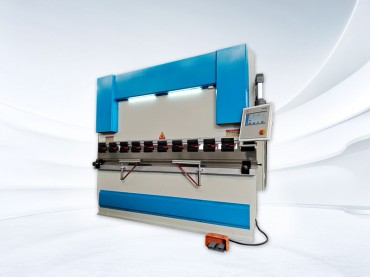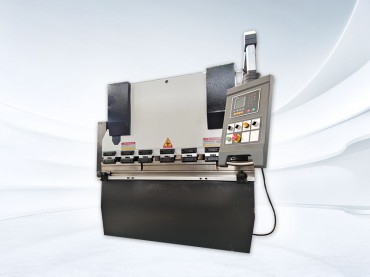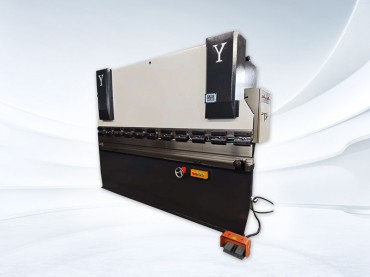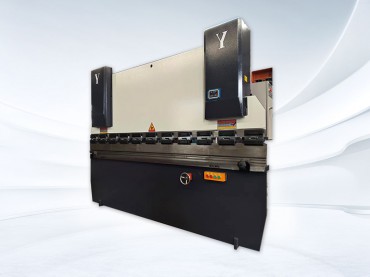
Hydraulic press brakes are equipment commonly used in the metalworking industry, primarily for bending metal sheets into desired shapes. Compared to traditional mechanical press brakes, hydraulic press brakes offer higher precision, robust operational capabilities, and a broader range of applications. Whether in construction, shipbuilding, automotive manufacturing, or the metalworking industry, hydraulic press brakes play a crucial role. Their operating principle involves the functioning of a hydraulic system, where hydraulic pressure drives the machine's movement to achieve sheet bending.
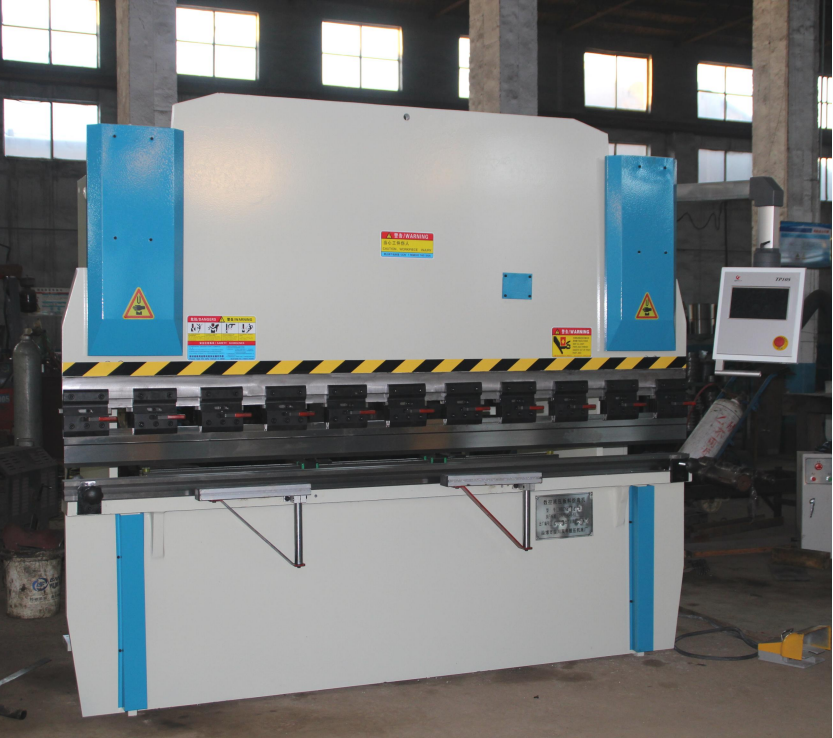
The hydraulic pump compresses hydraulic fluid and delivers it to the hydraulic cylinder. The fluid's flow and pressure drive the cylinder's piston. Motor-driven hydraulic pumps ensure stable operation of the hydraulic system.
Hydraulic fluid entering the cylinder generates pressure that pushes the piston downward. This motion is transmitted to the upper die via connecting rods, forcing it to descend. As the upper die presses down, it applies pressure to the sheet metal through the die's shape and design, gradually bending the metal into the desired form.
Modern hydraulic press brakes are typically equipped with a CNC system. This system coordinates with the hydraulic system via an electric servo drive, dynamically adjusting the movement speed, pressure, and bending angle of the upper and lower dies to ensure bending accuracy. The CNC system can automatically execute multiple bending operations at different angles according to programmed sequences, enhancing production efficiency and precision.
After completing the bending operation, the hydraulic system pressure is released. The piston retracts, disengaging from the sheet metal and returning to its initial position. At this point, the metal sheet has been successfully bent into the desired shape, concluding the operation.
Hydraulic press brakes achieve high bending accuracy through precise control of hydraulic pressure and die positioning, making them suitable for complex shapes and high-precision part processing.
Hydraulic press brakes can process metal sheets of varying thicknesses, hardnesses, and shapes, offering strong adaptability to diverse machining requirements.
Modern hydraulic press brakes are equipped with CNC systems that automatically execute various bending tasks according to programmed instructions. CNC systems minimize human operational errors, enhance production efficiency, and are particularly suitable for batch production.
Hydraulic press brakes feature straightforward operation. The hydraulic system provides robust power, allowing operators to complete most tasks by simply setting programs and parameters. Additionally, the integration of CNC systems further simplifies operation, reducing the complexity of traditional methods.
Compared to traditional mechanical press brakes, hydraulic press brakes consume less energy. Their superior stability also reduces demand for electricity and other resources during production, resulting in notable energy savings.
Hydraulic press brakes can complete complex bending tasks in a short time, making them particularly suitable for mass production and significantly boosting production efficiency.
Hydraulic press brakes are extensively used in automotive manufacturing for processing components such as vehicle bodies, chassis, and hoods. Their high precision and automated control meet the demands of large-scale production.
In construction, hydraulic press brakes are commonly employed to process steel structural components like beams, columns, and frames. They precisely bend various metal sheets, providing reliable material support for construction projects.
Hydraulic press brakes also see extensive application in mechanical equipment manufacturing, particularly for components requiring metal sheet bending, such as housings and frames.
In home appliance manufacturing, hydraulic press brakes process metal casings and structural components, precisely bending sheet metal to meet product design specifications.
Hydraulic press brakes are also employed in the aerospace industry, particularly for processing aircraft structural components. Their high-precision bending capabilities are critical to spacecraft performance and safety.
In shipbuilding, hydraulic press brakes are used for hull fabrication, handling large and complex sheet metal bending tasks to ensure hull strength and stability.
As technology advances and industrial demands evolve, the functionality and performance of hydraulic press brakes continue to improve. In the future, they will play an increasingly vital role across broader applications, establishing themselves as indispensable core equipment in the metal processing field.
If you are interested in press brakes, please contact us. We will recommend suitable machines and provide quotations.
 Address:Room 1202, Detaitang Building, No. 118 Huaguang Road, Zhangdian District, Zibo, Shandong
 WhatsApp:+8615653328535
 Wechat: +8615965331535
  E-mail:zs@sdsmachinery.com