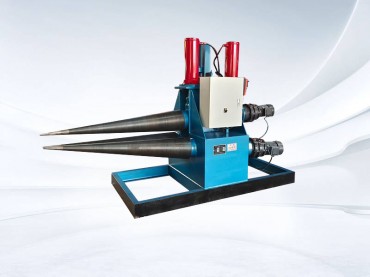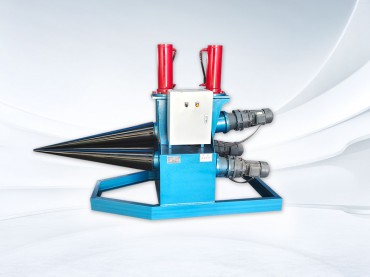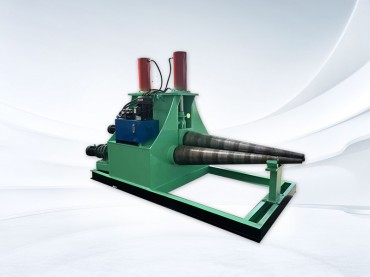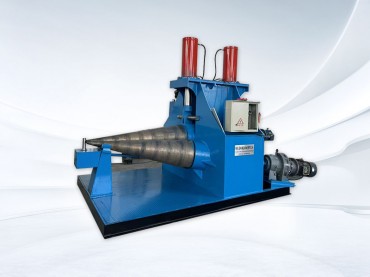
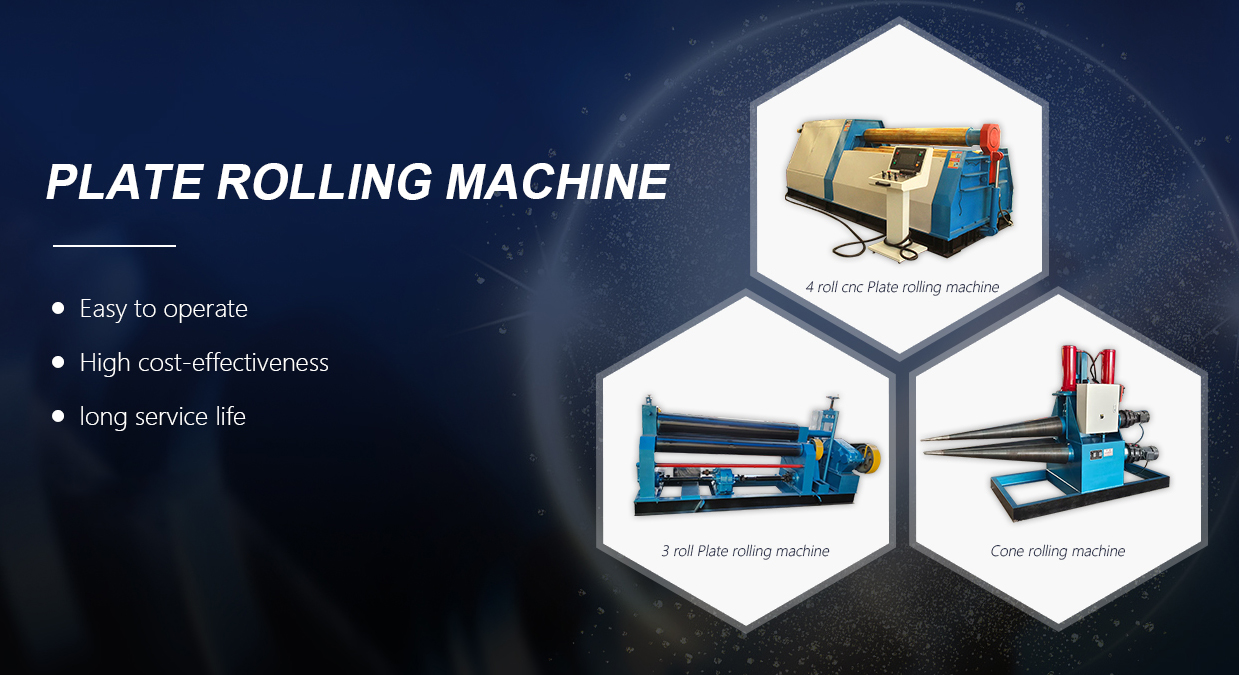
With advancements in manufacturing, metal sheet processing has become an indispensable part of modern industry. Metal sheets are widely used in the production of components of various shapes and applications, with the fabrication of conical shapes being particularly significant. Whether in construction, aerospace, automotive, or numerous other industries, conical metal parts hold substantial application value. To achieve precise and efficient conical fabrication, the cone rolling machine, as a specialized piece of equipment, plays a crucial role.
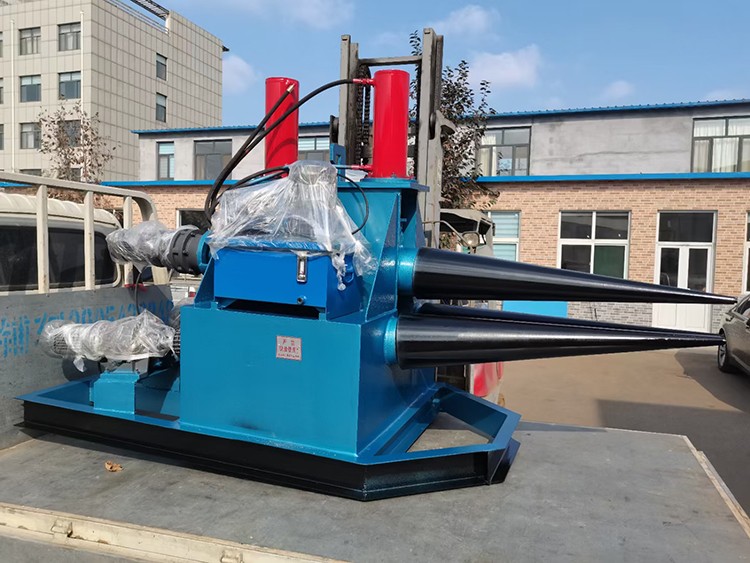
A cone rolling machine is specialized equipment designed to process metal sheets into conical shapes. Its operating principle relies on bending and curling the metal sheet. Through gradual pressure application and angle adjustments, the machine progressively forms the sheet into a conical shape. Typically composed of a main frame, rollers, a pressure system, and a CNC system, the cone rolling machine precisely controls the bending angle, radius, and taper of the metal sheet. Its applications are extensive, particularly suited for processing stainless steel, aluminum alloy, iron plates, and other metal sheets.
The cone rolling machine primarily uses three (or more) working rollers to gradually roll the metal plate into a conical shape. During operation, the plate is first fed between the three rollers. Under the pressure from the upper roller and the support from the left and right rollers, the plate is progressively bent. As pressure gradually increases, the metal plate curls inward from its flat state, forming a cone.
Selecting suitable metal sheet material is essential for successful cone production. Common materials include stainless steel, aluminum alloy, and steel plate. The sheet's thickness, hardness, and required cone angle must be pre-determined before operation to establish the cone rolling machine's working parameters.
Adjust the cone rolling machine's pressure, roller angle, and operating speed based on the sheet metal's specifications, thickness, and desired cone angle. Different sheets may require distinct parameter adjustments to ensure processing precision.
Place the metal sheet between the machine's working rollers and activate the machine for initial bending. The sheet will begin curving inward, gradually forming a conical shape. Operators must closely monitor the process to prevent excessive bending or distortion.
Gradually refine the bending angle by adjusting the pressure on the upper and lower rollers, along with their angles. Precise adjustments ensure the cone's taper and dimensions meet specified requirements.
After forming, inspect the cone's shape, dimensions, and angles for compliance. Make necessary trimming and adjustments as required. Final processing may involve shearing, welding, or other methods.
In construction, conical metal components are widely used in roofs, pipelines, chimneys, and other structures. Cone rolling machines enable the production of precise metal cones to meet diverse construction project needs.
Conical vessels and equipment are common in chemical and petroleum applications. Cone rolling machines enable rapid, efficient production of these metal components, boosting manufacturing efficiency.
Conical metal parts are frequently used in automotive exhaust systems and body structures. Cone rolling machines deliver the precision required for these complex geometries.
Conical shapes are extensively used in aerospace for manufacturing rocket engine casings, aircraft wings, and similar components. Cone rolling machines enable high-precision, high-strength metal processing, ensuring component safety and reliability.
- Efficiency: Cone rolling machines rapidly complete conical processing of metal plates, significantly reducing manual labor time.
- Precision: Through precise parameter adjustments, cone rollers produce cones meeting design specifications, guaranteeing component quality and accuracy.
- Versatility: Beyond basic conical shapes, these machines process complex curves and irregular components with strong adaptability.
- Waste Reduction: Compared to traditional manual methods, their superior precision minimizes material waste and boosts production efficiency.
The cone rolling machine is a vital piece of equipment in sheet metal processing. Its efficiency and precision play a significant role in manufacturing conical components. From construction to aerospace, cone rolling machines are widely used across various industries. Through proper operation and adjustment, they enable the rapid and accurate production of conical metal parts that meet specifications, boosting production efficiency while ensuring product quality.
 Address:Room 1202, Detaitang Building, No. 118 Huaguang Road, Zhangdian District, Zibo, Shandong
 WhatsApp:+8615653328535
 Wechat: +8615965331535
  E-mail:zs@sdsmachinery.com