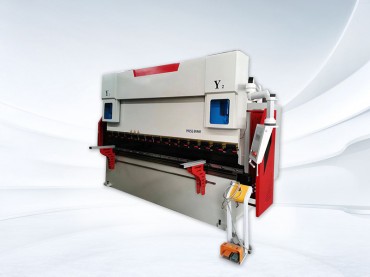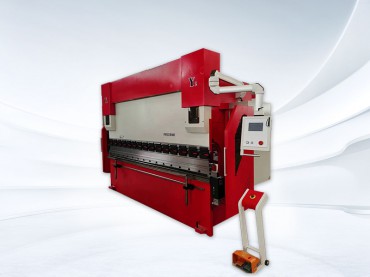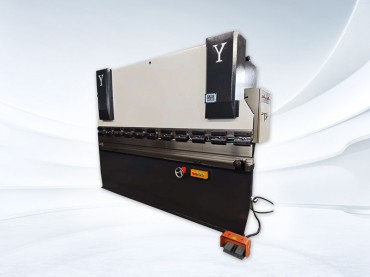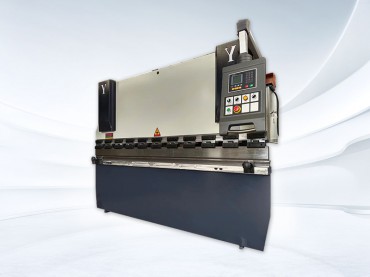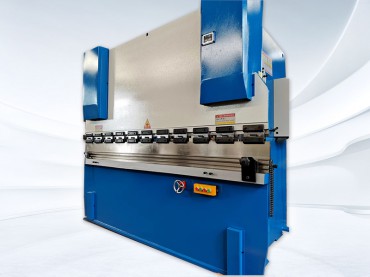
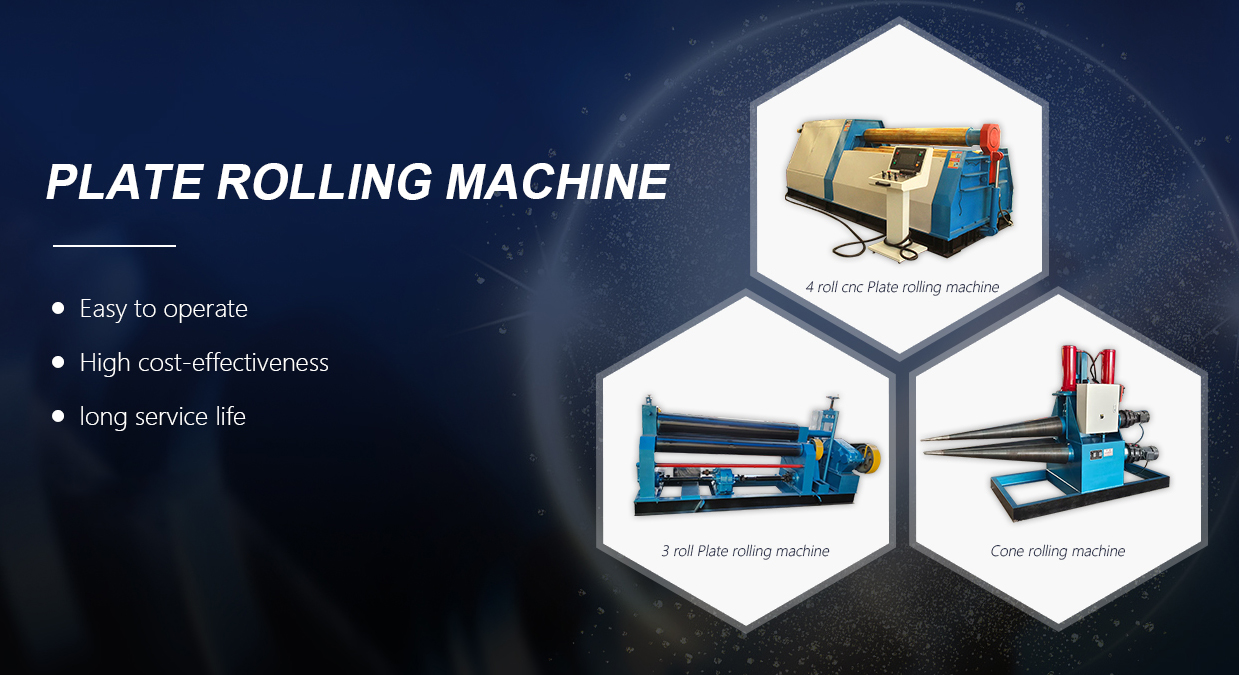
In the modern metalworking industry, press brakes—as one of the core pieces of equipment for sheet metal forming—are widely used in fields such as mechanical manufacturing, the automotive industry, power equipment, construction engineering, and home appliance manufacturing. Whether for simple angle bending or complex multi-step forming processes, press brakes play a crucial role.
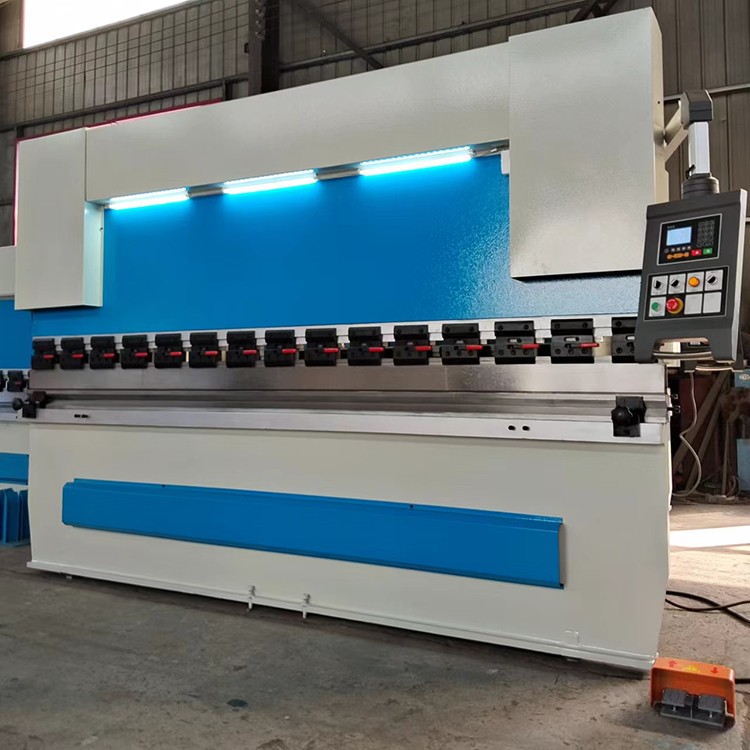
A press brake is a machine that uses pressure to cause plastic deformation in metal sheets through the action of dies, thereby achieving the desired angles and shapes. Its core mechanism involves the interaction between the upper die (punch) and the lower die (die cavity) to apply external force to the sheet metal, causing permanent deformation in the stressed area. Based on their drive systems, press brakes are primarily classified into hydraulic press brakes, mechanical press brakes, and CNC press brakes. Among these, hydraulic CNC press brakes have become the mainstream equipment in the current market due to their high precision and operational flexibility.
The machine frame serves as the foundation of the press brake and is typically constructed from welded steel plates, offering high strength and rigidity. The stability of the frame directly impacts bending accuracy and equipment lifespan.
The ram is the key component that supports the upper die. Driven by the hydraulic system, it moves up and down to apply pressure to the sheet metal. The operational precision of the ram determines the accuracy of the bending angle.
The work table is used to mount the lower die and support the sheet metal to be processed. Some high-end machines are equipped with compensation mechanisms to eliminate errors caused by frame deformation.
The die system consists of the upper and lower dies, which are the direct tools for forming the sheet metal. Dies of different shapes can perform various types of bending operations, such as V-bends and U-bends.
The hydraulic system serves as the power source driving the ram’s movement, primarily consisting of a hydraulic pump, cylinders, and control valves. Its stability directly affects the smoothness of equipment operation and machining accuracy.
Modern press brakes are typically equipped with a CNC system to control the ram stroke, pressure, and bending angle, enabling automated processing.
The operation of a press brake essentially follows a “apply pressure—material deformation—form angle” process, which can be divided into the following steps:
(1) Sheet Positioning: The operator places the metal sheet on the worktable and uses the backgauge system for precise positioning to ensure accurate bending.
(2) Ram Descent and Pressure Application: Driven by the hydraulic system, the ram moves downward, driving the upper die. When the upper die contacts the sheet, pressure begins to be applied.
(3) Plastic Deformation of the Sheet: As pressure gradually increases, the sheet undergoes plastic deformation between the upper and lower dies. Once the material’s yield point is exceeded, the sheet does not return to its original shape, resulting in a permanent bend.
(4) Reaching the Set Angle: By controlling the ram’s stroke and pressure, the sheet is ultimately bent to the desired angle. The CNC system precisely controls this process, ensuring consistency in repeatable operations.
(5) Ram Return Stroke: After bending is complete, the ram rises back to its initial position, allowing the operator to remove the workpiece and proceed to the next processing cycle.
The operation of a press brake involves several key concepts in materials science:
In the initial stage, when an external force is applied to the sheet metal, elastic deformation occurs; once the external force is removed, the material returns to its original shape. When the applied pressure exceeds the material’s yield point, the process enters the plastic deformation stage, resulting in permanent deformation.
After bending is complete, the sheet metal experiences a certain degree of springback due to the release of internal stresses. This is a common phenomenon in the bending process. Therefore, in actual operation, it is typically necessary to perform an “over-bend,” meaning the bending angle is set slightly larger than the target angle to compensate for springback error.
During the bending process, the outer side of the sheet experiences tensile stress, while the inner side experiences compressive stress. The neutral zone lies between the two, and its length remains essentially unchanged.
Although the working principle of a press brake is relatively simple, actual machining accuracy is influenced by various factors:
Different materials have varying yield strengths and elastic moduli, which directly affect the bending results.
The die opening dimensions, angles, and degree of wear all affect the final bending quality.
The running precision of the ram, guide rail clearance, and machine frame rigidity all influence machining accuracy.
Factors such as the bending sequence, pressure settings, and positioning accuracy all play a crucial role in the final product quality.
(1) Home Appliance Sector: Press brake play a critical role in the manufacture of television casings, refrigerator door panels, and the inner and outer metal housings of various electrical appliances. They precisely bend thin sheet metal into the required shapes, serving as a core component of the home appliance forming process.
(2) Building Structures Sector: The fabrication of roof beams, curtain wall panels, and other architectural metal components largely relies on press brakes for forming, ensuring both architectural design aesthetics and structural strength requirements are met.
(3) Automotive Components: Components requiring precision bending, such as exhaust systems, metal brackets, and protective covers, are typically processed using press brake to meet structural strength and assembly accuracy requirements.
(4) Home Appliance Manufacturing: press brakes are equally indispensable in the production of components such as oven liners and mechanical brackets, enabling efficient precision bending and the fabrication of complex shapes.
(5) Aerospace Industry: Press brakes are crucial in the manufacture of high-precision critical components such as engine cowlings, support structures, and wing assemblies. The precise forming of high-strength materials is a core process for ensuring aircraft performance and flight safety.
(6) Medical Device Industry: press brakes are widely used in medical device manufacturing to produce instrument stands, surgical tools, and precision metal components. Their high-precision machining capabilities ensure the safety and reliability of the equipment.
Press brake utilize die action and pressure control to induce plastic deformation in metal sheets, thereby achieving the fabrication of various complex shapes. Although their operating principle is based on fundamental mechanics, practical applications integrate multiple technologies, including mechanical, hydraulic, and control systems. For enterprises, a deep understanding of the operating principles of press brake not only helps improve equipment utilization efficiency but also optimizes processing techniques and reduces production costs, thereby gaining a competitive edge in the fiercely competitive market.
 Address:Room 1202, Detaitang Building, No. 118 Huaguang Road, Zhangdian District, Zibo, Shandong
 WhatsApp:+8615653328535
 Wechat: +8615965331535
  E-mail:zs@sdsmachinery.com