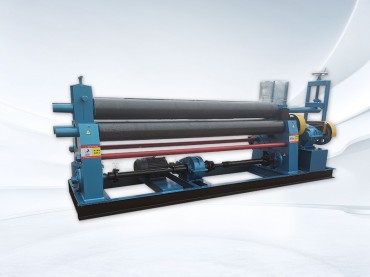
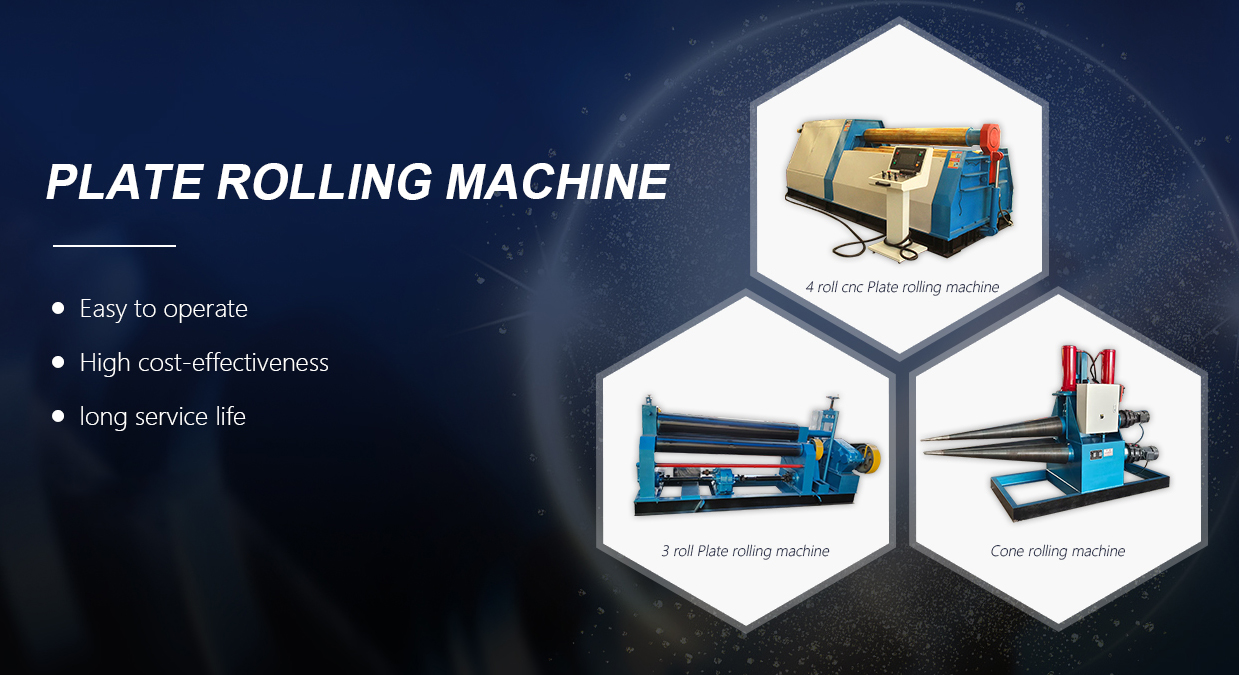
In modern manufacturing, particularly within the metalworking industry, mechanical plate rolling machines serve as common and vital equipment widely utilized in sheet metal forming processes. Their primary function involves physically curving metal sheets into circular or bent structures to meet diverse industrial requirements. Whether in construction, shipbuilding, pressure vessel manufacturing, or sectors like automotive and steel production, mechanical plate rolling machines play a crucial role. This article will explore the working principles, types, application domains, and significance of mechanical plate rolling machines in metal processing.
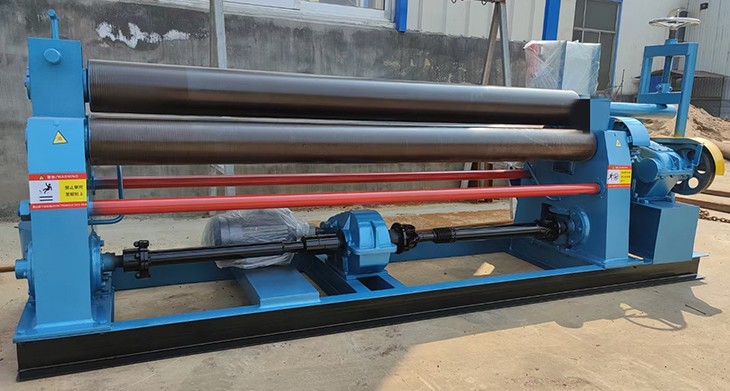
A mechanical plate rolling machine is a mechanically driven device for forming metal sheets. It primarily rolls thick plates, thin plates, and other metal sheets into circular or curved shapes, or forms them into shapes with specific curvatures. Its working principle involves gradually guiding the metal sheet through a three-roll or four-roll configuration, applying sequential compressive forces to progressively roll the sheet into desired cylindrical, conical, or other shapes. Typically composed of a support frame, drive unit, roll shafts, and an operating control system, mechanical plate rolling machines utilize hydraulic, mechanical, or electric drive mechanisms to ensure precise rolling and forming of metal sheets with varying materials and thicknesses.
The operational process of a mechanical plate rolling machine can be broadly divided into the following steps:
(1) Loading the metal sheet: First, position the metal sheet on the machine's worktable, using the support system to ensure stability.
(2) Sheet guidance: The metal sheet is guided by the upper or lower rollers into the working roller zone, typically driven by front and rear rollers.
(3) Rolling and forming: The machine's working rollers begin rotating, gradually applying pressure to initiate deformation of the metal sheet along the desired curve. By controlling roller rotation and pressure, the sheet is ultimately formed into a circular or curved shape.
(4) Completion of operation: Once the metal sheet is fully formed, the rolling machine automatically unloads the finished product, which can then undergo subsequent processing as needed.
Mechanical plate rolling machines are widely used across multiple industries, playing an irreplaceable role particularly in the following sectors:
(1) Construction Industry: In construction projects, plate rolling machines are primarily used to process building materials such as roof panels and wall panels. Especially in large industrial buildings, circular or curved metal sheets are often required for constructing pipelines, equipment housings, building facades, and more. Mechanical plate rolling machines efficiently shape metal sheets into required forms, meeting architectural design specifications.
(2) Shipbuilding Industry: During ship construction, hull plates typically require bending and rolling. Mechanical plate rolling machines accomplish the forming of large-sized ship plates. Whether for hulls, decks, or various ship components, high-precision rolling machine processing is indispensable.
(3) Pressure Vessel Manufacturing: Pressure vessels like boilers, gas cylinders, and storage tanks frequently require plate rolling. The application of mechanical plate rolling machines in these fields ensures the strength and stability of the vessels. Due to the special nature of pressure vessels, extremely high forming quality is required during the rolling process, which mechanical plate rolling machines achieve through precise operation.
(4) Steel Industry: Mechanical plate rolling machines are also extensively used in the steel industry for processes like steel plate processing, cold rolling, and hot rolling. The steel sector demands large volumes of rolled metal sheets, making these machines indispensable due to their high production efficiency.
(5) Automotive Manufacturing: In automotive production, particularly for body and chassis fabrication, plate rolling machines play a crucial role. Through mechanical plate rolling, steel plates can be formed into required curved shapes for manufacturing vehicle exteriors and internal structures.
Mechanical plate rolling machines are increasingly applied across metal processing, providing modern manufacturing with efficient and precise sheet metal forming solutions. With continuous technological advancements, these machines will continue to play vital roles across multiple industries, helping sectors enhance production efficiency, reduce costs, and drive industrial upgrading and development.
If you are interested in mechanical plate rolling machines, please contact us. We will recommend suitable equipment and provide a quotation.
 Address:Room 1202, Detaitang Building, No. 118 Huaguang Road, Zhangdian District, Zibo, Shandong
 WhatsApp:+8615653328535
 Wechat: +8615965331535
  E-mail:zs@sdsmachinery.com