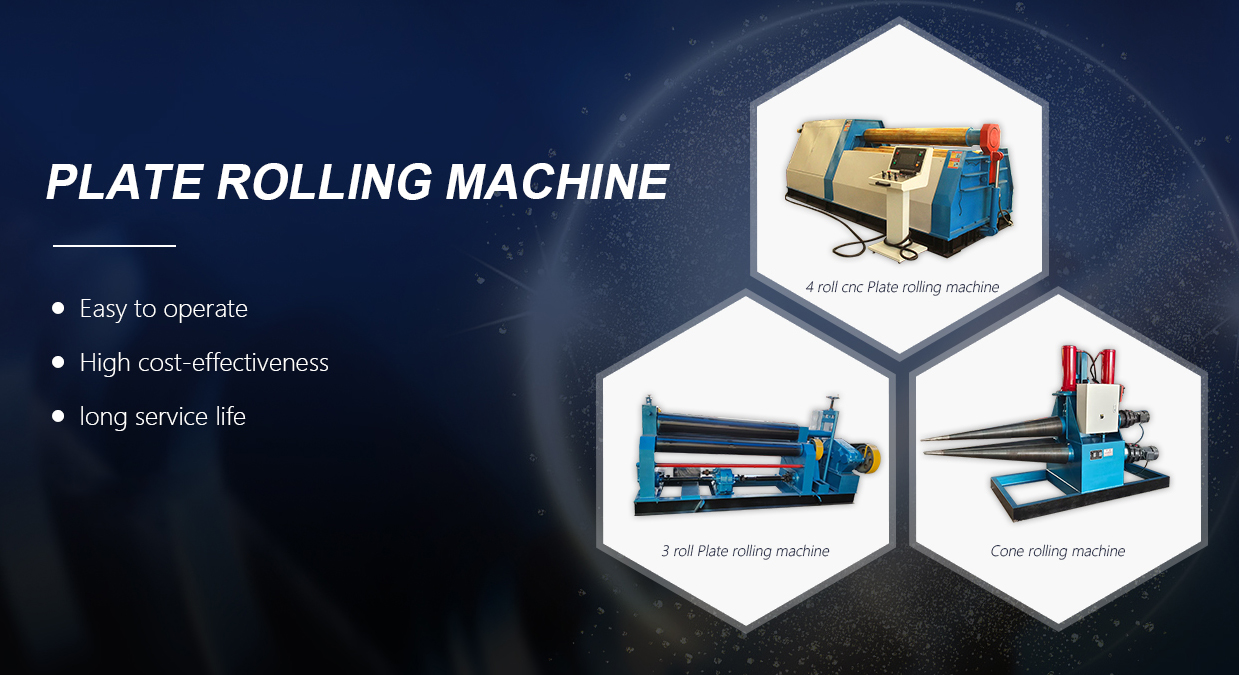
In the metal processing and manufacturing industry, plate rolling machines have always played a crucial role, capable of bending and rolling metal materials such as steel plates, aluminum plates, and stainless steel plates into circular, arched, or other curved structures. Among these, mechanical plate rolling machines remain a common choice for many small and medium-sized manufacturing enterprises due to their advantages of simple structure, convenient operation, and low maintenance costs. As manufacturing demands continue to grow, the functionality of mechanical plate rolling machines has been continuously optimized, making them indispensable core equipment in plate metal forming processes. This article will delve into the primary functions and industry significance of mechanical plate rolling machines, analyzing aspects such as structural characteristics, core functions, processing capabilities, and application value.
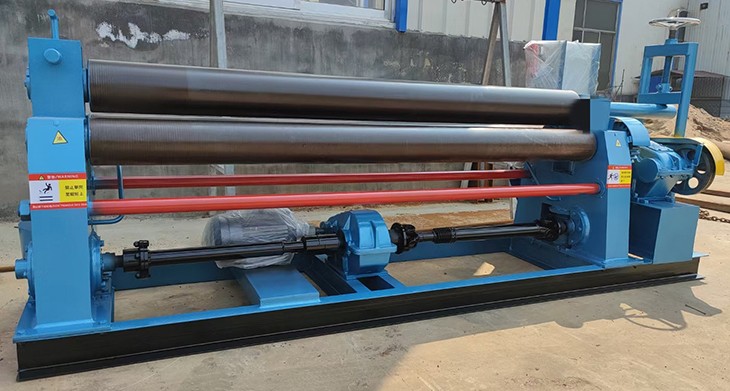
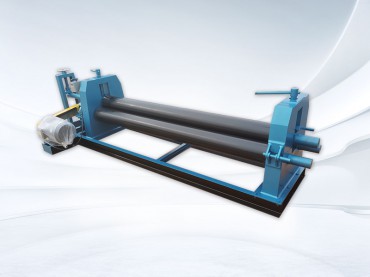
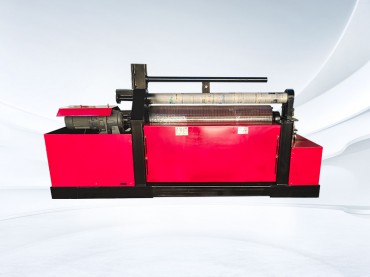
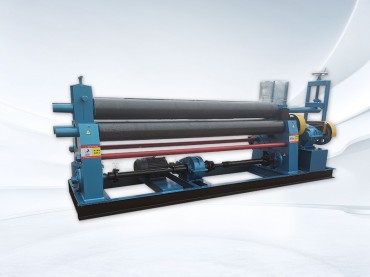
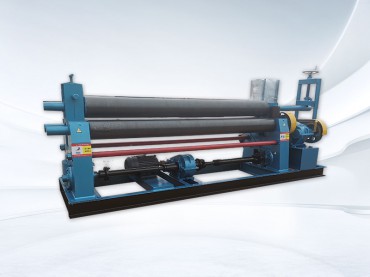
Mechanical plate rolling machine typically feature a three-roll configuration comprising an upper roll and two lower rolls. These rolls generate relative motion through mechanical transmission to achieve plate rolling. Key structural features include:
The most common configuration, where two lower rolls support the plate while the upper roll applies pressure, progressively inducing plastic deformation in the steel plate.
Primarily utilizing motors, reducers, and gear drives, this design offers simplicity and low failure rates.
Provides uniform and stable bending pressure for medium-to-thin plates.
Compared to hydraulic plate rollers, its mechanical structure is clearer, with highly interchangeable spare parts and lower maintenance costs.
These structural characteristics endow mechanical plate rollers with the durability and reliability suitable for widespread factory use.
The primary functions of mechanical plate rolling machine focus on plate bending and forming, specifically encompassing the following aspects:
This is the most fundamental and widely used function of plate rollers.
By adjusting the downward pressure of the upper roll, the plate metal is repeatedly rolled between the three rolls to form cylindrical structures of various diameters. Typical applications include: storage tank shells, chimney cylinders, pipe sections, boiler cylinders, and transport container shells.
Whether processing large cylinders or small-diameter thin-walled components, mechanical plate rolling machines can efficiently complete the task.
For non-circular structures like semicircles, curved segments, or curved surfaces, mechanical plate rollers achieve the desired curvature through multiple rolling passes.
This function is commonly used for: architectural decorative arcs, bridge arch structures, and curved casings for mechanical equipment.
Operators can adjust upper roller pressure and pass count to achieve precise curvature according to processing requirements.
Some mechanical plate rollers feature basic end pre-bending capabilities to minimize straight end sections, resulting in a more uniform cylinder shape post-rolling.
While less precise than hydraulic plate rollers, this functionality meets the requirements for most standard processing needs.
Certain applications require forming plates into composite curved surfaces with varying radii, such as a large arc segment combined with a small arc segment. Mechanical plate rollers achieve this through segmented pressure application.
This feature is commonly used for: ductwork curved sections, specialized equipment housings, and decorative curved components. By appropriately adjusting the operational sequence, relatively complex curved surfaces can be formed.
After rolling, mechanical plate rollers perform repeated rolling passes to refine the workpiece's roundness and seam alignment. This process ensures smoother surfaces and tighter dimensional tolerances.
This is particularly critical for pressure vessels, high-precision pipe sections, and welded cylinders, directly enhancing product aesthetics and fit accuracy.
Although mechanical plate rollers are traditional equipment, they still offer distinct advantages:
(1) Suitable for processing medium-to-thin plates: Typically handles plate thicknesses of 1–12mm, with rolling diameters varying by model to meet standard requirements across most industries.
(2) Simple operation with quick learning curve: Requires no complex electrical control systems; workers can master operation after basic training, making it ideal for factories with high staff turnover.
(3) Low cost and minimal investment: Equipment procurement costs are approximately 30%–50% lower. Maintenance is straightforward, failure rates are lower, making it highly suitable for start-up factories and small-to-medium enterprises.
(4) Stable, durable, and adaptable: With a simple structure and strong wear resistance, mechanical plate rolling machines maintain stable operation even in dusty or less-than-ideal workshop environments.
Thanks to their reliable structure and robust processing capabilities, mechanical plate rollers are widely used in: ventilation duct manufacturing, boiler and pressure vessel industries, automotive and construction machinery shell processing, metal structural component fabrication, environmental protection equipment, dust collector housing production, agricultural machinery, industrial equipment manufacturing, and exterior component rolling. Whether forming cylindrical parts, curved sections, or plate metal shaping, mechanical plate rollers excel as essential foundational equipment in the metalworking industry.
As vital equipment in metal forming processes, mechanical plate rolling machines maintain enduring vitality in manufacturing due to their reliability, durability, and cost-effectiveness. They play a pivotal role not only in cylinder and arc processing but also provide stable, efficient plate forming capabilities across diverse industries. With evolving market demands, mechanical plate rolling machines will continue to hold significant importance in metal processing, serving as trusted rolling equipment for numerous enterprises.
If you are interested in plate rolling machines, please contact us. We will recommend suitable machines and provide quotations.
 Address:Room 1202, Detaitang Building, No. 118 Huaguang Road, Zhangdian District, Zibo, Shandong
 WhatsApp:+8615653328535
 Wechat: +8615965331535
  E-mail:zs@sdsmachinery.com