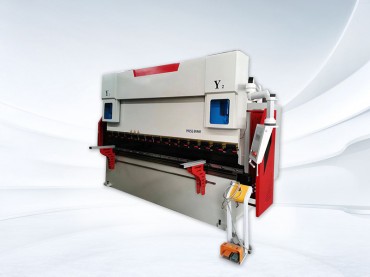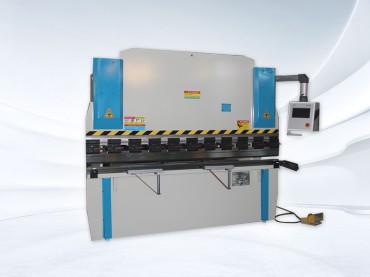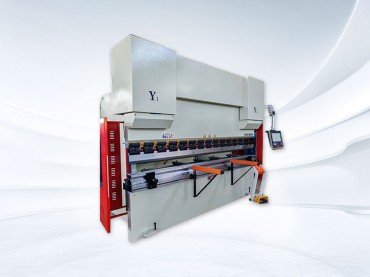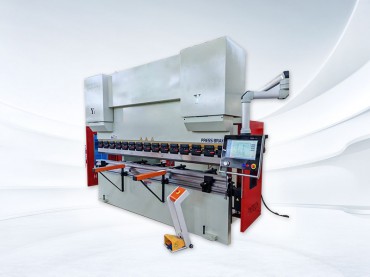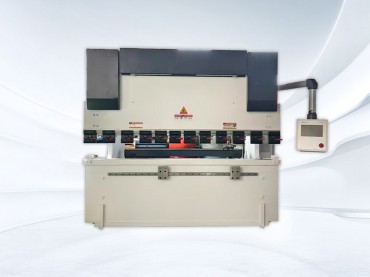
In the metalworking industry, press brakes are indispensable equipment in sheet metal forming processes, widely used across various sectors including architectural steel structures, machinery manufacturing, home appliances, automotive components, and power equipment. For many first-time users encountering this machinery, a common question arises: Are press brakes difficult to operate? Does it require a high technical threshold? In reality, with technological advancements and increasing levels of equipment intelligence, the operational difficulty of press brakes is steadily decreasing, making their learning and use increasingly user-friendly.
Early mechanical press brakes and standard hydraulic press brakes heavily relied on operator experience. Operators needed extensive hands-on experience to judge bending angles, return positions, and sheet springback, making the debugging process relatively cumbersome. Without sufficient experience, issues like angle deviations and dimensional instability were common. Consequently, in the era of traditional equipment, press brakes were often regarded as “technical machines” requiring skilled workers for stable operation, which reinforced the perception that “press brakes are difficult to operate.”
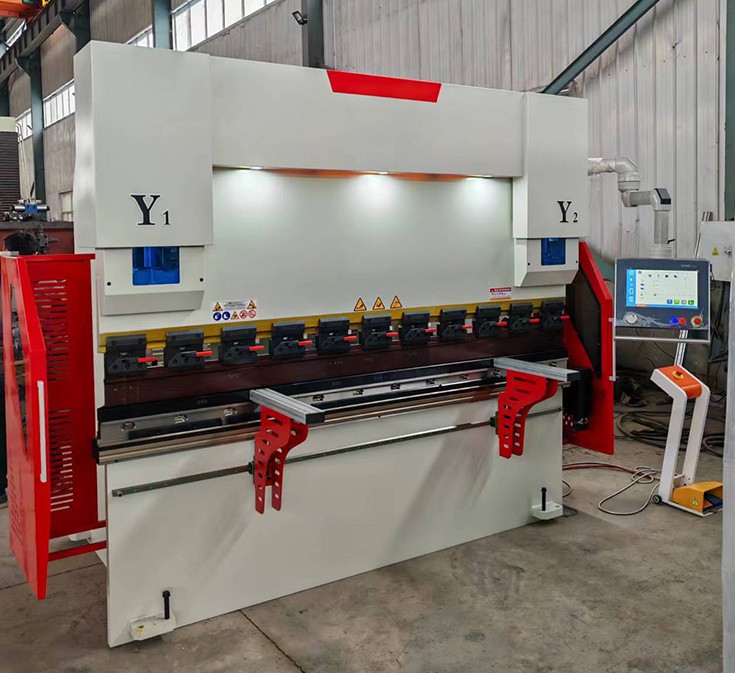
With the maturation of CNC technology and hydraulic control systems, modern CNC press brakes have completely transformed this landscape. CNC press brakes precisely control critical parameters such as ram stroke, backgauge position, and bending angle through their CNC systems. Operators need only input relevant data into the system to complete most tasks. In actual production, the operational workflow typically involves: selecting a program, inputting sheet metal parameters, calling up die parameters, and starting the equipment. This process features clear logic and high repeatability, substantially reducing errors caused by manual judgment. Operators with basic training can become proficient in a short time.
Modern press brakes prioritize “human-machine friendliness” in their design. Many machines feature graphical user interfaces supporting bending process simulation, allowing operators to preview results before actual production and avoid waste from trial-and-error adjustments. Additionally, functions like automatic angle compensation, pressure calculation, and multi-axis control enable the machine to automatically adjust parameters based on material thickness and length. These intelligent features further reduce reliance on operator experience, making the bending process more stable and controllable.
It is important to emphasize that whether a press brake is “difficult to operate” depends not only on the equipment itself but also closely on training and management. Reputable manufacturers typically provide installation and commissioning, operator training, and technical guidance to help users quickly master equipment operation. As long as operators strictly follow operating procedures and understand the equipment's basic principles and safety requirements, press brakes are not inherently difficult to master. On the contrary, under standardized management, press brakes are industrial equipment with clear operational logic and high repeatability.
Modern press brakes also feature significant enhancements in safety protection. Multiple safety configurations—including photoelectric protection devices, two-hand start systems, and emergency stop mechanisms—effectively reduce the risk of misoperation. This not only safeguards personnel but also instills greater confidence in novice operators, psychologically diminishing apprehension toward the equipment.
Overall, whether a press brake is difficult to operate depends largely on the equipment type and usage method. Traditional machines demand more experience, but modern CNC press brakes have significantly reduced operational complexity through automation and intelligent design. With standardized training and familiarity with operational procedures, most operators can achieve proficiency within a relatively short timeframe. As manufacturing evolves toward intelligent and standardized practices, press brakes are transforming from “experience-dependent equipment” into “easy-to-learn, efficient tools.” This shift provides robust support for businesses aiming to lower labor barriers and enhance production efficiency.
If you're interested in press brakes, please contact us. We'll recommend suitable machines and provide a quote.
 Address:Room 1202, Detaitang Building, No. 118 Huaguang Road, Zhangdian District, Zibo, Shandong
 WhatsApp:+8615653328535
 Wechat: +8615965331535
  E-mail:zs@sdsmachinery.com