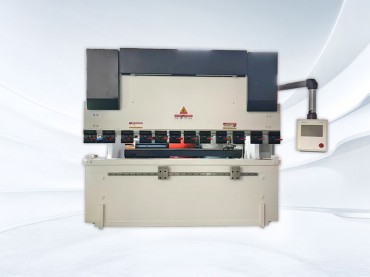
As modern manufacturing continues to evolve toward automation, intelligence, and high precision, the processing of sheet metal demands higher standards for machining accuracy, production efficiency, and product consistency. Bending—a critical process in sheet metal fabrication—is widely used across sectors such as mechanical engineering, the automotive industry, electrical equipment manufacturing, architectural decoration, home appliance production, and the fabrication of metal structural components. While traditional bending equipment can handle basic sheet-forming tasks, it often requires significant manual intervention when dealing with complex workpieces, batch production, or the need for high-precision control.
CNC press brakes have emerged as a vital metal-forming solution to meet these production requirements. By utilizing a CNC system to control the ram (slide), backgauge, and other motion axes, these machines execute precise sheet positioning and bending sequences based on pre-programmed instructions, allowing metal sheets to be shaped into specific angles and forms according to design specifications. Compared to conventional bending equipment, CNC press brakes offer distinct advantages in terms of machining accuracy, ease of operation, production efficiency, and repeatability.
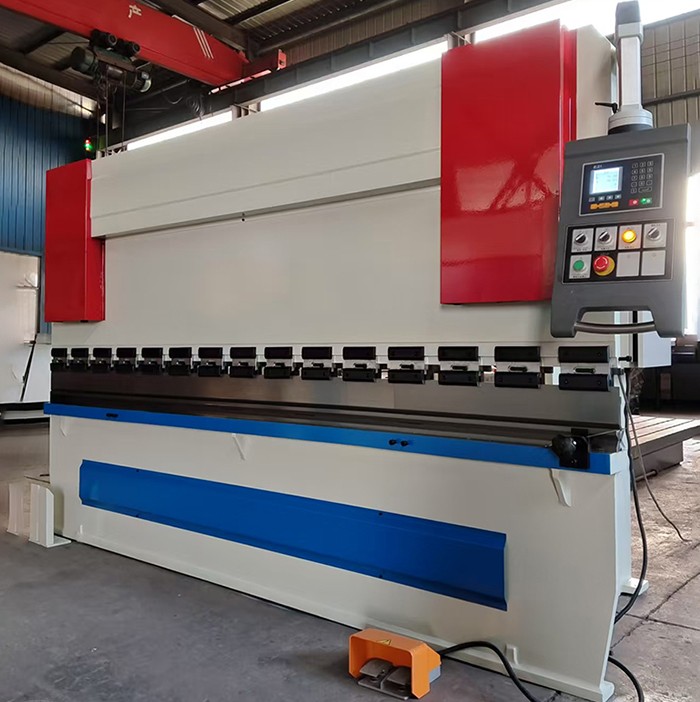
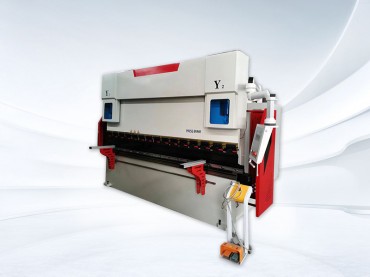
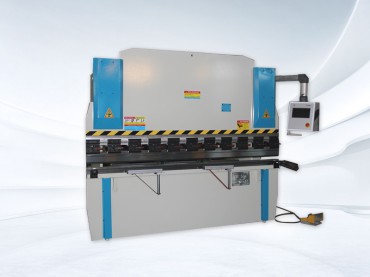
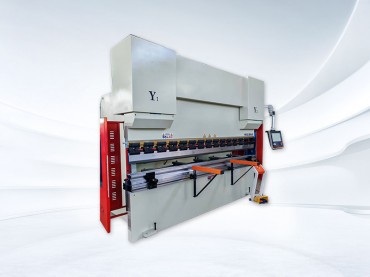
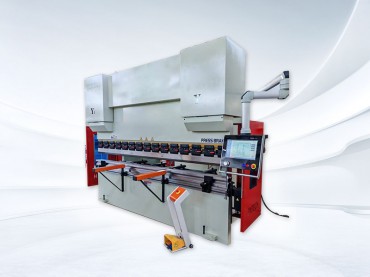
A CNC press brake is a machine that uses a computer numerical control system to govern mechanical movement for the purpose of bending sheet metal. It typically consists of a frame, a worktable, a ram (slide), a hydraulic or electric drive system, upper and lower dies (tools), a backgauge assembly, and a CNC control unit. During operation, the user inputs parameters—such as sheet thickness, material type, bend length, bend angle, and the processing sequence—based on the workpiece drawings. The CNC system then calculates or retrieves the appropriate program, directing the machine’s moving components to operate at precise positions and speeds. The upper die descends, pressing the sheet metal into a V-shaped groove (or another die configuration) in the lower die. Under this external force, the sheet undergoes plastic deformation, resulting in the desired bend angle.
A CNC press brake does not merely rely on raw force to bend a sheet; rather, it precisely manages pressure, stroke, position, and other processing parameters to ensure the sheet deforms in a controlled, predetermined manner between the dies. The control precision of the equipment, the condition of the tooling (dies), material properties, and operational parameters all influence the final processing outcome.
(1)The operator inputs the parameters for the workpiece to be processed into the CNC system. Based on information such as the sheet thickness, length, material properties, and the target bending angle, the system configures the relevant processing parameters—including the ram stroke, bending position, backgauge position, and the sequence of operations.
(2)The backgauge mechanism moves to a designated position, serving as a reference for positioning the sheet metal. The operator places the sheet on the machine bed, ensuring its edge aligns accurately with the backgauge. Proper positioning minimizes dimensional deviations and ensures consistency across different workpieces.
(3)Once the sheet is positioned, the equipment’s drive system is activated. In a hydraulic CNC press brake, the hydraulic pump and control valves—following commands from the CNC system—regulate the flow and pressure of the hydraulic fluid. This causes the hydraulic cylinders to drive the ram (slide) downward. The upper die, mounted on the ram, descends toward the sheet and gradually applies pressure.
(4)Subjected to the combined force of the upper and lower dies, the sheet begins to undergo bending deformation. As the ram continues its downward movement, the sheet is pressed into the V-groove of the lower die, increasing the degree of the bend. When the ram reaches the pre-set position, the sheet takes on a shape approximating the target angle.
(5)It should be noted that metal sheets typically exhibit a degree of "springback" after bending. In other words, once the external pressure is removed, the material’s inherent elasticity causes it to recover slightly, resulting in a change in the bend angle. Consequently, in practical operations, the CNC system and the operator must apply appropriate compensation to the bending stroke or angle—factoring in material characteristics, sheet thickness, tooling parameters, and operational experience—to ensure high precision in the final formed part.
(6)Once the bending process is complete, the ram returns to its initial (upward) position. The operator then removes the workpiece or proceeds to the next bending step as defined by the program. Through a series of sequential processing steps, a flat metal sheet can be gradually transformed into boxes, brackets, enclosures, frames, and other complex structural components.
The CNC system serves as the control center for the entire machine. It is responsible for receiving processing data, executing machining programs, and coordinating the movement of various axes. Operators can input parameters—such as sheet specifications, bending angles, dimensions, and the sequence of operations—via the CNC interface. Advanced CNC systems often include features like graphical programming, automated bending sequence calculation, tooling management, workpiece simulation, and data storage. Operators can create machining programs directly from product blueprints, which reduces the need for repetitive parameter entry. The functionality and user interface of the CNC system significantly influence the machine's ease of use. For sheet metal processing companies that frequently switch between different product specifications, selecting a control system tailored to their specific production needs is crucial.
The frame acts as the primary load-bearing structure of the CNC press brake, supporting the worktable, ram (slide), hydraulic system, and other critical components. During the bending process, the machine must withstand substantial operational loads; therefore, the frame must possess sufficient strength and rigidity. A well-designed frame minimizes deformation under stress, ensuring the machine maintains a stable processing state. For equipment designed to handle large-sized sheets, the frame design must also account for the distribution of forces across the entire machine and the stability of the working area.
The ram is a key component that holds the upper die and performs the bending motion. Controlled by the CNC system, the ram moves downward at a specified position and speed to apply pressure to the metal sheet; once the bend is complete, it returns to its initial position. The precision of the ram’s movement directly affects the bending angle and the final dimensions of the workpiece. Consequently, the machine must be equipped with a reliable guidance structure and motion control system.
The drive system provides the power required for the operation of the CNC press brake. A hydraulic CNC press brake typically consists of components such as a hydraulic pump, hydraulic cylinders, control valves, an oil tank, and a network of hydraulic piping. Hydraulic systems control the speed, position, and working pressure of the ram (slide) by regulating the pressure and flow rate of the hydraulic fluid. Electric CNC press brakes, by contrast, typically utilize servo motors, ball screws, or other mechanical transmission mechanisms to achieve motion control. While their drive methods differ from those of hydraulic equipment, they likewise require precise positioning and stable movement in accordance with the processing program.
The backgauge system is primarily used to determine the positioning of the sheet metal on the machine bed. It generally consists of gauge fingers, a support structure, and a drive mechanism, allowing it to move forward or backward based on the required dimensions. In multi-stage bending operations, the backgauge system can automatically adjust its position according to the program, ensuring that the sheet metal is correctly positioned for each successive step; this enhances both production efficiency and processing consistency.
Dies are the critical components of a CNC press brake that come into direct contact with the sheet metal. The upper die is typically mounted on the ram, while the lower die is secured to the machine bed. During operation, the upper die descends, pressing the sheet metal into the groove of the lower die to induce bending deformation. The shape, opening size, angle, and load-bearing capacity of the dies all influence the final bending result. Common types include acute-angle (knife-edge) punches, gooseneck punches, straight punches, and various V-opening dies. The appropriate dies must be selected based on factors such as sheet thickness, the desired bending angle, and the structural characteristics of the workpiece.
Before processing, the operator must examine the design drawings to confirm the material, thickness, width, bending length, bending angles, and the dimensions of each bent edge. For complex workpieces, it is also necessary to determine an optimal bending sequence to prevent any interference between the workpiece, the machine, or the tooling during the process.
The upper and lower dies are selected based on the sheet thickness, material strength, bending angle, and the shape of the workpiece. The opening size of the die must be matched to the material being processed and the specific bending requirements. Choosing the wrong tooling can lead to deviations in bending angles, surface indentations on the sheet metal, or localized deformation.
Enter the relevant workpiece data into the CNC system, including sheet thickness, material type, bend length, bending angle, and required dimensions. Depending on the equipment configuration, the system can assist in calculating the bending program and setting parameters such as ram position, backgauge position, and other motion-related variables.
Install the upper and lower dies according to the manufacturer’s specifications for the equipment and tooling. Verify that the dies are securely fastened, ensure the work area is free of foreign objects, and confirm that all machine systems are functioning correctly. Once installed, verify the positioning and compatibility of the dies.
Place the sheet metal on the worktable and position it according to the backgauge settings defined in the CNC system. Ensure the sheet lies flat and stable, avoiding any tilting, shifting, or inadequate support.
After confirming the processing program and parameters, a trained operator should initiate the operation in accordance with the equipment’s operating procedures. The CNC system controls the ram and backgauge, coordinating the upper and lower dies to gradually bend the sheet metal to the target angle.
Once bending is complete, inspect the workpiece for bending angle accuracy, dimensions, surface quality, and overall shape. For products requiring high precision, use appropriate measuring tools for verification. If any deviations in angles or dimensions are detected, analyze factors such as the material, tooling, positioning, and machine parameters before adjusting the processing program according to established standards.
If a workpiece requires multiple bends, continue the process according to the established program. Once all bending steps are finished, perform a final inspection of the product and route it to the next stage of production as required.
In the automotive manufacturing process, many structural body components, brackets, connectors, and metal housings require sheet metal bending. CNC press brakes can process metal components into various shapes according to design specifications, providing the foundation for subsequent welding, assembly, and surface treatment processes.
Power distribution cabinets, control cabinets, electrical enclosures, and equipment housings are typically composed of multiple metal sheets that require cutting, bending, welding, and assembly. CNC press brakes are used to process side panels, base plates, doors, and internal support structures, ensuring consistency in product dimensions and structural integrity.
In the fields of architectural decoration and metal structural fabrication, CNC press brakes are used to process metal curtain wall panels, decorative panels, roofing components, metal door and window fittings, and structural supports. For long workpieces or parts requiring repetitive processing, properly configured CNC equipment significantly enhances production efficiency.
Appliances such as refrigerators, washing machines, and air conditioners incorporate numerous metal housings and internal structural components. These parts generally require precise bending to meet requirements for external dimensions, assembly clearances, and structural strength.
The frames, housings, protective covers, mounting brackets, and connecting plates used in various types of machinery often require bending. CNC press brakes can perform a wide range of bending tasks tailored to the specific structural requirements of different products, making them suitable for high-mix, low-volume production as well as mass production.
(1) Select the appropriate machine tonnage and tooling based on the material, thickness, and dimensions of the metal sheet. Since different materials vary in strength and deformation characteristics, the required bending capacity cannot be determined solely by sheet thickness; it must be assessed by considering the bending length, tooling parameters, and technical data provided by the manufacturer.
(2) Pay close attention to the installation and maintenance of tooling. Tooling must be kept clean and free from significant wear, cracks, or deformation. Using mismatched or unsuitable tooling not only compromises processing precision but also increases the load on both the machine and the tools themselves.
(3) Operators must be familiar with the basic functions of the CNC system and ensure that the input parameters for the sheet metal, bending dimensions, and processing programs are correct. Before commencing full-scale batch production, a first-article inspection must be conducted in accordance with process requirements to verify that the processed parts meet specifications.
(4) Regular inspections of the hydraulic system, electrical system, lubrication points, and mechanical connections are required. For hydraulic CNC press brakes, attention should be paid to the condition of the hydraulic oil, pipeline connections, and overall system operation; for electric CNC press brakes, the servo drives and transmission mechanisms should be inspected according to the manufacturer’s specifications.
(5) Strict adherence to safety protocols is mandatory during equipment operation. Operators must undergo professional training and are prohibited from placing their hands or any other part of their body into the tooling work zone. Furthermore, adjustments to the tooling or the removal of foreign objects while the equipment is in operation are strictly forbidden. Installation, repair, and maintenance tasks must be performed in compliance with the equipment manual and relevant safety regulations.
CNC press brakes primarily utilize a CNC system to control the ram (slide), backgauge, and drive mechanisms. This allows the upper and lower dies to apply pressure to sheet metal according to a pre-programmed sequence, enabling the creation of bends with various angles and shapes. The operational process encompasses several stages, including parameter input, sheet metal positioning, forming via tooling, angle control, and quality inspection. Compared to traditional bending equipment, CNC press brakes offer superior management of processing programs, enhanced repeatability in positioning, and higher production efficiency. They are widely used across various sectors, including automotive manufacturing, electrical equipment production, architectural decoration, home appliance manufacturing, and general mechanical machining.
For sheet metal processing enterprises, a thorough understanding of the operating principles, components, and processing requirements of CNC press brakes facilitates informed equipment selection, the optimization of production workflows, and the improvement of product quality. As CNC and automation technologies continue to advance, CNC press brakes will play an increasingly vital role in the field of modern sheet metal processing.
 Address:Room 1202, Detaitang Building, No. 118 Huaguang Road, Zhangdian District, Zibo, Shandong
 WhatsApp:+8615653328535
 Wechat: +8615965331535
 E-mail:zs@sdsmachinery.com