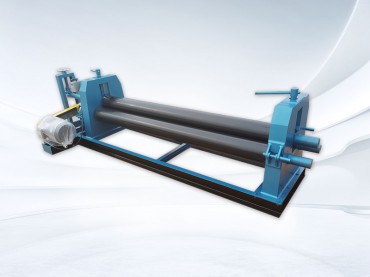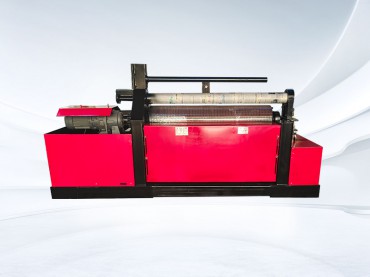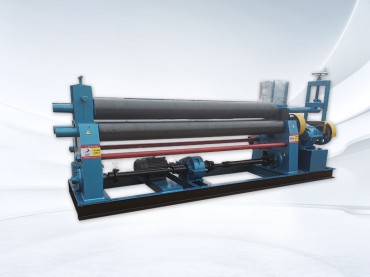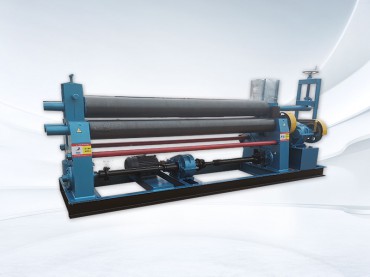
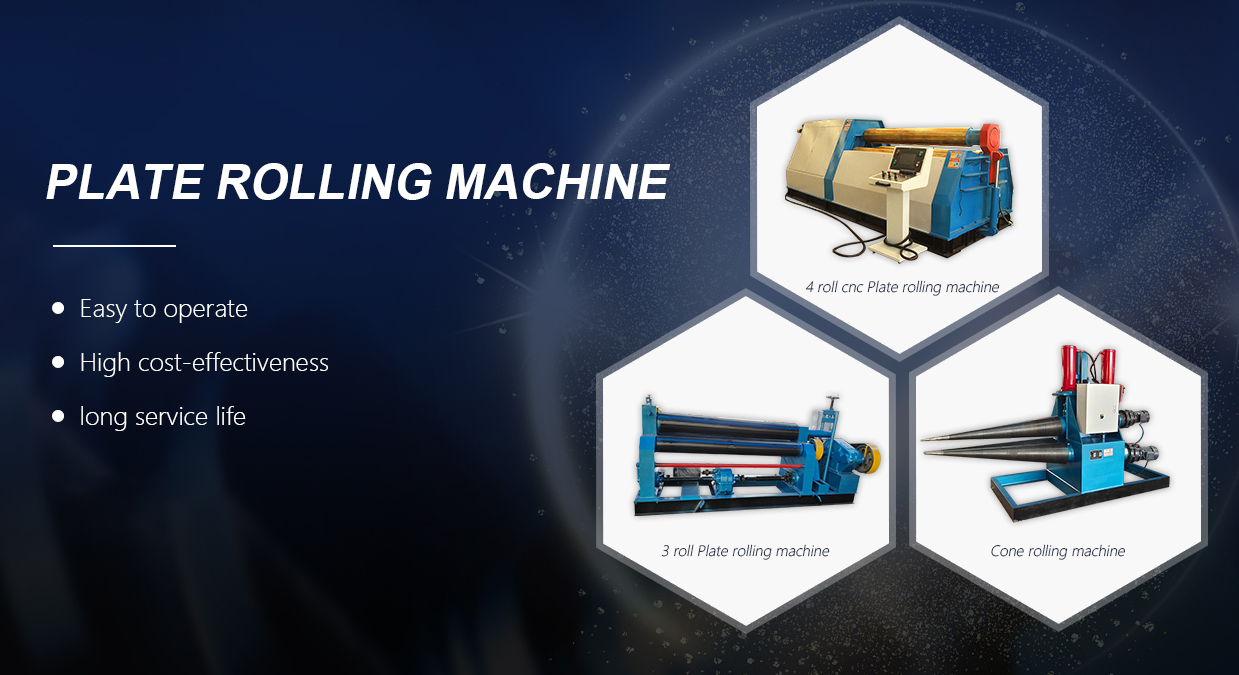
With the advancement of modern manufacturing, metal plate processing plays a vital role in sectors such as mechanical engineering, construction, energy equipment, shipbuilding, and the production of pressure vessels. In these manufacturing processes, many products require not only cutting, punching, and bending, but also the transformation of flat metal plates into cylinders, arcs, or other curved structures. Metal plate rolling machines—often referred to simply as plate rollers or plate-bending machines—are essential pieces of equipment for these tasks.
A metal plate rolling machine is primarily used to continuously bend metal plates, gradually shaping flat sheets into desired arcs, cylinders, or other curved forms. Depending on their structural design, the number of rollers, and the control system employed, these machines can accommodate a wide range of plate thicknesses, widths, and material types.
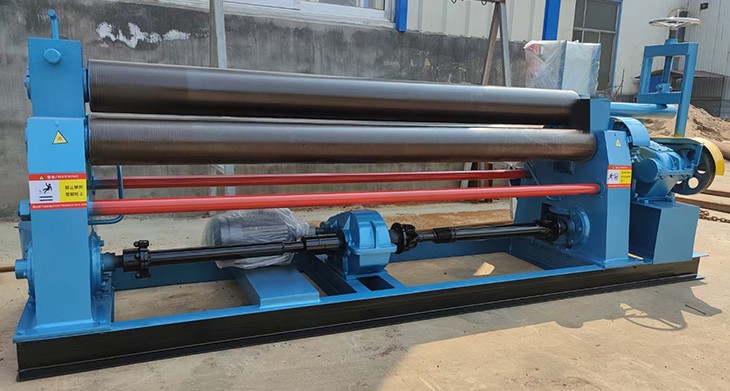
A metal plate rolling machine is a mechanical device that utilizes pressure and the relative motion between rollers to induce plastic deformation (bending) in metal plates. Its primary function is to transform flat metal plates into cylinders, arcs, cones, or other curved structures that meet specific design requirements. These machines typically consist of working rollers, a drive system, a frame, a hydraulic or mechanical transmission system, and an electrical control system. During operation, a metal plate is fed between the rollers; the combined effect of the pressure exerted by the rollers and their rotational motion causes the plate to bend gradually until it achieves the desired curvature.
Based on the number and arrangement of the rollers, the most common types are three-roll and four-roll plate rolling machines. Three-roll machines feature a relatively simple design and are suitable for a variety of standard rolling tasks. Four-roll machines generally offer superior plate clamping and positioning capabilities, making them well-suited for applications that demand higher levels of processing efficiency and precision.
Furthermore, based on their drive and control mechanisms, plate rolling machines can be categorized as mechanical, hydraulic, or CNC (computer numerical control) types. These different configurations vary in terms of processing capacity, level of automation, operational methods, and scope of application.
Rolling flat plates into cylinders is one of the most common applications for plate rolling machines. During the process, the equipment applies pressure to the metal plate via multiple rollers, gradually shaping it into a circular or near-circular cross-section. Cylindrical structures are widely used in industrial production, including storage tanks, metal shells, pipe casings, equipment housings, and various container components.
In the manufacturing of storage tanks, for instance, steel plates are rolled into cylindrical sections of a specified diameter—based on design dimensions—and subsequently joined (typically via welding) to form a complete tank structure. The specific plate rolling machine selected must have the capacity to handle the required diameters and thicknesses of the workpieces.
Beyond full cylinders, plate rolling machines can also be used to produce various types of curved metal plates. Examples include curved metal panels for architectural decoration, arched casings for mechanical equipment, and curved components for engineering structures. Compared to flat plates, curved plates accommodate unique structural design requirements, offering significant utility in fields such as architectural design, equipment manufacturing, and industrial engineering.
During processing, operators must adjust equipment parameters—accounting for the target radius, plate thickness, and material properties—to minimize issues such as uneven bending or deviations in curvature.
With the appropriate equipment configuration and processing techniques, certain plate rolling machines can be used to create conical or near-conical metal structures. Conical components—characterized by a larger diameter at one end and a smaller diameter at the other—are frequently found in industrial vessels, hoppers, pipe fittings, and specialized equipment parts. Processing conical plates places specific demands on the machine’s design, the adjustment mechanisms of the rollers, and the operator’s expertise. For enterprises that frequently produce conical components, specialized cone-rolling machines may be a more suitable choice to meet varying requirements for taper and dimensions.
Many industrial pieces of equipment require cylindrical or curved metal shells. Plate rolling machines are capable of shaping metal plates into curved components, providing the foundation for subsequent processes such as welding, assembly, and surface treatment. For instance, the shells of various industrial storage units, dust collection systems, filtration equipment, and chemical processing apparatus often require plate rolling. Equipment manufacturers can select the appropriate rolling machine—based on product dimensions and material specifications—to fabricate cylindrical bodies and shells of various sizes.
In large-scale engineering projects and heavy machinery manufacturing, metal structural components may feature significant width, thickness, or diameter. Plate rolling machines can be used to process thick plates and large curved components, provided these fall within the machine's operational capacity. Examples include large storage tanks, industrial piping, energy equipment, and structural components for ships—all of which require a plate-rolling stage.
When processing thick plates, key parameters such as maximum rolling thickness, effective working width, roll diameter, drive capacity, and frame rigidity must be carefully considered. A machine's processing capability cannot be determined solely by its name or appearance; it must be verified against the specific specifications of the plate and the target rolling diameter.
Metal plate rolling machines primarily utilize the principle of plastic deformation to shape metal materials. When a plate is subjected to pressure from the rollers, internal bending stresses are generated. Once the external force reaches a certain threshold, the material undergoes plastic deformation, retaining its curved shape even after the force is removed. While the specific operational methods vary by machine type, the fundamental principle remains the same: controlling the bending process through the relative positioning of the rollers, the application of pressure, and rotational movement.
In a typical rolling process, equipment parameters are first configured based on the material, thickness, and width of the plate, as well as the target diameter. The plate is then positioned between the working rollers; through clamping and adjustment, it is gradually guided into a curved state. As the rollers continue to rotate, the plate advances, undergoing progressive bending deformation. Operators adjust the roller positions and processing parameters as needed until the desired curvature is achieved.
In actual production, the phenomenon of "springback" (elastic recovery) must also be taken into account. Metal materials may exhibit a certain degree of shape recovery after unloading; consequently, the final bending radius may differ from the radius maintained while the material is under load. Controlling this "springback"—often through trial runs, parameter adjustments, and the application of process expertise—is essential for ensuring dimensional accuracy in the finished parts.
The manufacturing of pressure vessels and industrial storage tanks is a primary application for plate rolling machines. Many such vessels require steel plates to be formed into cylindrical shells, which are subsequently welded, inspected, and assembled into the final product. Industrial storage tanks, cylindrical sections for pressure vessels, and the outer shells of large-scale containers are all examples of components that may require plate rolling.
These products typically demand high standards regarding plate thickness, roundness, dimensional precision, and weld quality. Therefore, manufacturers must select an appropriate plate rolling machine based on material specifications, design standards, and their own production capacity.
It should be noted that while plate rolling machines are used to form curved components—such as cylindrical shells—they cannot replace other critical stages in pressure vessel manufacturing, such as welding, non-destructive testing, and quality inspection.
In the shipbuilding industry, many structural components feature curved or arched shapes. Plate rolling machines are used to process elements such as hull plating, cylindrical structures, and other metal components that fall within the machine's operational capabilities. Given that ship structures are often complex—with varying plate thicknesses, curvatures, and dimensions—the choice of processing equipment must be aligned with specific technical drawings and process requirements. For large-scale shipbuilding projects, the working width, thickness capacity, and operational stability of the rolling equipment directly influence production scheduling.
In construction, curved metal plates are frequently used for roofing, exterior facades, decorative elements, and various steel structural components. Plate rolling machines can shape metal plates into arcs with specific radii, enabling the realization of curved architectural designs. For instance, curved metal roofing or decorative panels are often employed in the construction of stadiums, exhibition centers, industrial facilities, and commercial buildings. In addition, certain cylindrical components and curved connecting parts used in steel structure projects may also require fabrication through plate rolling.
The manufacturing of equipment for the oil, gas, and energy sectors frequently involves the production of large metal vessels, piping components, and equipment housings. Plate rolling machines are used to process steel plates into the required cylindrical shapes and curved structures. For instance, various storage units, industrial piping components, and energy equipment casings often necessitate the use of plate rolling processes.
Given that these industries typically impose strict requirements regarding structural dimensions and manufacturing quality, the selection of equipment must carefully account for the material type, processing specifications, and relevant manufacturing standards.
Much of the equipment used in chemical production and environmental protection projects incorporates metal cylinders, storage vessels, and housings for filtration systems. Plate rolling machines are employed to shape steel plates into the curved components required for such equipment—including dust collection units, filtration devices, reactor shells, and industrial storage tanks. Because different chemical media demand varying levels of corrosion resistance, manufacturers must consider both the material type and the intended operating environment when selecting steel plates. It should be noted that while a plate rolling machine handles the forming process, it cannot substitute for proper material selection or subsequent anti-corrosion treatments.
In the field of machinery manufacturing, many pieces of equipment require circular or arc-shaped metal enclosures. Plate rolling machines are used to produce machinery covers, equipment cylinders, structural connectors, and other curved components. For manufacturers that need to produce items in a variety of custom dimensions, plate rolling machines offer a flexible forming solution; by adjusting processing parameters, a single machine can handle rolling tasks for different specifications—provided they fall within its operational capacity.
(1) Determine the maximum thickness and width of the plates to be processed. Different models of rolling machines have varying processing capacities; therefore, the equipment specifications must align with the materials used in actual production.
(2) Confirm the target rolling diameter. The rolling diameter influences the processing difficulty and the performance requirements for the equipment. In particular, when rolling cylinders with smaller diameters, it is crucial to verify that the equipment is capable of meeting the specific requirements.
(3) The material of the metal sheets must be determined. Carbon steel, stainless steel, aluminum, and other metals differ in terms of strength, ductility, and springback characteristics. Consequently, different materials of the same thickness may require varying levels of processing capacity.
(4) Consider the equipment’s structure and control system. For standard plate-rolling operations, a three-roll or four-roll plate-rolling machine can be selected based on specific production needs. If product specifications vary frequently or if there is a high demand for automation, options such as hydraulic control or CNC (computer numerical control) configurations should be considered.
(5) Attention should also be paid to the manufacturing quality of the equipment, the materials used for the rollers, the drive system, the electrical control system, safety protection devices, and after-sales service. For export procurement or long-term production projects, it is also important to evaluate whether the supplier can provide technical documentation, operational training, and spare parts support.
Proper operation and maintenance help ensure processing quality and extend the service life of the equipment.
(1) Before beginning any processing, check the operational status of the equipment, the condition of the roller surfaces, the hydraulic system, and the electrical control system to ensure everything is functioning correctly. Additionally, verify that the specifications of the metal sheets fall within the equipment’s permitted processing range.
(2) During the rolling process, follow the equipment’s operating instructions for feeding and adjustments, ensuring that the metal sheet is positioned level and remains properly aligned. For large or heavy sheets, use appropriate auxiliary support and handling equipment as required.
(3) Operators must strictly adhere to safety regulations and avoid placing their hands or any other body parts into the hazardous zones near the rollers. Never attempt to adjust or remove safety protection devices while the equipment is in operation.
(4) After completing the work, promptly clear any metal debris or foreign objects from the equipment surfaces. Follow the manufacturer’s requirements to inspect the lubrication, hydraulic, and transmission systems. Regular maintenance helps minimize equipment malfunctions and ensures consistent processing performance. A metal plate rolling machine is an essential piece of metal-forming equipment, primarily used to shape flat metal plates into cylinders, arcs, cones, and other curved structures. It is widely employed across various sectors, including the manufacturing of pressure vessels, storage tanks, ships, energy equipment, chemical and environmental protection systems, as well as general mechanical engineering and construction.
As industrial manufacturing demands increasingly precise dimensions, higher processing efficiency, and greater levels of automation, plate rolling machines have evolved to offer superior control accuracy, more flexible processing methods, and more comprehensive automated features. When selecting a metal plate rolling machine, manufacturers must carefully evaluate factors such as plate thickness, working width, material type, rolling diameter, and specific production processes. Ensuring that the equipment’s processing capabilities align with actual production requirements is key to successfully forming metal plates, boosting overall productivity, and establishing a reliable foundation for subsequent welding and assembly operations.
 Address:Room 1202, Detaitang Building, No. 118 Huaguang Road, Zhangdian District, Zibo, Shandong
 WhatsApp:+8615653328535
 Wechat: +8615965331535
 E-mail:zs@sdsmachinery.com