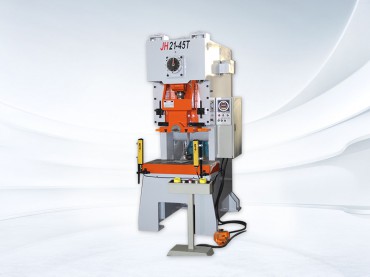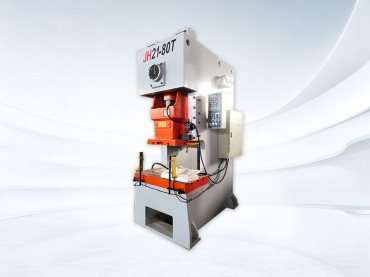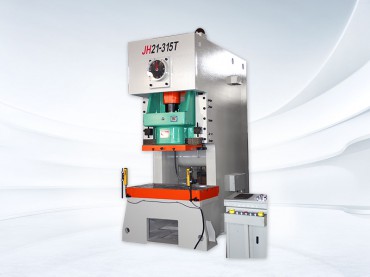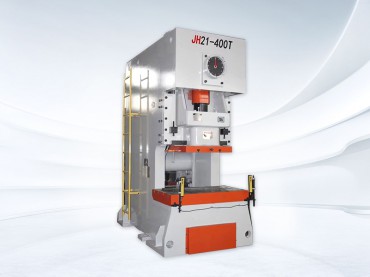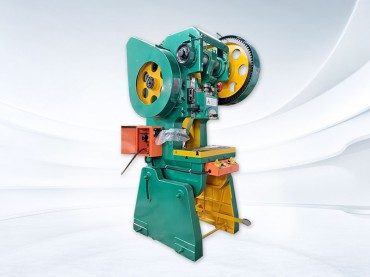
Punch presses are among the most important forming machines in the modern metalworking industry and are widely used in automotive manufacturing, home appliance production, electronics, hardware products, aerospace, building materials, and machinery manufacturing. By using different dies, punch presses can perform a variety of processing operations, including punching, blanking, trimming, bending, drawing, embossing, and forming, making them essential equipment for the high-efficiency, high-volume production of metal parts.
As the manufacturing industry continues to evolve toward intelligence, automation, and high precision, the variety of punch presses has also expanded. From traditional mechanical punch presses to modern CNC servo punch presses, and from small benchtop machines to large-scale, high-speed automated production lines, different types of punch presses can meet the demands of various materials, processes, and production scales.
A punch press is a machine that uses mechanical, hydraulic, or servo-driven force to apply pressure to sheet metal via dies, causing the material to undergo plastic deformation or separation, thereby producing the desired parts. A punch press primarily consists of a frame, a ram, a worktable, a drive system, a clutch, a brake, a motor, and a control system. During the processing, the die is mounted between the ram and the worktable. As the ram moves up and down, the die punches the material, thereby completing various processing operations.
Due to their high processing efficiency and excellent dimensional consistency, punch presses have become one of the core pieces of equipment in modern sheet metal processing production lines.
Based on their power source, punch presses can be primarily classified into the following types.
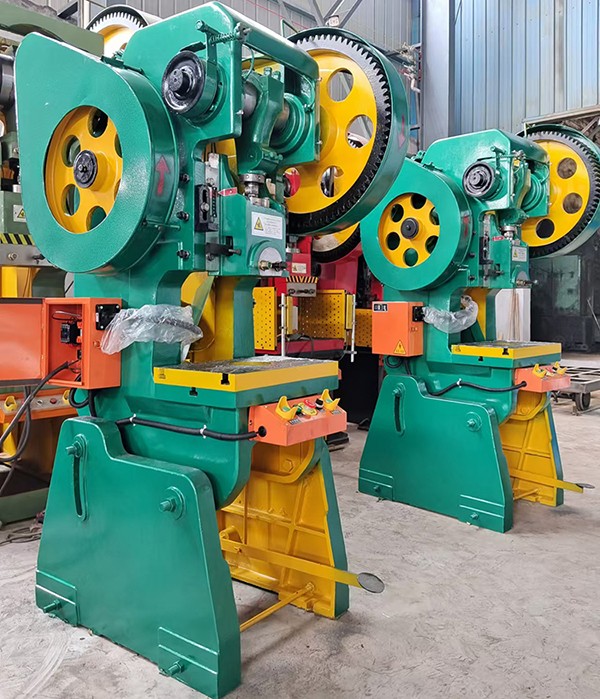
Mechanical punch presses are currently the most widely used type of press. They primarily rely on an electric motor to drive a flywheel, which in turn drives the ram up and down via mechanical transmission mechanisms such as a crankshaft and connecting rods.
Mechanical punch presses have the following characteristics: mature design; fast processing speed; high production efficiency; low maintenance costs; and suitability for continuous batch production.
Mechanical punch presses are widely used in industries such as hardware stamping, automotive parts, home appliance components, and the manufacture of metal structural parts. For general punching, blanking, and forming operations, mechanical punch presses offer high cost-effectiveness.
Hydraulic punch presses use a hydraulic system to provide power. The hydraulic cylinder drives the ram to perform the punching action. Compared to mechanical punch presses, hydraulic punch presses have the following advantages: stable pressure; adjustable stroke; suitable for high-tonnage processing; ability to maintain pressure for extended periods; and high machining precision.
Hydraulic punch presses are particularly suitable for: deep drawing; thick-plate processing; precision stamping; and the manufacture of large parts. They play a crucial role in the production of automotive body panels, aerospace components, and large metal structural parts.
Pneumatic punch presses use compressed air to drive cylinders and perform stamping operations. Their main features include: fast operation; low energy consumption; simple operation; high safety; and easy maintenance. Due to their relatively low impact force, they are more suitable for: thin-sheet metal processing; small hardware components; electronic parts; riveting; and embossing. Many electronics manufacturers use pneumatic presses for precision assembly production.
Based on differences in frame structure, presses are primarily classified into the following types.
The C-frame punch press is named for its “C”-shaped frame.
Key features: Ample working space; convenient loading and unloading; compact footprint; suitable for processing small to medium-sized workpieces.
Widely used in: hardware products; home appliance components; small stamped parts.
Gantry punch presses feature a closed-frame structure. Compared to C-frame structures, they offer higher rigidity.
Primarily suitable for: large workpieces; high-precision machining; high-tonnage stamping. They are commonly used in the automotive manufacturing and heavy machinery industries.
Depending on machining requirements, punch presses can be divided into standard punch presses and precision punch presses.
Standard punch presses primarily meet the machining needs of general industrial parts. Precision punch presses, on the other hand, utilize high-rigidity frames, high-precision guideways, and advanced control systems to achieve higher dimensional accuracy and surface quality.
Precision punch presses are typically used for: precision electronic components; medical devices; precision hardware; and telecommunications equipment.
With the advancement of industrial automation, punch presses have gradually evolved toward intelligent production.
(1) Standard Manual Punch Presses
These primarily rely on manual loading and unloading. They are suitable for: small-batch production; die debugging; and repair work.
(2) Semi-Automatic Punch Presses
Equipped with a partial automatic feeding system, these machines improve production efficiency and reduce manual labor intensity.
(3) Fully Automatic Punch Press Production Lines
Integrated with robots, manipulators, automatic feeders, and automatic unloading systems, these lines enable: automatic feeding; automatic stamping; automatic inspection; and automatic palletizing. Suitable for large-scale continuous production in the automotive, home appliance, and large-scale manufacturing industries.
When purchasing a punch press, companies should comprehensively consider production needs and process requirements.
- If primarily processing standard metal parts, mechanical punch presses typically offer a higher cost-performance ratio.
- For thick sheets, high-tonnage, or deep-drawing products, hydraulic punch presses provide more stable processing capabilities.
- For processing electronic components, small parts, or applications requiring a high level of operational safety, pneumatic presses are a suitable choice.
- For high-precision, highly automated, and energy-efficient production needs, servo presses are the ideal choice.
In addition, the punch press tonnage and automation configuration should be selected appropriately based on material thickness, product dimensions, production batch size, die structure, and future expansion plans to improve equipment utilization and return on investment.
With the rapid advancement of smart manufacturing and Industry 4.0, the press industry is continuously evolving toward digitalization, intelligent manufacturing, and green manufacturing. In the future, servo drive technology will become even more widespread, enabling presses to achieve higher energy efficiency, lower noise levels, and more precise control capabilities. CNC systems will also integrate more intelligent functions, such as automatic parameter optimization, die management, fault diagnosis, and remote monitoring, thereby improving equipment operational efficiency and maintenance convenience.
Punch presses can be classified by drive type into mechanical, hydraulic, pneumatic, and servo punch presses; by frame structure into C-frame and gantry punch presses; and by automation level into manual, semi-automatic, and fully automatic punch presses. Different types of press brakes have distinct characteristics and are suitable for different processing materials, production scales, and process requirements. When selecting a punch presses, companies should conduct a comprehensive evaluation that takes into account factors such as product type, sheet metal thickness, production efficiency, machining accuracy, automation requirements, and budget to choose the equipment that best meets their specific production needs. With the continued development of CNC technology, servo control, artificial intelligence, and automated production lines, future punch presses will continue to evolve toward greater intelligence, efficiency, energy savings, and flexibility, providing modern manufacturing with higher-quality, more
 Address:Room 1202, Detaitang Building, No. 118 Huaguang Road, Zhangdian District, Zibo, Shandong
 WhatsApp:+8615653328535
 Wechat: +8615965331535
  E-mail:zs@sdsmachinery.com