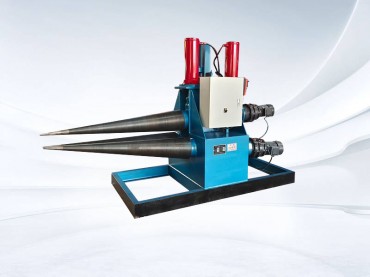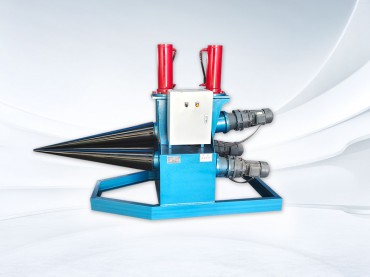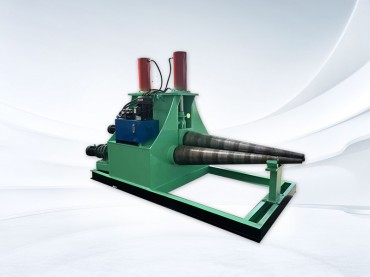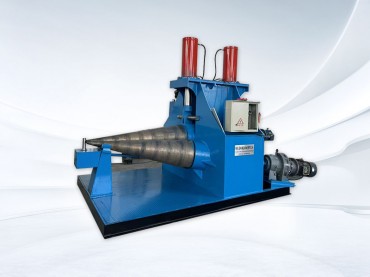
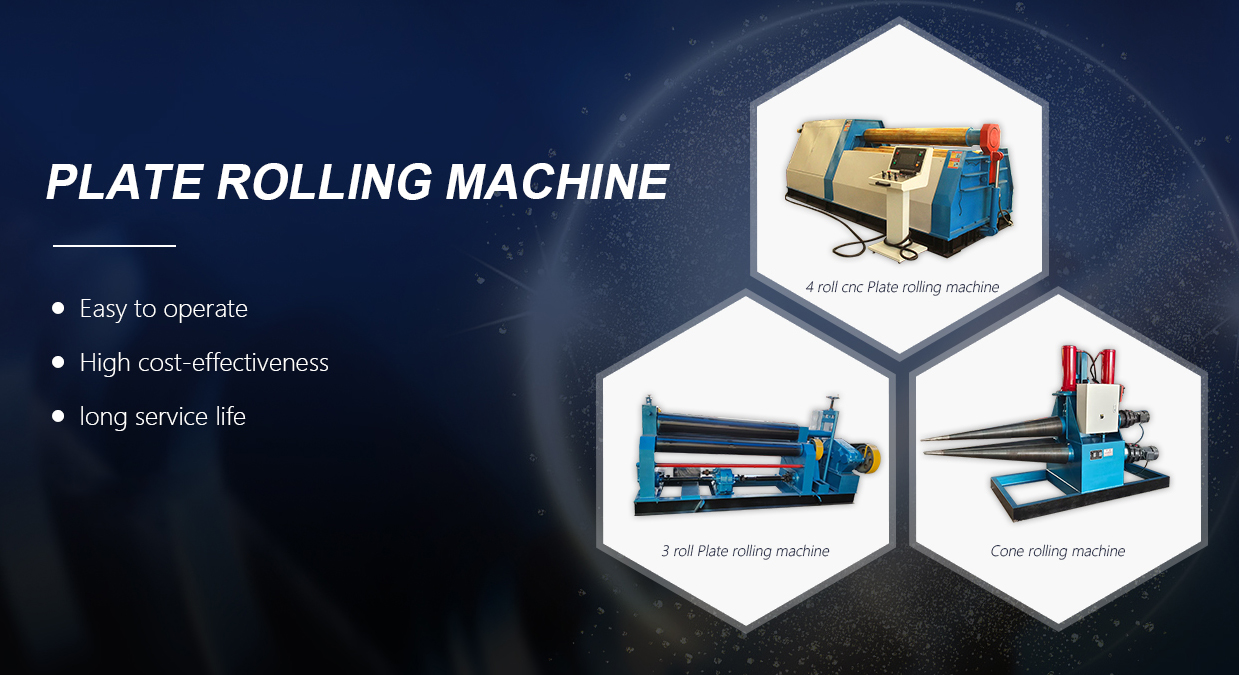
As modern manufacturing continues to develop towards higher efficiency, precision, and automation, sheet metal forming technology is becoming increasingly important in industries such as machinery manufacturing, pressure vessels, petrochemicals, construction, power, environmental protection equipment, and new energy. For companies that need to process conical cylinders, conical pipes, and other conical metal structures, cone rolling machines are a very practical sheet metal forming equipment.
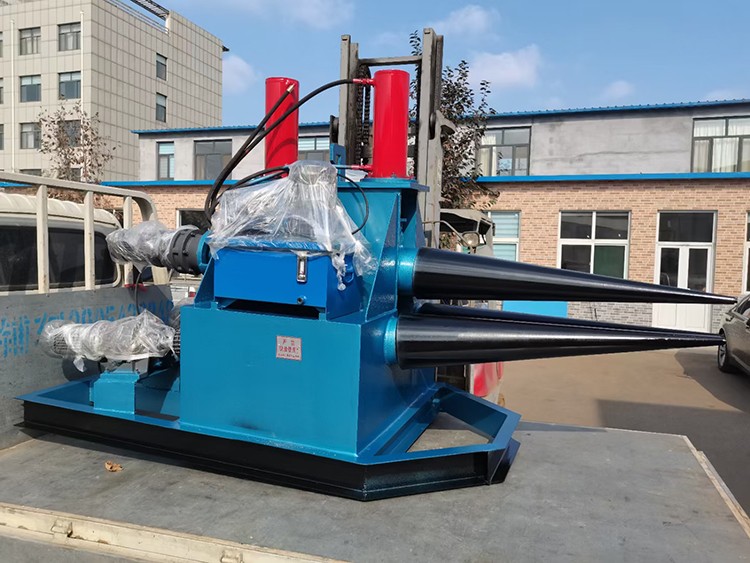
A cone rolling machine is a mechanical device used to process flat metal sheets into conical cylinders or conical structural components. It uses the pressure and movement created between multiple rollers to gradually plastically deform the sheet metal.
Depending on their structure and working method, common tapered rolling equipment on the market includes: three-roll cone rolling machines; four-roll cone rolling machines; hydraulic cone rolling machines; CNC cone rolling machines; and specialized conical plate rolling equipment. Different types of equipment differ in terms of sheet thickness, maximum rolling width, minimum rolling diameter, taper range, and degree of automation. When selecting equipment, companies need to comprehensively consider the actual workpiece size, material type, sheet thickness, and production quantity.
Improving production efficiency is one of the most obvious advantages of using a cone rolling machine.
Traditional processing of tapered workpieces may require multiple steps, including layout, cutting, bending, assembly, straightening, and welding. This involves many processes, requiring significant manpower and resulting in a long production cycle. A cone rolling machine can complete the main forming process through continuous rolling bending, gradually processing a flat plate into a tapered workpiece. For mass production, mechanized rolling significantly reduces repetitive manual operations, making the production process more continuous. When the equipment is combined with automatic feeding, CNC control, and auxiliary positioning systems, processing efficiency can be further improved, enabling companies to more consistently complete batch orders.
One of the biggest challenges in processing tapered workpieces is the difference in diameter at both ends. If ordinary bending methods are used, the bending amount at different positions needs to be accurately calculated, and dimensional errors are easily introduced in multiple processes. A cone rolling machine, by adjusting the roller position, causes the sheet metal to bend to different degrees in different areas, gradually forming a tapered structure. By properly setting equipment parameters, the overall curve of the conical workpiece can be made more uniform. For products with high requirements, multiple pre-bending and gradual forming can further reduce uneven deformation of the sheet metal.
Therefore, cone rolling machines are very suitable for production projects with high requirements for the dimensional and appearance requirements of conical structures.
Traditional manual processing methods require a high level of operator experience. Inaccurate positioning during operation can lead to: taper deviation; inconsistent dimensions at both ends; uneven arc; mismatched joints; and workpiece deformation. Using a cone rolling machine allows for more precise adjustment of the roller position through its mechanical structure and control system. Hydraulic and CNC cone rolling machines, in particular, can precisely control key parameters, thereby reducing errors caused by human operation. This repeatability and stability are of great importance to companies that need to produce the same specifications of products over a long period.
Tapping machines are not limited to one type of product. By adjusting equipment parameters and changing appropriate configurations, metal workpieces of different sizes and tapers can be processed. Common products include: conical cylinders; conical pipes; conical storage tanks; conical funnels; light poles; ventilation ducts; dust removal equipment components; chemical equipment components; and metal tower structures. Therefore, for manufacturing enterprises with a wide variety of products, cone rolling machines offer good production flexibility.
Cone rolling machines can typically process a variety of common metal materials, such as carbon steel plates, stainless steel plates, aluminum plates, and alloy steel plates. However, different materials have different yield strengths, elongations, and springback characteristics. Therefore, in actual processing, it is necessary to rationally select equipment specifications and processing parameters based on the material properties. For example, stainless steel plates typically have high strength and springback, thus placing higher demands on equipment rigidity and roller precision. Choosing a suitable cone rolling machine can achieve more stable forming results for different materials.
Traditional manual forming processes usually require a large amount of manual handling, positioning, and repeated adjustments. The larger and heavier the sheet material, the more significant the labor intensity of manual operation. cone rolling machines complete the main forming work through mechanical power, reducing the time workers spend directly handling high-strength sheet materials. Further adding robotic arms, hoisting equipment, and automated feeding systems can reduce the frequency of manual handling and improve the safety and standardization of the production process.
While cone rolling machines offer many advantages, proper operation remains crucial.
First, select the appropriate specifications of equipment based on the thickness, width, and strength of the sheet material.
Second, before processing, check that the rollers, hydraulic system, transmission system, and safety devices are in normal working order.
During the tapering process, ensure the sheet material is correctly positioned to prevent misalignment. For thicker sheets, pre-bending and tapering steps need to be carefully planned; complex tapers cannot be achieved in a single pass. Furthermore, operators should receive professional training and follow the equipment manual and safety operating procedures.
In summary, the main advantages of using a cone rolling machine include increased production efficiency, improved forming quality, reduced human error, adaptability to various product specifications, lower overall production costs, and increased automation. For companies that require long-term processing of conical cylinders, conical pipes, funnels, light poles, and other conical metal structural components, tapered conical machines effectively simplify traditional processing procedures and improve production stability.
With the continuous development of hydraulic, CNC, and automation technologies, the processing accuracy, ease of operation, and production efficiency of modern tapered conical machines will be further enhanced. In the future, tapered conical machines will continue to play a vital role in fields such as machinery manufacturing, chemical equipment, construction, power, environmental protection, new energy, and pressure vessels, providing more efficient, stable, and professional solutions for sheet metal forming.
 Address:Room 1202, Detaitang Building, No. 118 Huaguang Road, Zhangdian District, Zibo, Shandong
 WhatsApp:+8615653328535
 Wechat: +8615965331535
  E-mail:zs@sdsmachinery.com