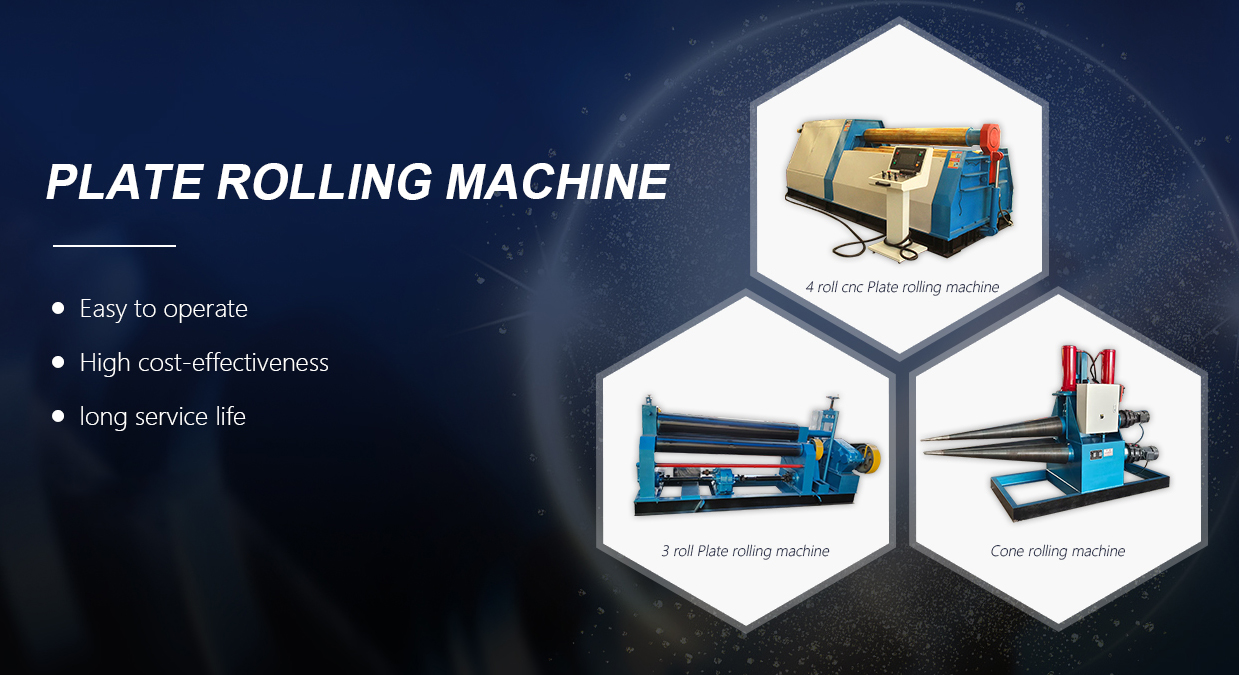
As global manufacturing continues to evolve toward greater intelligence, automation, and precision, metal plate forming technology has undergone significant upgrades. High-performance plate rolling equipment is essential across a wide range of sectors, including pressure vessel manufacturing, petrochemicals, shipbuilding, wind power equipment, bridge engineering, and steel structure construction. Among these, hydraulic plate rolling machines have become indispensable in the modern metal processing industry, thanks to their powerful rolling capabilities, consistent precision, ease of operation, and high level of automation.
Unlike traditional mechanical plate rolling machines, hydraulic models utilize a hydraulic system as their power source. Hydraulic cylinders precisely control the position and pressure of the work rolls, allowing steel plates to be gradually formed into cylinders, arcs, cones, and other shapes through continuous application of force. This process ensures smoother operation and higher precision, meeting the modern manufacturing industry's demand for high-quality products.
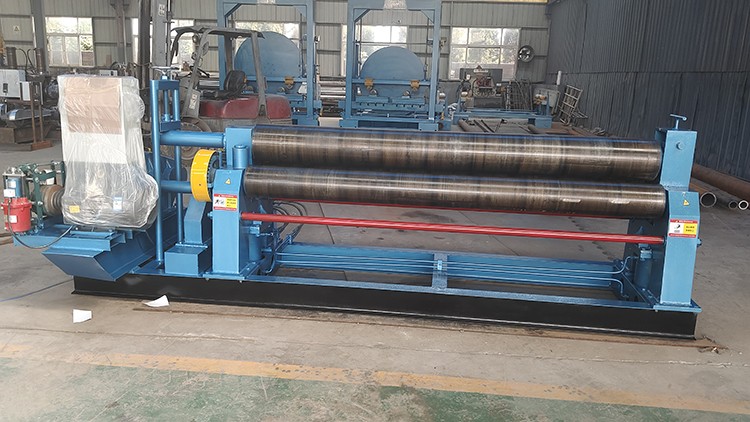
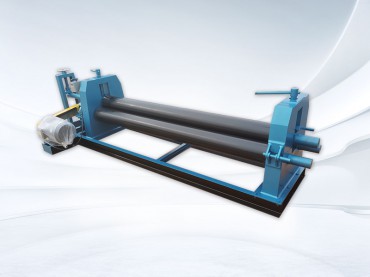
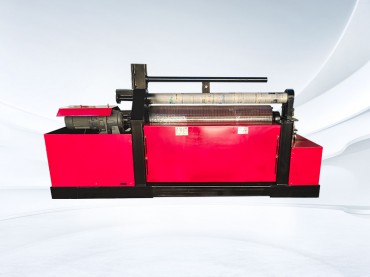
A hydraulic plate rolling machine is specialized equipment that uses a hydraulic transmission system to drive the movement of work rolls, thereby continuously bending and forming metal plates. Its primary function is to roll flat plate materials into cylinders, arcs, cones, and other components with complex curved surfaces.
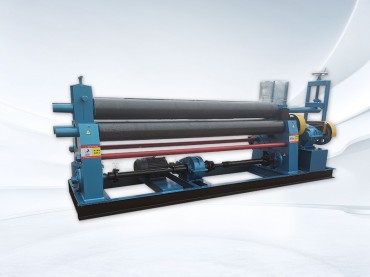
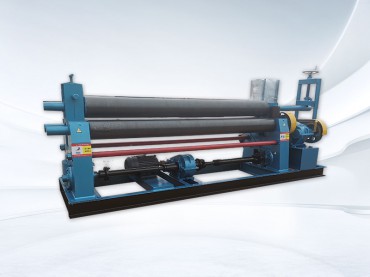
Current market offerings primarily consist of two types: three-roll and four-roll hydraulic plate rolling machines.
Three-roll machines feature a simple structure and high adaptability, making them suitable for processing a variety of standard cylinders. Four-roll machines incorporate a side-roll control system, enabling pre-bending and rolling to be completed in a single setup; this results in higher efficiency and precision, making them particularly well-suited for mass production.
The machine comprises a frame, work rolls, a hydraulic system, a motor, a reduction mechanism, an electrical control system, and safety protection devices. The hydraulic system provides stable power, driving the work rolls to move to preset positions and thereby achieving continuous plastic deformation of the plate.
One of the key advantages of hydraulic plate rolling machines is their powerful processing capability.
Driven by hydraulics, the equipment can exert significant pressure. Consequently, it is capable of processing not only standard carbon steel plates but also stainless steel, aluminum, copper, and certain high-strength alloy steel plates. By simply adjusting the hydraulic pressure and the positioning of the rolls, the machine can process plates of varying thicknesses and widths to meet different product specifications.
This is particularly advantageous in the manufacture of products such as pressure vessels, wind turbine towers, and large storage tanks, which often require the rolling of thick plates; hydraulic plate rolling machines deliver stable output, ensuring a reliable processing operation. Furthermore, the hydraulic system automatically adjusts the applied force based on the material properties, ensuring uniform pressure distribution across the plate. This minimizes processing errors and enhances overall product quality.
For rolled metal products, roundness, straightness, and dimensional consistency are critical factors determining the quality of the final product.
Hydraulic plate rolling machines utilize hydraulic synchronization control technology to precisely position the work rolls, ensuring uniform force application on the plate.
Compared to traditional mechanical rolling equipment, hydraulic systems offer greater flexibility in pressure adjustment, minimizing localized deformation and resulting in superior roundness for the rolled workpiece. For large-scale components such as pressure vessels, boilers, storage tanks, and chemical processing equipment, high-precision rolling reduces subsequent welding errors and improves overall assembly quality.
Modern CNC hydraulic plate rolling machines are also equipped with digital control systems that automatically calculate rolling parameters, enhancing repeatability and ensuring stability in mass production.
Traditional rolling equipment often leaves long straight edges at both ends of the plate, necessitating additional processing. Hydraulic plate rolling machines—particularly four-roll models—can perform pre-bending on the plate before the main rolling process begins. Pre-bending shapes the ends of the plate to more closely match the desired curvature, significantly reducing the length of the remaining straight edges. This not only improves product quality but also cuts down on subsequent trimming work and boosts production efficiency. The pre-bending function is of great significance in the manufacture of large cylinders and pressure vessels.
Modern hydraulic plate rolling machines are typically equipped with PLC or CNC control systems. Operators simply input parameters such as plate thickness, width, and target diameter, and the machine automatically executes the necessary operations. Unlike traditional equipment that relies heavily on operator experience, CNC hydraulic plate rolling machines are easier to master. Even with complex workpieces, continuous processing can be achieved through programmed control. In addition, some high-end models support automatic compensation, automatic positioning, and data storage functions. When processing similar products, enterprises can directly recall historical programs, thereby increasing production efficiency and reducing the time required for manual adjustments.
Hydraulic systems are characterized by smooth power transmission and minimal impact, resulting in more stable operation for hydraulic plate rolling machines. Compared to certain mechanical drive systems, hydraulic drives reduce impact loads on mechanical components such as gears and bearings. This not only lowers operating noise and reduces mechanical wear but also enhances the overall reliability of the machine. Stable operation is particularly crucial for continuous production, as it lowers the equipment failure rate and improves production stability. Furthermore, the hydraulic system can automatically adjust output pressure based on the processing load, ensuring the equipment consistently maintains an optimal working state.
Hydraulic plate rolling machines are capable of processing not only standard cylinders but also various complex curved parts, such as: cylindrical shells; conical shells; elliptical structures; curved steel plates; semi-circular components; and specially shaped curved parts.
By adjusting roll positions and rolling methods, enterprises can meet the personalized needs of different customers. This processing flexibility is highly valuable for manufacturers of non-standard equipment.
Modern manufacturing enterprises are increasingly focused on production efficiency. Hydraulic plate rolling machines offer continuous processing capabilities, enabling rapid plate rolling.
Compared to manual processing and traditional mechanical equipment, they significantly shorten processing times. Simultaneously, high processing precision leads to reduced product rework rates and less material waste. In mass production, high efficiency translates to lower unit manufacturing costs and greater market competitiveness. Additionally, automated controls reduce the need for manual intervention, thereby lowering labor costs for the enterprise.
(1) Pressure vessel manufacturing: Used for processing large-scale equipment such as storage tanks, reaction vessels, and boiler shells.
(2) Petrochemical industry: Used for manufacturing products such as oil storage tanks, chemical towers, and pressure piping.
(3) Shipbuilding: Used for processing hull steel plates and large curved components.
(4) Wind power industry: Used for the rolling and fabrication of wind turbine towers.
(5) Steel structure construction: Used for manufacturing large steel cylindrical structures, bridges, and architectural components.
(6) Construction machinery: Used for producing protective housings, drums, and structural components for various types of machinery.
Hydraulic plate rolling machines feature a mature structural design, making routine maintenance relatively simple.
Enterprises simply need to follow a maintenance schedule to regularly inspect: hydraulic oil quality, cylinder seals, the lubrication system, the electrical control system, work roll wear, and the condition of hydraulic pipeline connections.
Proper maintenance can effectively extend the equipment's service life. The increasing reliability of modern hydraulic components also further reduces maintenance costs.
With advantages such as robust processing capabilities, high rolling precision, a high degree of automation, stable operation, broad applicability, ease of maintenance, and high production efficiency, hydraulic plate rolling machines have become essential equipment in the modern metal plate processing industry. Whether in sectors such as pressure vessels, petrochemicals, shipbuilding, wind power equipment, steel construction, or construction machinery, these machines play an irreplaceable role. They not only help enterprises improve product quality and production efficiency but also reduce material waste and overall manufacturing costs, thereby generating greater economic returns.
Looking ahead, as intelligent control, digital manufacturing, and green energy-saving technologies continue to advance, hydraulic plate rolling machines will play an increasingly important role in global manufacturing, providing more efficient, stable, and intelligent metal forming solutions for high-end equipment manufacturing and the development of modern industry.
 Address:Room 1202, Detaitang Building, No. 118 Huaguang Road, Zhangdian District, Zibo, Shandong
 WhatsApp:+8615653328535
 Wechat: +8615965331535
  E-mail:zs@sdsmachinery.com