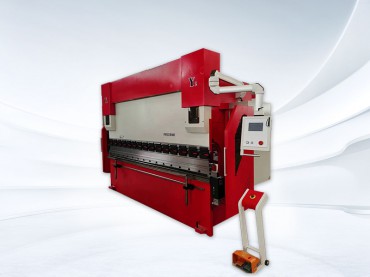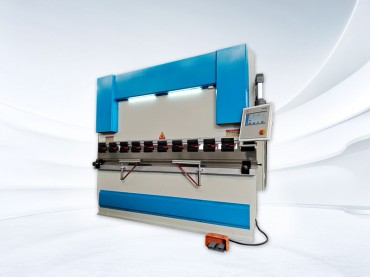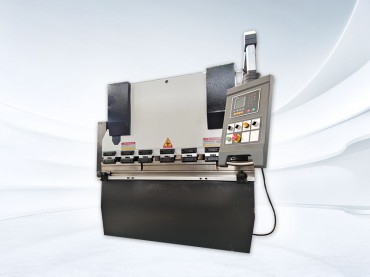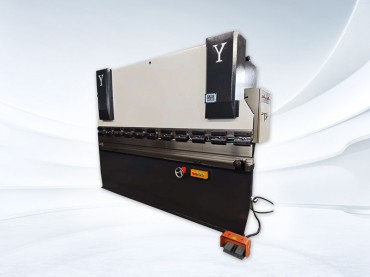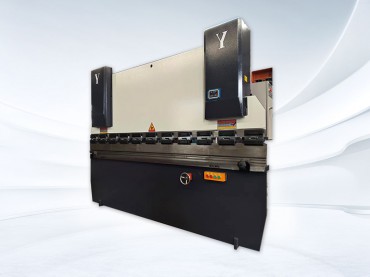
As the manufacturing sector rapidly evolves toward automation, intelligence, and high precision, sheet metal processing has become a critical production stage across numerous industries, including machinery manufacturing, the automotive sector, construction, home appliances, and aerospace. Among the various types of sheet metal processing equipment, the bending machine (or press brake) is one of the most widely used and frequently operated tools. It is capable of bending flat metal sheets into various angles and shapes according to design specifications, thereby laying the foundation for subsequent processes such as welding, assembly, and final product manufacturing.
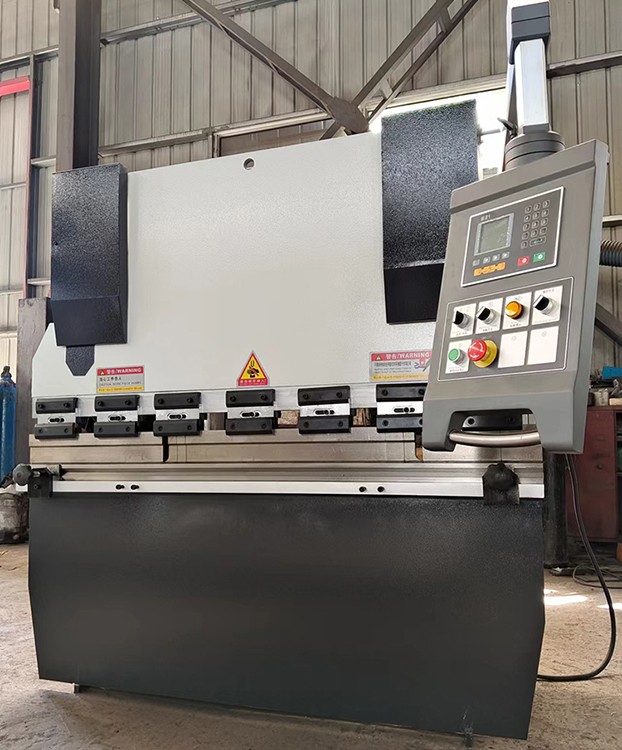
A bending machine is a piece of metal processing equipment that applies pressure to metal sheets using upper and lower dies, causing plastic deformation to create various angles, arcs, and structural shapes.
Bending machines are categorized by their drive systems into types such as hydraulic, electro-hydraulic servo CNC, mechanical, and electric bending machines. Among these, hydraulic CNC bending machines and electro-hydraulic servo bending machines have become the mainstream choice for modern sheet metal processing enterprises due to their high precision, stability, and automation capabilities.
A bending machine typically consists of a frame, a hydraulic system, cylinders, a ram (or slide), a worktable, a backgauge system, a tooling system, and a CNC control system. Operators simply input processing parameters, and the machine executes continuous bending operations according to the programmed settings, significantly enhancing production efficiency and product consistency.
The most fundamental and important function of a bending machine is to process various metal sheets into different angles and shapes. Common materials include carbon steel, stainless steel, galvanized steel, aluminum, copper, and alloy steel sheets. By utilizing dies of various specifications, the machine can perform 90° and 45° bends, as well as U-shaped, V-shaped, Z-shaped, multi-sided, and complex irregular bends. Compared to traditional manual processing methods, bending machines offer faster processing speeds and superior bending angle accuracy, meeting modern industrial requirements for dimensional consistency.
For enterprises engaged in mass production, bending machines can significantly boost productivity while reducing the intensity of manual labor.
Bending machines are widely used in the manufacture of various sheet metal components. Many products in modern industry utilize sheet metal structures, such as electrical control boxes, power distribution cabinets, network server racks, industrial chassis, instrument housings, and metal casings.
These products typically undergo multiple processes—including laser cutting, punching, bending, welding, and coating—with bending serving as a critical step that determines the product's shape and assembly precision. Bending machines can rapidly execute various bending operations based on design blueprints, ensuring the parts possess excellent structural strength and assembly performance. For enterprises engaged in the mass production of standardized products, CNC bending machines ensure dimensional consistency across workpieces, thereby enhancing product quality.
The automotive manufacturing industry is a major application sector for bending machines. Automotive production involves extensive sheet metal processing for components such as body reinforcements, chassis brackets, battery trays, mounting brackets, protective plates, and exhaust system parts. These components generally require high dimensional precision and assembly consistency.
CNC bending machines can automatically adjust bending angles and back-gauge positions based on programmed instructions, enabling the continuous processing of complex parts. The rise of new energy vehicles has driven growing demand for products such as power battery casings and charging equipment housings, further fueling the development of the bending machine market.
Bending machines are also extensively used in the construction industry for components such as steel structure connectors, roof panels, wall panels, door and window profiles, stair railings, and curtain wall accessories.
Modern steel structure construction increasingly relies on prefabrication methods, where sheet metal is bent in the factory before being transported to the construction site for installation.
This processing model not only boosts construction efficiency but also ensures product quality. Bending machines can process steel plates to various specifications in accordance with architectural design requirements, providing high-quality metal components for construction projects.
Home appliances frequently feature metal casings, making bending machines vital to this industry. Key products include casings for refrigerators, washing machines, air conditioners, ovens, and microwave ovens, as well as kitchen equipment. These products typically require a neat appearance and precise dimensions. Bending machines ensure straight bends and consistent angles, facilitating smoother subsequent welding and assembly processes. For automated production lines, high-efficiency bending equipment significantly boosts overall production capacity.
The machinery manufacturing industry relies heavily on bending machines. Examples include protective covers for construction machinery, equipment bases, motor housings, structural components for conveyor systems, agricultural machinery parts, and housings for mining equipment. These products often require processing from thick steel plates. Modern hydraulic bending machines deliver high pressing force, enabling the processing of plates of varying thicknesses to meet diverse manufacturing needs.
Bending machines have become essential equipment in modern manufacturing due to the following advantages:
(1) High processing precision: Modern CNC bending machines precisely control bending angles, ensuring product consistency.
(2) High production efficiency: Automated controls reduce manual adjustment time, making them ideal for batch production.
(3) Wide processing range: Capable of processing plates of various materials, thicknesses, and dimensions.
(4) Labor cost savings: A single CNC bending machine can perform multiple processing steps, increasing labor productivity.
(5) Easy tool changes: Switching molds allows for the production of different parts, maximizing equipment utilization.
(6) High level of automation: Can be integrated with robots for automatic loading and unloading, enabling intelligent production.
(1) Select appropriate molds based on the product to enhance bending quality.
(2) Optimize the bending sequence to minimize time spent on repeated positioning.
(3) Regularly inspect the hydraulic system, guide rails, molds, and back-gauge system to ensure the equipment remains in optimal condition.
(4) For mass production, configure automatic feeding devices and robots to achieve unmanned production and boost overall efficiency.
As a vital tool in modern sheet metal processing, bending machines are widely used across numerous industries, including machinery manufacturing, the automotive sector, construction steel structures, home appliance manufacturing, power equipment, rail transportation, aerospace, and new energy. It is capable of performing high-precision bending on various types of sheet metal and offers advantages such as high production efficiency, a wide processing range, a high degree of automation, and stable operation; it is a vital piece of equipment for modern manufacturing enterprises seeking to improve product quality, reduce production costs, and enhance market competitiveness.
 Address:Room 1202, Detaitang Building, No. 118 Huaguang Road, Zhangdian District, Zibo, Shandong
 WhatsApp:+8615653328535
 Wechat: +8615965331535
  E-mail:zs@sdsmachinery.com