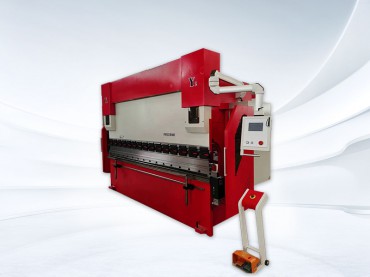
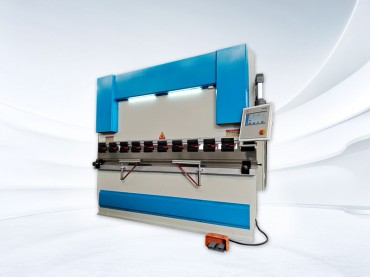
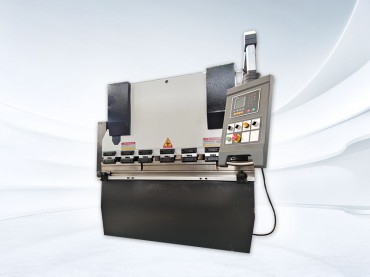
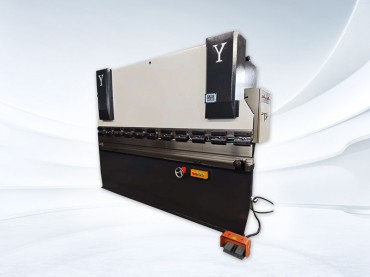
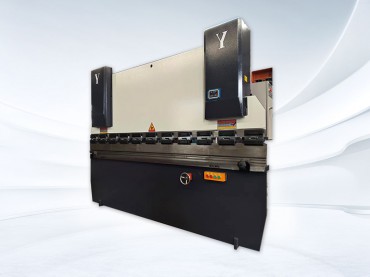
In the metalworking industry, bending machines serve as core equipment for sheet metal forming and are widely used in various fields, including mechanical manufacturing, construction engineering, the automotive industry, and home appliance production. With the continuous advancement of industrial technology, the variety of bending machines has grown increasingly diverse, with equipment evolving from traditional mechanical systems to modern CNC systems. For businesses, understanding the types of bending machines and their characteristics is a crucial prerequisite for selecting the right equipment and improving production efficiency. Different types of bending machines exhibit distinct differences in structural design, drive mechanisms, control systems, and application scope. This article will systematically introduce the primary classification methods for bending machines and analyze the characteristics and suitable applications of each type of equipment.
1. Classification of Bending Machines by Drive Mechanism
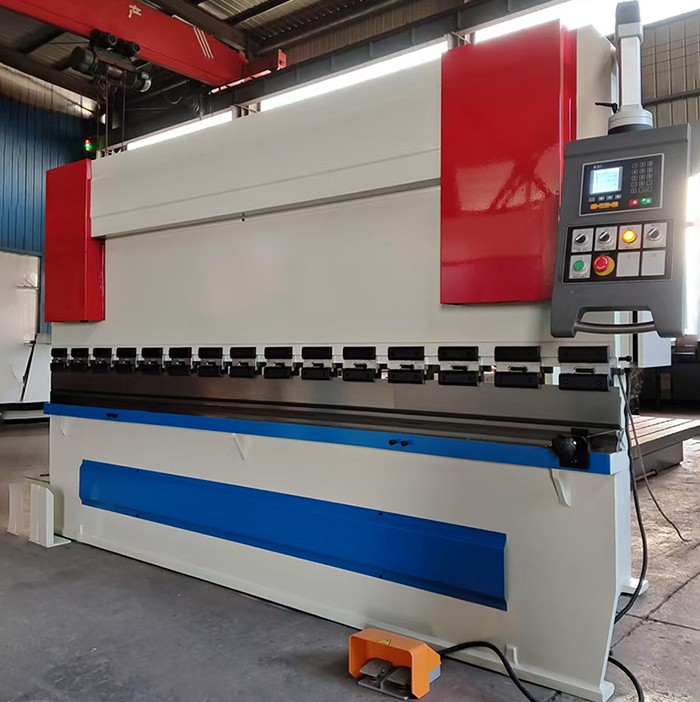
One of the most common ways to classify bending machines is based on their drive systems. Different drive mechanisms directly influence equipment performance and operational characteristics.
(1) Mechanical Bending Machines
Mechanical bending machines transmit power through a flywheel and crank mechanism to drive the ram’s vertical movement. These machines feature a relatively simple structure and operate at high speeds, making them suitable for mass production. Their advantages include high efficiency and structural stability; however, they have limited precision control and offer poor adjustment flexibility. Consequently, they are rarely used in applications requiring high precision.
(2) Hydraulic Bending Machines
Hydraulic bending machines utilize a hydraulic system to drive the ram, making them the most widely used type today. They are characterized by stable pressure and high control precision, enabling a variety of complex processes. The hydraulic system can adjust pressure and stroke according to different processing requirements, making the equipment suitable for a wide range of materials and thicknesses. Compared to mechanical equipment, they offer greater operational flexibility and higher safety.
(3) Servo-electric Bending Machines
Servo-electric bending machines employ direct motor drive, offering high precision, high efficiency, and energy-saving and environmentally friendly features. Their control systems are more intelligent, enabling precise positioning and repeatable processing. This type of equipment is suitable for high-precision manufacturing fields, such as the production of electronic product housings and precision components. Although the initial investment is higher, they offer good long-term cost-effectiveness.
2. Classification of Bending Machines by Structural Type
In addition to drive methods, bending machines can also be classified based on their structural design.
(1) Top-Moving Bending Machines
Top-moving bending machines are the most common structural type, featuring a ram located at the top that performs bending through vertical movement. This structure offers excellent stability and is suitable for a wide range of processing scenarios.
(2) Bottom-Moving Bending Machines
Bottom-moving bending machines feature a moving lower worktable, while the upper section remains stationary. This structure offers advantages in certain specialized processing applications but has a relatively limited scope of use.
(3) Double-Action Bending Machines
Double-action bending machines achieve more complex forming processes through the coordinated movement of upper and lower working components. This type of equipment is suitable for processing specialized products but features a relatively complex structure.
3. Bending Machines Classified by Control Method
With the advancement of automation, control systems have become a key criterion for distinguishing bending machine types.
(1) Conventional Bending Machines (Manual/Semi-automatic)
Traditional bending machines primarily rely on manual operation and are suitable for simple processing tasks. These machines are relatively low-cost but heavily dependent on the operator.
(2) CNC Bending Machines
CNC bending machines utilize program control to achieve automated processing. Operators need only input parameters, and the machine can complete complex bending tasks. Their advantages include high precision and excellent repeatability, making them ideal for mass production. Additionally, they reduce human error and improve production efficiency.
4. Comparison of Advantages and Disadvantages of Different Types of Bending Machines
Different types of equipment vary in terms of performance and cost.
- Mechanical bending machines are suitable for high-speed production but lack flexibility; hydraulic bending machines offer balanced performance and are the most widely used; servo-electric bending machines provide the highest precision but come at a higher cost.
- In terms of structure, top-acting machines offer good stability, bottom-acting machines are suitable for special requirements, while dual-acting machines are suitable for complex processes.
When making a selection, companies should conduct a comprehensive evaluation based on their specific production needs.
5. How to Select the Appropriate Bending Machine Type
During the actual selection process, the following aspects should be prioritized:
(1) Material type and thickness: Different materials require varying levels of machine pressure.
(2) Product precision requirements: For high-precision processing, CNC or servo-driven machines are recommended.
(3) Production scale: High-volume production is best suited for highly automated equipment.
(4) Budget and long-term maintenance costs: Select the solution with the best cost-performance ratio.
Overall, there is a wide variety of bending machines, and different types of equipment have distinct characteristics in terms of structure, performance, and applications. When making a selection, companies should choose the most suitable option based on their actual needs. With continuous technological advancements, bending machines will become increasingly intelligent and efficient, providing stronger support for the metalworking industry.

 Address:Room 1202, Detaitang Building, No. 118 Huaguang Road, Zhangdian District, Zibo, Shandong
 WhatsApp:+8615653328535
 Wechat: +8615965331535
  E-mail:zs@sdsmachinery.com