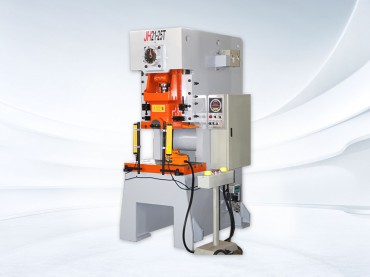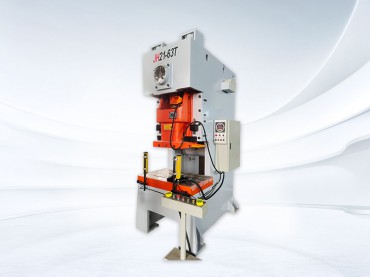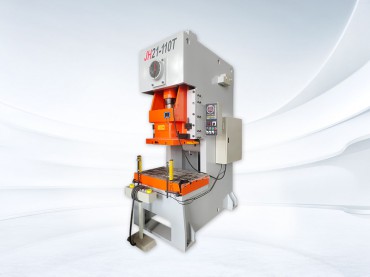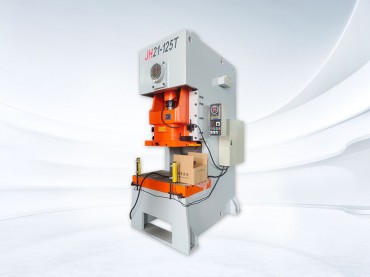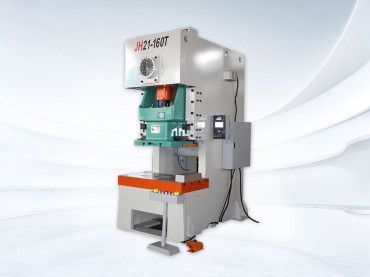
In the field of metal forming, mechanical punching machine—as the traditional workhorse of the industry—have undergone a century of technological accumulation and evolution. To this day, they continue to play an irreplaceable role in numerous industries, including automotive manufacturing, home appliance production, electronic components, and hardware products. This article will begin with the basic operating principles of mechanical punch presses, systematically analyze their advantages, outline typical application scenarios, and discuss key points regarding safety and maintenance.
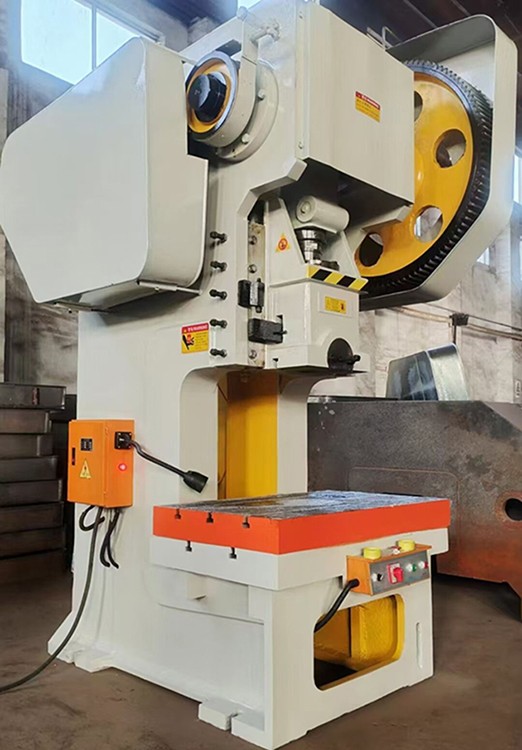
The core mechanism of a mechanical punching machine is based on the crank-slider mechanism, a classic mechanical system that converts rotational motion into linear reciprocating motion. The operating process is as follows: A motor drives a flywheel to rotate continuously via a belt or gears. The flywheel acts as an energy storage component, accumulating kinetic energy during the idle stroke and releasing it during the punching stroke to help the motor overcome peak loads. When the clutch (typically a pneumatic friction clutch) engages the flywheel with the crankshaft, the crankshaft begins to rotate, driving the connecting rod to move the slide up and down along the guide rails. As the slide descends, the upper die mounted on the slide engages with the lower die fixed to the worktable, performing operations such as punching, bending, and stretching on the metal sheet positioned between them. After completing a single stamping operation, the slide moves upward, and the workpiece is removed or automatically ejected, preparing for the next cycle.
The most prominent advantage of mechanical punching machines lies in their exceptional processing speed. Standard mechanical punching machines can achieve stroke rates ranging from tens to over a hundred strokes per minute, while specially designed high-speed precision presses can reach hundreds of strokes per minute or even higher. The chain reaction of benefits resulting from high-speed production is equally significant: shorter processing cycles mean faster order fulfillment, lower labor costs per unit, and higher output relative to the equipment’s footprint. For products with high demand and relatively few variations—such as automotive parts, home appliance housings, and silicon steel sheets for motors—the high-speed advantage of mechanical punching machinees is particularly pronounced.
The stroke curve of a mechanical punching machine is fixed—the crank-connecting rod mechanism ensures that the displacement, speed, and acceleration of the ram remain completely consistent throughout each stroke. This mechanical determinism provides the punch press with extremely high repeatability at the bottom dead center. Regardless of the number of consecutive punches, the ram’s position at the lowest point remains virtually unchanged, which is crucial for processes requiring strict control of the punching height.
When properly installed and well-lubricated, the noise level of mechanical punching machines is relatively manageable. The use of modern pneumatic friction clutches makes the clutch engagement process smoother, significantly reducing metal impact noise; enclosed gearboxes and damping materials effectively absorb high-frequency noise; and the cast-iron machine body, with its substantial mass and excellent damping properties, suppresses vibration transmission. Compared to older models equipped with rigid clutches, modern mechanical punching machines exhibit significantly lower noise levels. This helps improve the working environment for operators, reducing the risk of hearing damage from prolonged exposure to high noise levels, while also making verbal communication and warning signals within the workshop clearer, thereby promoting safe production.
The control interface of mechanical punching machines is intuitive and straightforward. Operators control the engagement and disengagement of the clutch via foot switches or dual-hand buttons, allowing the ram to perform a single or multiple consecutive punching operations. Key parameters such as stroke count, die height adjustment, and pneumatic system pressure are displayed on mechanical gauges or simple digital readouts, eliminating the need for complex programming or parameter settings. For most routine stamping tasks, operators need only master basic operations such as die installation, material feeding, finished product removal, and scrap clearance. After a short pre-job training period, they can work independently. This low entry barrier allows companies to recruit and train front-line operators more quickly, reducing reliance on highly skilled personnel, and is particularly suitable for small and medium-sized enterprises looking to ramp up production rapidly.
- Automotive Industry: Used for blanking and forming body panels, brackets, reinforcement plates, chassis structural components, and more, meeting the demands of high-volume production. The automotive manufacturing sector is the largest downstream market for mechanical punching machines.
- Home Appliance Manufacturing: The housings and structural components of products such as refrigerators, washing machines, and air conditioners are commonly processed using mechanical punching machines to ensure surface quality and assembly precision. The home appliance industry is sensitive to equipment costs, making the economic advantages of mechanical punch presses particularly prominent in this sector.
- Electronics and Hardware Products: For mass-produced, high-precision parts such as mobile phone cases, computer accessories, connector terminals, and hardware tools, mechanical punch presses remain the primary equipment. High-speed precision punch presses are widely used in this field.
- Construction and Decoration: Architectural structural components, metal decorative panels, and ventilation duct fittings are often formed using mechanical punch presses.
- Consumer Goods: Small metal products such as kitchenware, lighting components, bicycle parts, and stationery hardware rely heavily on mechanical punching machinees for mass production.
- Operators must undergo professional training and strictly adhere to operating procedures; untrained personnel are strictly prohibited from operating the equipment;
- Presses must be equipped with reliable safety devices, such as photoelectric safety sensors, two-hand control buttons, and protective guards, and their effectiveness must be verified before each startup;
- Reaching directly into the stamping area to retrieve parts is strictly prohibited; mechanical grippers, pneumatic retrieval devices, or specialized fixtures must be used;
- When installing or adjusting dies, the power supply must be disconnected and the flywheel energy released to prevent accidental startup;
- If abnormal noises or movements are detected during production, immediately shut down the machine for inspection.
- Lubrication Maintenance: Regularly check lubricant levels and quality, and apply oil or grease to all lubrication points according to equipment specifications to reduce wear on critical friction pairs such as crankshafts, guide rails, and gears.
- Fastening Inspection: Periodically check whether the machine body bolts, die mounting bolts, and connecting bolts of various components are loose to prevent equipment damage or loss of precision caused by vibration.
- Die Maintenance: Grind or replace worn dies in a timely manner based on the quality of stamped parts to maintain sharp cutting edges. This ensures product quality and reduces equipment load.
- Clutch and Brake Inspection: Regularly inspect the wear of friction plates, the sealing of the pneumatic system, and whether the braking angle is within the permissible range. These are critical items for ensuring safety and normal equipment operation.
- Electrical System Inspection: Check that electrical circuits, relays, proximity switches, emergency stop buttons, and other components are functioning properly to prevent control failures caused by poor contact or component aging.
- Scheduled Maintenance: We recommend a comprehensive overhaul every six months, along with secondary maintenance annually or after 2,000–3,000 operating hours, to disassemble and inspect critical components and restore their precision.
As a traditional yet highly efficient metalworking machine, the mechanical punching machine continues to play a vital role in global manufacturing due to its high speed, high precision, ease of operation, and low cost.
If you are interested in mechanical punching machine, please contact us. We will recommend suitable machines and provide you with a quote.
 Address:Room 1202, Detaitang Building, No. 118 Huaguang Road, Zhangdian District, Zibo, Shandong
 WhatsApp:+8615653328535
 Wechat: +8615965331535
  E-mail:zs@sdsmachinery.com