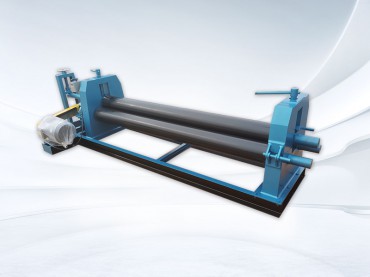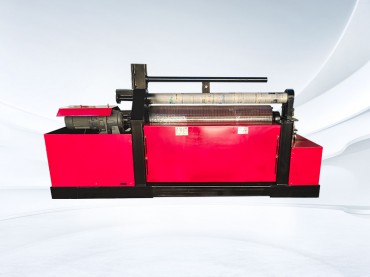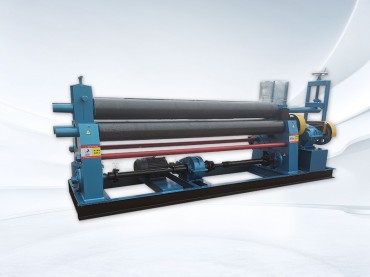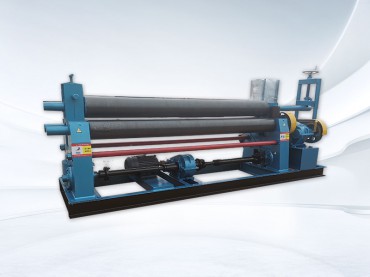
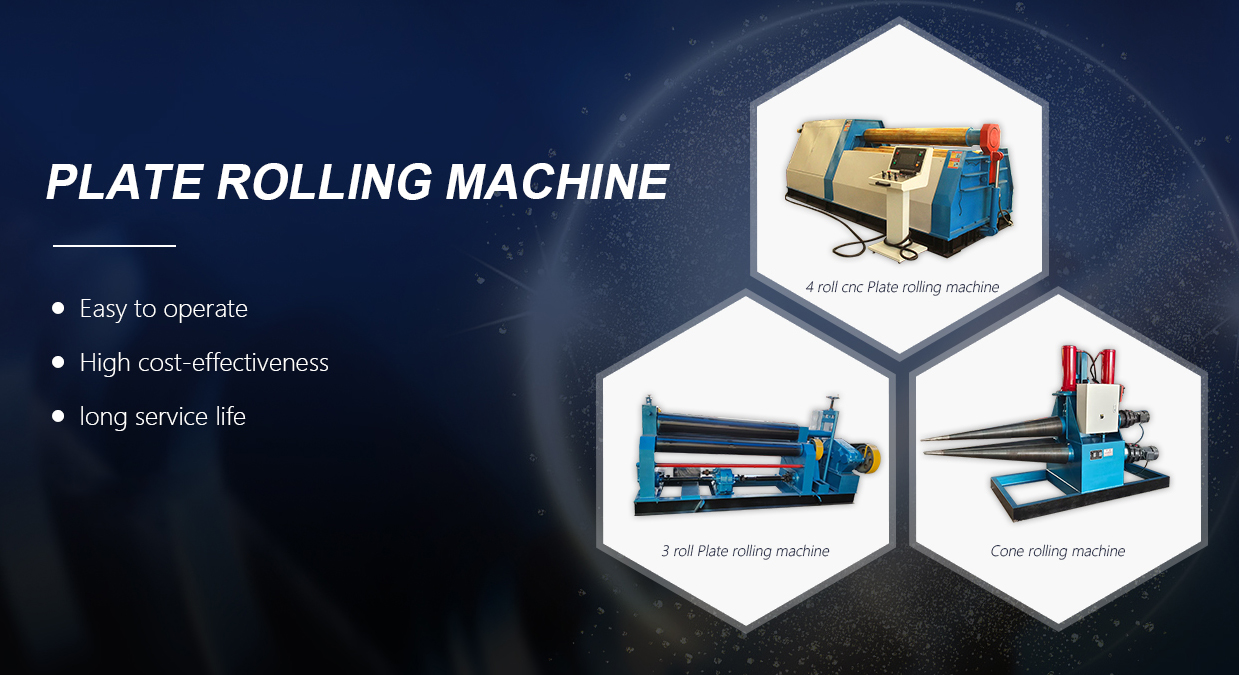
In the modern metalworking industry, the steel plate rolling machine serves as a critical piece of equipment, undertaking the vital task of transforming flat steel plates into cylindrical or curved structures. With the advancement of industrialization and the construction sector, the application of steel plate rolling machines has become increasingly widespread across fields such such as the manufacturing of large-scale vessels, pipelines, ships, pressure vessels, and architectural structures. This article will provide a detailed introduction to steel plate rolling machines from multiple perspectives, helping users and industry professionals gain a better understanding of the equipment's functions, types, and advantages.
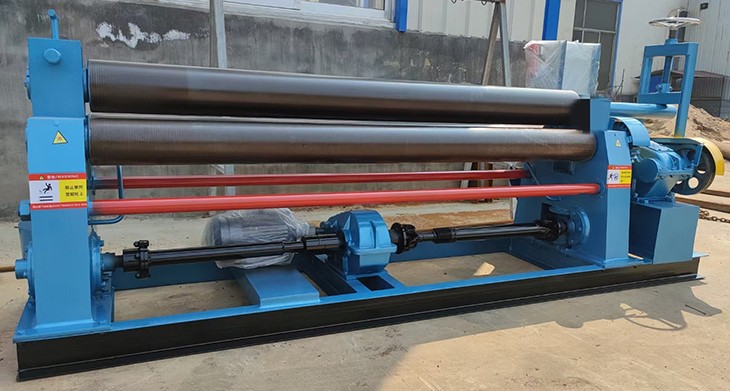
A steel plate rolling machine—also known as a plate bending roll or plate forming machine—is a type of metal forming equipment designed to process metal sheets using rollers, thereby shaping them into desired circular or curved cross-sections. Through the coordinated operation of mechanical transmission and hydraulic systems, the rolling machine can precisely control the bending radius and rolling length of the steel plate, meeting a wide range of industrial production requirements. Steel plate rolling machines are extensively utilized in fields such as pressure vessel manufacturing, wind turbine tower production, steel structure construction, shipbuilding, chemical storage tank fabrication, and large-diameter pipeline production; they stand as one of the indispensable core pieces of equipment in the modern metalworking industry.
The fundamental principle behind the steel plate rolling machine involves utilizing the pressure exerted between upper, lower, or multiple rollers to progressively bend the steel plate as the rollers rotate, thereby gradually transforming the flat sheet into the desired circular arc shape. The primary workflow is as follows:
(1) Plate Loading: The steel plate to be processed is placed onto the rolling machine, and the spacing between the rollers is adjusted to accommodate the thickness of the material.
(2) Roller Adjustment: Using either a hydraulic system or mechanical mechanisms, the positions of the upper, middle, and lower rollers are adjusted to set the specific rolling radius and bending angle.
(3) Rolling and Forming: Under the action of the rollers, the steel plate is progressively curved along its longitudinal axis until it achieves the target circular arc or cylindrical shape.
(4) Correction and Finishing: Following the initial forming process, the steel plate may undergo secondary adjustments to ensure that its dimensional accuracy and roundness meet the specified design requirements.
The entire process relies on precise mechanical design and sophisticated hydraulic control systems to ensure that the steel plate remains free from cracks, wrinkles, or deformation during the rolling operation.
Based on the number of rollers, drive mechanism, and processing method, steel plate rolling machines can be broadly classified into the following categories:
(1) Three-Roller Rolling Machine: The most common type of rolling machine, suitable for rolling thin to medium-thickness steel plates. The upper roller is adjustable, allowing for the formation of curved arcs; it offers flexible operation and low maintenance costs.
(2) Four-Roller Rolling Machine: Features an additional auxiliary roller that enhances rolling precision and plate stability, making it ideal for rolling thick plates and for tasks requiring high precision.
(3) Hydraulic Rolling Machine: Controls roller pressure via a hydraulic system, enabling the rolling of thick plates and high-strength steel plates; it features a high degree of automation and excellent safety.
(4) CNC Rolling Machine: Utilizes a computer numerical control (CNC) system to automatically complete the rolling process according to pre-set programs; suitable for high-precision, mass production tasks, and widely used in the manufacturing of wind turbine towers, storage tanks, and large-scale steel structures.
Due to their flexibility and processing capabilities, steel plate rolling machines play a vital role across numerous industries:
(1) Pressure Vessel Manufacturing: Rolling boilers, storage tanks, reactors, and similar vessels, requiring uniform thickness and precise roundness.
(2) Wind Turbine Towers: Large-scale tower sections require high-precision rolling machines to complete the segmented rolling process.
(3) Shipbuilding: Rolling curved steel plates for ship hulls, ensuring structural integrity and watertightness.
(4) Architectural Structures: Rolling columns, beams, and curved roof components for large-scale steel-framed buildings.
(5) Pipeline Manufacturing: Rolling steel plates for pipelines used in the petroleum, chemical, and municipal water supply sectors.
- High Processing Precision: Through the use of precision rollers and hydraulic adjustment systems, the rolled steel plates exhibit minimal roundness errors and dimensional deviations.
- Strong Adaptability: Capable of processing steel plates of various materials, thicknesses, and widths, thereby meeting a wide range of industrial requirements.
- Ease of Operation: Modern rolling machines feature hydraulic or CNC control systems, significantly reducing the complexity and physical effort involved in manual operation.
- High Production Efficiency: Large-scale rolling machines are capable of continuous production, making them highly suitable for high-volume processing tasks. - Long Service Life: Manufactured using high-quality materials, the equipment can serve reliably for many years with proper maintenance.
To ensure the long-term, stable operation of a steel plate rolling machine, the following points should be observed:
(1) Regularly inspect the hydraulic system; keep the hydraulic fluid clean and replace any aging hoses.
(2) Check the rollers for signs of wear; grind or replace them as necessary.
(3) Keep the machine body clean to prevent steel chips or dust from compromising operational precision.
(4) Periodically lubricate moving parts to minimize friction and wear.
(5) Ensure operators are properly trained and fully proficient in the machine's operating procedures and safety protocols.
As a core piece of equipment in the modern metalworking industry, the steel plate rolling machine plays an indispensable role in industrial production, distinguished by its high precision, high efficiency, and strong adaptability. Whether for large-scale steel structures, storage tanks, shipbuilding, or wind turbine towers, the steel plate rolling machine provides reliable processing solutions. With the continuous advancement of automation and intelligent technologies, steel plate rolling machines will continue to elevate processing standards, bringing even greater innovation and convenience to the metalworking industry.
 Address:Room 1202, Detaitang Building, No. 118 Huaguang Road, Zhangdian District, Zibo, Shandong
 WhatsApp:+8615653328535
 Wechat: +8615965331535
  E-mail:zs@sdsmachinery.com