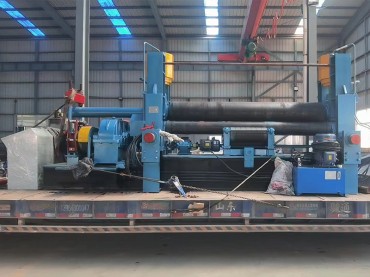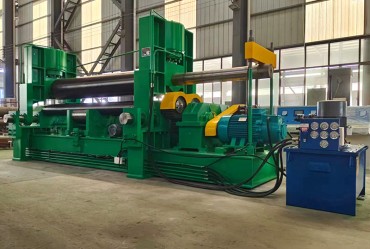
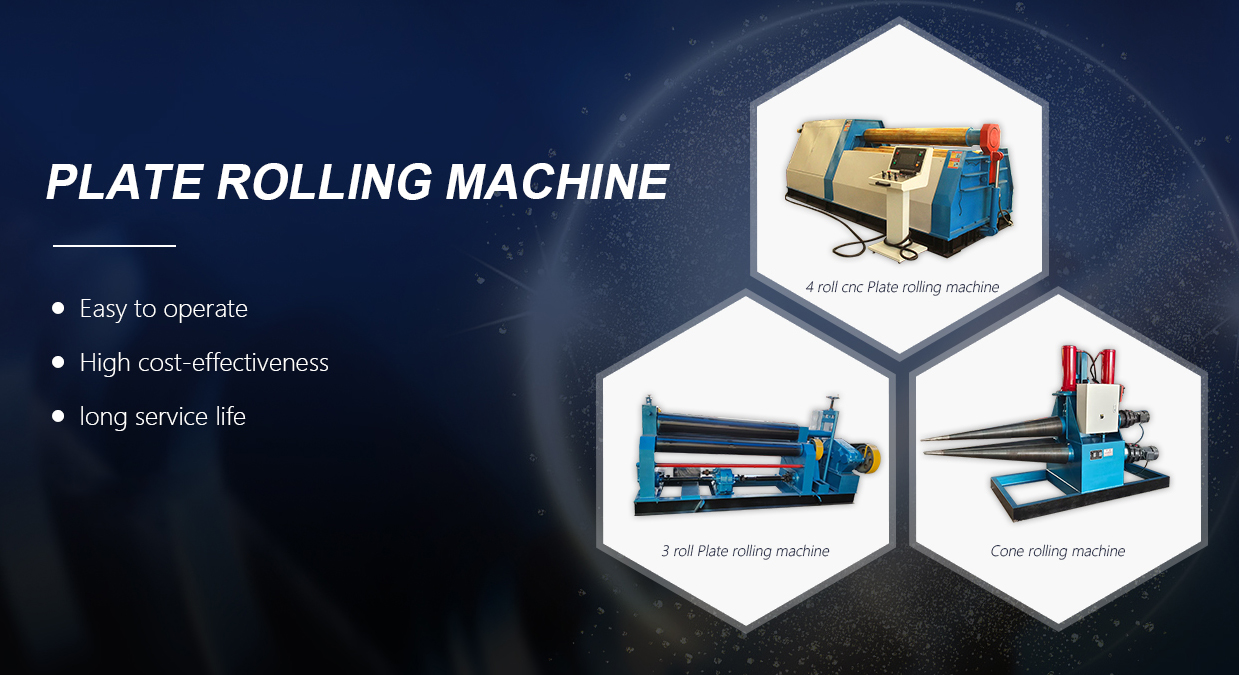
In the modern metalworking industry, sheet metal forming technology is a critical component of the manufacturing process. As the core equipment for bending and forming sheet metal, plate rolling machines are widely used in fields such as pressure vessels, wind power equipment, shipbuilding, petrochemicals, and steel structure manufacturing. Compared to traditional plate rolling equipment, hydraulic plate rolling machines demonstrate significant advantages in power control, machining precision, and operational stability. For enterprises, the appropriate selection of hydraulic plate rolling machines can not only improve production efficiency but also effectively reduce processing costs and enhance market competitiveness. This article will systematically analyze the core advantages and application value of hydraulic plate rolling machines from multiple perspectives.
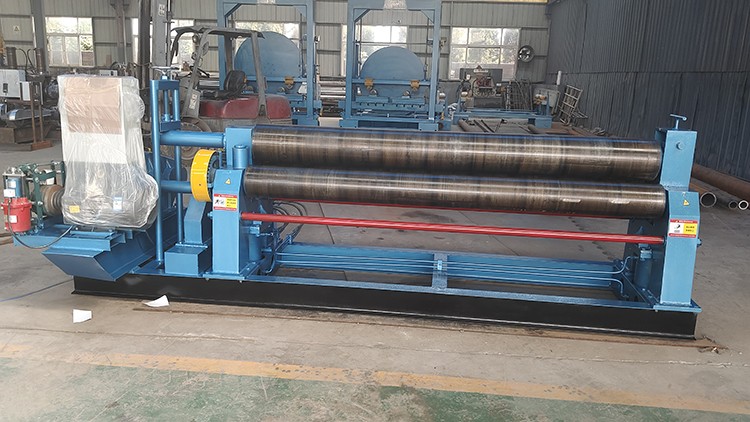
Hydraulic plate rolling machines primarily use a hydraulic system to drive the movement of upper, lower, and side rollers, causing metal plates to undergo gradual plastic deformation under applied force, ultimately forming the desired cylindrical, arc-shaped, or conical structures. Compared to mechanical drives, hydraulic drives enable more precise pressure control and smoother operation. The hydraulic system regulates pressure output through oil pumps, cylinders, and control valves, ensuring the equipment maintains stable processing performance under various operating conditions. This characteristic of “flexible drive” gives hydraulic plate rolling machines greater adaptability in complex processing scenarios.
Hydraulic plate rolling machines can finely adjust the sheet metal deformation process by precisely controlling pressure and roller positions. In actual production, this high-precision control effectively reduces errors and improves the consistency of finished products. Particularly when manufacturing pressure vessels or high-standard structural components, where requirements for roundness, straightness, and dimensional accuracy are extremely high, hydraulic plate rolling machines can effectively meet these demands, thereby reducing the need for subsequent correction processes.
Hydraulic plate rolling machines can process not only ordinary carbon steel plates but also stainless steel, aluminum plates, and high-strength alloy materials. With a wide range of adjustable pressure settings, they can accommodate the processing needs of plates with varying thicknesses and strengths. This broad adaptability gives them a distinct advantage across multiple industries, allowing enterprises to complete diverse processing tasks without frequently changing equipment.
Modern hydraulic plate rolling machines are typically equipped with CNC systems, enabling automatic control of roller positioning, pressure adjustment, and the entire processing cycle. Operators need only input relevant parameters to complete complex rolling tasks. These automated functions not only reduce reliance on manual expertise but also significantly enhance production efficiency, making them particularly suitable for mass production and standardized manufacturing.
The hydraulic system offers excellent cushioning performance, reducing impact and vibration during operation. This smooth operation not only improves processing quality but also minimizes equipment wear. Compared to mechanical equipment, the key components of hydraulic plate rolling machines experience more uniform stress distribution, thereby extending the overall service life and reducing long-term maintenance costs.
Safety is a critical metric for industrial equipment. Hydraulic plate rolling machines are typically equipped with multiple safety protection devices, such as overload protection, emergency stop systems, and safety interlocks. In the event of an anomaly, the equipment can quickly halt operation, effectively preventing accidents and ensuring operator safety.
In the pressure vessel manufacturing industry, hydraulic plate rolling machines enable high-precision cylindrical processing to meet stringent quality standards; In the wind power equipment sector, the manufacturing of large-scale tower sections requires high-strength rolling capabilities, which hydraulic equipment can reliably fulfill; in the shipbuilding industry, the processing of large quantities of curved sheet metal places high demands on equipment, and hydraulic plate rolling machines provide consistent and stable processing capabilities. Furthermore, in steel structure engineering and petrochemical equipment manufacturing, hydraulic plate rolling machines play an irreplaceable role, with their high efficiency and stability significantly enhancing production efficiency.
Compared to traditional mechanical plate rolling machines, hydraulic plate rollers offer distinct advantages in several areas. First, in terms of power output, hydraulic systems allow for continuous adjustment, whereas mechanical equipment typically relies on fixed transmission structures, resulting in limited flexibility. Second, regarding machining precision, hydraulic control is more precise, which helps improve product quality. Additionally, in terms of user experience, hydraulic equipment is more user-friendly and offers a higher degree of automation, effectively reducing labor intensity. Furthermore, regarding maintenance, although the hydraulic system has a relatively complex structure, its overall failure rate is lower, ensuring more stable long-term operation.
With the promotion of green manufacturing concepts, the energy-saving performance of equipment is receiving increasing attention. By optimizing the design of the hydraulic system, hydraulic plate rolling machines can reduce energy loss and improve energy utilization efficiency. Some advanced models also incorporate energy-saving hydraulic systems or servo control technology, which not only reduce energy consumption but also enhance the equipment’s response speed. This not only meets environmental requirements but also helps enterprises reduce operating costs.
Hydraulic plate rolling machines are relatively simple to maintain on a daily basis. By regularly inspecting the condition of the hydraulic oil, cleaning the system, and maintaining key components, long-term stable operation of the equipment can be ensured. Furthermore, modern equipment is typically equipped with fault diagnosis systems that can promptly detect and address issues, thereby reducing downtime and improving production continuity.
Thanks to their high precision, stability, operational flexibility, and robust safety features, hydraulic plate rolling machines have become essential equipment in the modern sheet metal processing industry. Their value continues to grow across both traditional manufacturing sectors and emerging industries. For businesses, selecting a high-performance hydraulic plate rolling machine not only improves production efficiency and product quality but also reduces operating costs, enabling long-term, stable growth.
 Address:Room 1202, Detaitang Building, No. 118 Huaguang Road, Zhangdian District, Zibo, Shandong
 WhatsApp:+8615653328535
 Wechat: +8615965331535
  E-mail:zs@sdsmachinery.com