
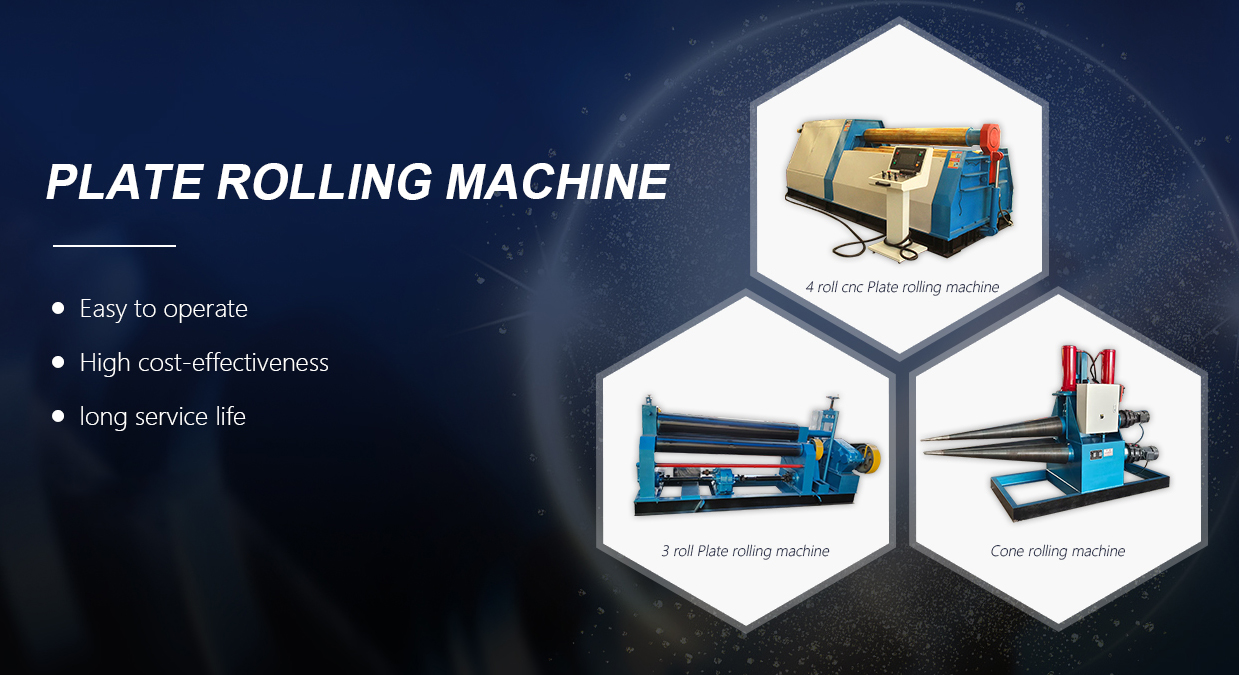
With the growing demand for high-precision and efficient equipment in modern manufacturing, plate rolling machines have become indispensable tools in major industrial plants and workshops as one of the core devices in metal processing. Among the various types of plate rolling machines, manual plate rolling machines have emerged as the preferred choice for many small and medium-sized enterprises and workshops due to their simple structure, ease of operation, and lower cost.
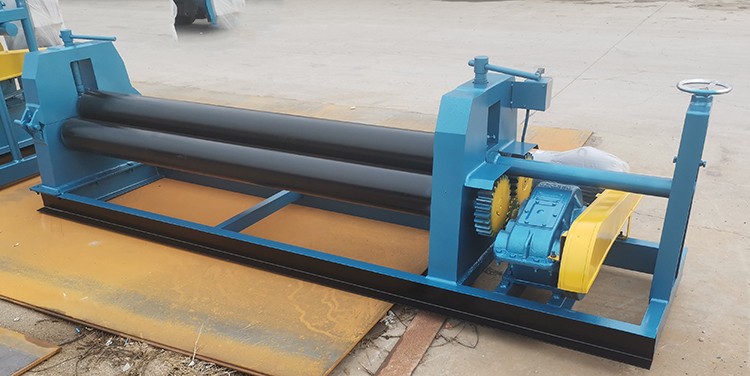
A manual plate rolling machine is a mechanical device that controls the plate rolling process through manual operation. It is primarily used to bend and roll metal sheets into circular, conical, or other complex shapes. Typically composed of three rollers—two working rollers and one support roller—the operator manually rotates the rollers to control the metal sheet's rolling process. Compared to automatic or electric plate rolling machines, manual models offer simpler operation and a relatively straightforward structure. They are typically employed in small to medium-sized work environments and are well-suited for processing thinner, smaller-sized metal plates.
Manual plate rolling machines induce plastic deformation in metal plates through mechanical force, ultimately forming the desired curved surface shape. The core principle involves using the rotation and pressure of the rollers to progressively bend the sheet between them. Typically, the upper roller is the drive roller, responsible for applying pressure and moving the sheet, while the lower roller is the driven roller, providing support and assisting in forming. By adjusting the gap and pressure between the rollers, the curvature and diameter of the bend can be controlled.
(1) Simple Structure: Manual plate rolling machines feature a straightforward design, typically comprising three rollers, an operating handwheel, and a support structure. This simplicity facilitates maintenance and allows operators to learn quickly.
(2) Low Cost: Compared to highly automated roll forming machines, manual models offer lower investment costs, making them suitable for small and medium-sized enterprises or workshops with limited budgets.
(3) User-Friendly Operation: Manual plate rolling machines feature straightforward, intuitive operation. Operators can manually adjust roller spacing to effortlessly control the rolling process. They demonstrate excellent flexibility when processing thin metal sheets.
(4) Wide Applicability: Manual plate rolling machines can not only roll circular metal plates but also achieve conical plate rolling by adjusting the roller spacing. They are suitable for processing various metal materials such as steel plates, stainless steel, and aluminum sheets.
(5) Compact Size, Space-Saving: manual plate rolling machines have a small footprint, making them ideal for small workshops and limited spaces without occupying excessive working area.
(1) Metal Processing Industry: Manual plate rolling machines are widely used in metal processing for forming sheet metal. They are particularly common in manufacturing various metal drums, pipes, elbows, fuel tanks, and similar components.
(2) Construction Industry: In construction, manual plate rolling machines are frequently used to roll metal roofing, wall panels, and other structural components. Due to the high demands on sheet dimensions and shapes in construction projects, manual plate rolling machines are widely adopted for their precise rolling capabilities.
(3) Mechanical Manufacturing Industry: In mechanical manufacturing processes, manual plate rolling machines are frequently used to process various curved components such as cylinders, boilers, and storage tanks. Their adjustable rolling functions make them suitable for fabricating parts of diverse shapes.
(4) Shipbuilding: Within the shipbuilding industry, manual plate rolling machines are extensively employed for rolling metal plates used in hull construction, facilitating the production of compliant ship components.
(5) Automotive Manufacturing: In the automotive sector, manual plate rolling machines can be utilized to fabricate metal plates required for vehicle bodies and their components, particularly for small-batch production and custom parts.
- Lower Cost: Compared to automated equipment, manual plate rolling machines have a lower purchase cost, making them suitable for businesses with limited budgets.
- Simple Operation: Operators can learn to use them without complex training, accommodating production needs of various scales.
- Easy Maintenance: Due to their simple structure, manual plate rolling machines are easy to repair and maintain, requiring no high maintenance costs.
- High Flexibility: Ideal for small-batch production and custom requirements, offering precise control over complex metal sheet shapes.
With their straightforward design, affordable cost, and flexible operation, manual plate rolling machines play a vital role in small workshops and SMEs. Despite limitations in production efficiency and application scope, their high cost-effectiveness makes them the preferred choice for metal sheet rolling in many businesses.
 Address:Room 1202, Detaitang Building, No. 118 Huaguang Road, Zhangdian District, Zibo, Shandong
 WhatsApp:+8615653328535
 Wechat: +8615965331535
  E-mail:zs@sdsmachinery.com


