
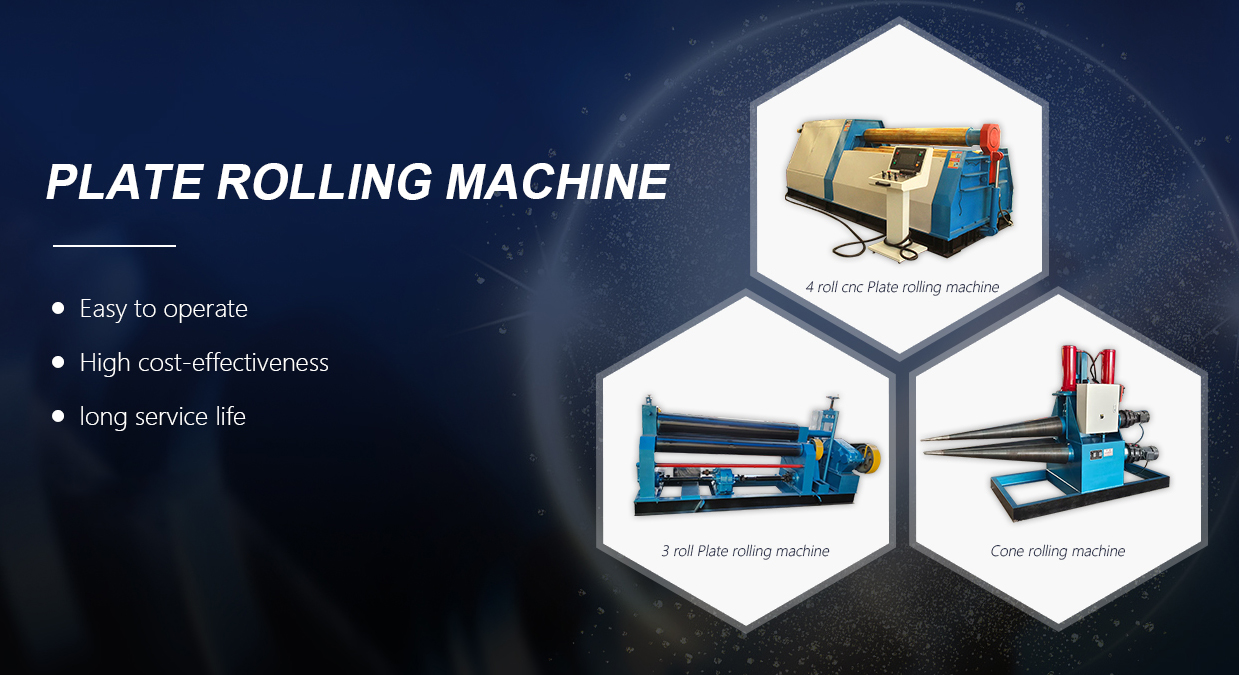
Manual plate rolling machines are common metalworking equipment widely used for curling and forming sheet metals such as steel plates, aluminum plates, and copper plates. Due to their simple structure, ease of operation, and low maintenance costs, manual plate rolling machines are extensively employed in many small factories, workshops, and maintenance units. Although modern CNC and hydraulic plate rolling machines offer advantages in efficiency and precision, manual plate rolling machines remain the preferred choice for many enterprises due to their excellent cost-effectiveness.
Manual plate rolling machines operate by applying rotational and compressive forces to bend metal sheets into the desired curved shape. The equipment typically consists of three rollers: two lower rollers and one upper roller. The metal sheet is compressed between the lower and upper rollers to form a circular or other shape. Since operation is manual, the operator adjusts the roller positions by turning a handle or handwheel to achieve different radii and shapes.
Proper operating procedures ensure efficient machine performance while minimizing equipment wear and operational risks. The basic steps are as follows:
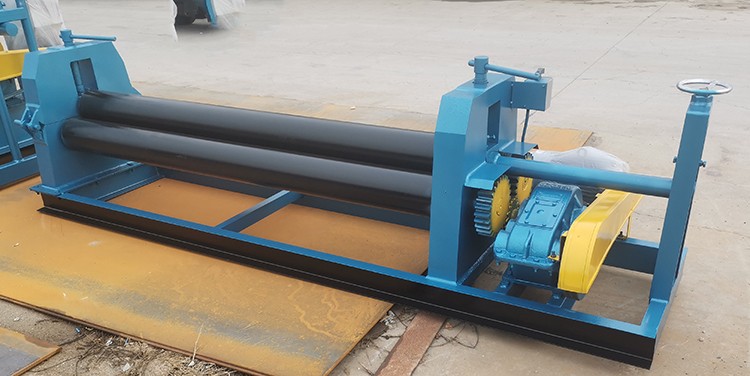
- Inspect equipment condition: Verify all components function correctly, particularly ensuring rollers are clean and handles/handwheels operate smoothly.
- Clean workpiece: Ensure the metal plate to be rolled is free of rust or other contaminants to prevent equipment damage or compromised processing accuracy.
- Select appropriate metal plate: Choose plates of suitable thickness and material based on process requirements. Excessively thick or hard plates may require stronger equipment.
- Adjust upper roller height: Modify the gap between the upper and lower rollers based on sheet thickness and desired bending radius. Generally, thicker sheets require greater spacing. Raise or lower the upper roller using the handwheel to ensure smooth sheet entry into the bending process.
- Adjust the lower roller position: Ensure the lower roller is properly positioned to prevent sheet misalignment or uneven bending during the rolling process.
Gently place one end of the metal sheet between the machine's rollers, ensuring both ends are evenly aligned and parallel to the rollers. Gently turn the handwheel to guide the sheet into the rollers, preventing skewing or jamming due to improper operation.
Activate roller rotation by turning the handwheel or handle. Manual roll bending machines typically use one or more handwheels to control roller rotation. Apply consistent force when turning the handwheel to ensure smooth sheet progression between rollers.
- Gradual compression: As the rollers rotate, the metal sheet gradually bends. Each turn of the handwheel bends the sheet by a specific angle.
- Check bending results: Periodically inspect the bending progress during operation to ensure the curve is uniform and meets specifications. If excessive bending occurs, slightly loosen the upper roller to reduce the bending angle.
Stop operation when the metal sheet reaches the predetermined bend angle. At this point, manually adjust the rollers to remove the sheet from the equipment. If further curling is required, continue the process by adjusting the roller spacing and repeating the operation.
After rolling, promptly clean the rolling machine and work area to prevent metal debris or oil residue from affecting equipment lifespan. Regularly lubricate and maintain the manual rolling machine to ensure smooth operation of all components.
Although manual plate rolling machines are simple to operate, they exert high mechanical pressure. Therefore, strict adherence to safety protocols is essential during operation to prevent accidents.
Before using the manual plate rolling machine, inspect all components for integrity, particularly the condition of the rollers and handwheel, to ensure the equipment is in good working order.
During operation, wear necessary protective equipment such as safety goggles and gloves to prevent accidents. Sharp edges may form on metal sheets during rolling, requiring operators to exercise extreme caution.
Operate the manual plate rolling machine within its rated capacity, especially when rolling excessively thick or hard plates. Overloading may damage the equipment and potentially injure operators.
Keep the work area tidy, preventing metal debris or tools from scattering on the floor to minimize operational hazards.
Manual plate rolling machines serve as highly efficient and economical metal curling tools, widely used in various small and medium-sized metal processing facilities. Through proper operation and skillful techniques, these machines enable users to achieve precise metal sheet rolling, meeting diverse production requirements. Concurrently, operators must strictly adhere to safety protocols to ensure work is conducted in a secure and standardized environment, preventing unnecessary equipment damage and personal injury.
 Address:Room 1202, Detaitang Building, No. 118 Huaguang Road, Zhangdian District, Zibo, Shandong
 WhatsApp:+8615653328535
 Wechat: +8615965331535
  E-mail:zs@sdsmachinery.com


