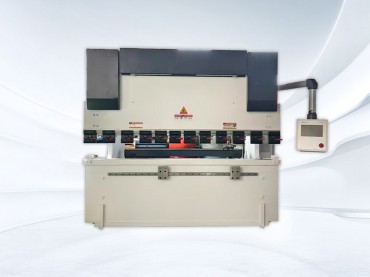
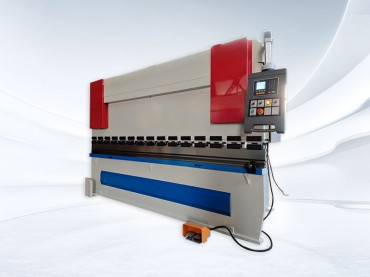
Press brakes, as crucial mechanical equipment in the metalworking industry, are widely used for bending and forming various metal materials during manufacturing and processing. By precisely controlling pressure and worktable movement, these machines can bend metal sheets into parts of different angles, shapes, and dimensions according to process requirements. With the continuous growth of manufacturing and industrial demands, press brakes play an irreplaceable role in sectors such as metal fabrication, construction, automotive, and aerospace.
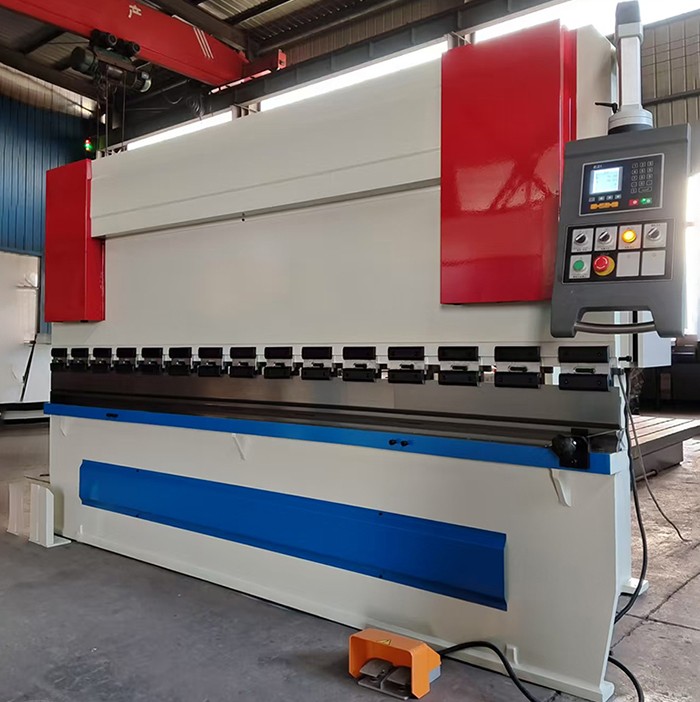
(1) Metal Sheet Bending and Forming: By precisely controlling the movements of the upper and lower dies, press brakes can bend metal sheets into different angles or shapes. This process is common in mechanical manufacturing, construction, home appliances, and other industries.
(2) Processing Diverse Bending Shapes: Beyond standard right-angle bends, press brakes can produce complex metal parts featuring circular, V-shaped, U-shaped, Z-shaped, and other intricate forms to meet varied manufacturing requirements.
(3) High-Precision Control: Press brakes utilize CNC systems to regulate the bending process, ensuring accuracy in angle, depth, and shape. This makes them suitable for parts requiring high precision.
(4) Material Dimension Control: Press brakes adjust pressure and die configurations based on material properties like thickness, hardness, and elasticity. This prevents excessive deformation or damage during processing.
2. Working Principle of Press Brakes
(1) Upper and Lower Die Coordination: The shape and size of upper and lower dies are typically customized for specific processing requirements. The upper die is usually an adjustable device that can be positioned up or down to alter bending angle or depth.
(2) Pressure System: The press brake's pressure system delivers driving force through either a hydraulic or mechanical system. Hydraulic press brakes deliver stable pressure through hydraulic cylinders, while mechanical press brakes utilize springs, mechanical transmission, or similar methods to generate force.
(3) CNC System: Modern press brakes widely employ CNC systems for automated control. These systems precisely set parameters like bending angle, speed, and pressure, ensuring consistent accuracy for each bend. High-end press brakes also feature automatic docking devices to enhance processing efficiency.
(4) Operating Modes: Traditional press brakes are predominantly manually operated, whereas modern press brakes typically feature automated operating systems. These systems enable preset programming, automatic adjustment, and automatic stop functions, significantly boosting production efficiency and machining precision.
3. Application Fields of Press Brakes
(1) Construction Industry: In construction, press brakes process various metal sheets and structural components such as metal roofs, wall panels, and building steel structures. They precisely control the shape and angles of metal sheets, ensuring structural stability and safety.
(2) Automotive Manufacturing: During vehicle production, press brakes process metal components like body panels, chassis frames, and door/window frames. Precise bending ensures these parts meet strength, dimensional, and quality standards.
(3) Aerospace: The aerospace sector demands extreme precision in metal parts. Press brakes fabricate high-accuracy components such as aircraft fuselages and engine parts, guaranteeing their structural integrity, reliability, and safety.
(4) Home Appliance Industry: Metal casings and structural components for home appliances are predominantly processed using press brakes. These machines not only ensure the aesthetic appeal of appliance parts but also enhance product strength and durability.
(5) Mechanical Manufacturing: Components, brackets, and frames for mechanical equipment require processing via press brakes. Capable of handling metal sheets of varying thicknesses and materials, press brakes are extensively utilized across diverse production stages in the mechanical manufacturing sector.
(6) Precision Machining Industry: Press brakes find extensive application in precision machining, particularly for high-accuracy bending of thin-gauge metal sheets. By precisely controlling bending angles and dimensions, they meet the exacting requirements of electronics, instrumentation, and similar industries.
4. Advantages of Press Brakes
(1) High Precision: Modern press brakes equipped with CNC systems maintain consistent accuracy during mass production, ensuring stable quality for every product.
(2) Versatility: Press brakes can process metal parts into diverse shapes and angles, accommodating varied production needs with high flexibility.
(3) Enhanced Production Efficiency: With high automation levels, press brakes reduce manual labor and boost production efficiency, demonstrating significant advantages in large-scale manufacturing.
(4) Labor Savings: Through CNC systems and automated equipment, press brakes perform complex operations with minimal human intervention, lowering labor costs.
As a vital piece of equipment in metal processing, the press brake has gained widespread adoption across various industries due to its high precision and efficiency. With continuous technological advancements, press brakes will continue to play a significant role in industrial manufacturing, providing more efficient and precise processing solutions for diverse sectors.

 Address:Room 1202, Detaitang Building, No. 118 Huaguang Road, Zhangdian District, Zibo, Shandong
 WhatsApp:+8615653328535
 Wechat: +8615965331535
  E-mail:zs@sdsmachinery.com