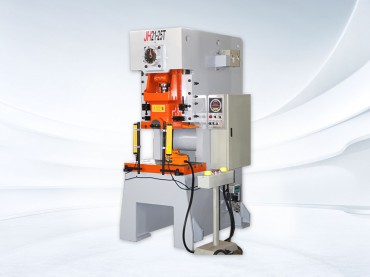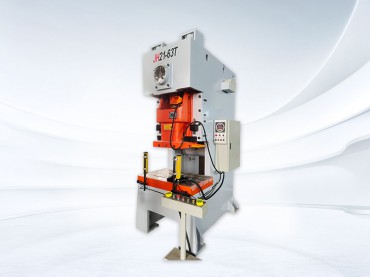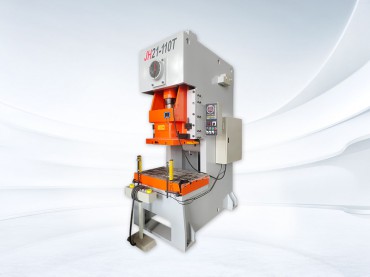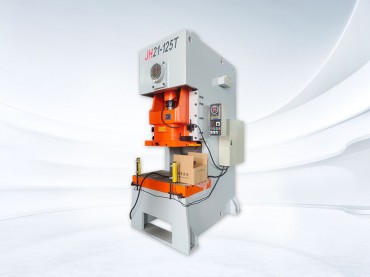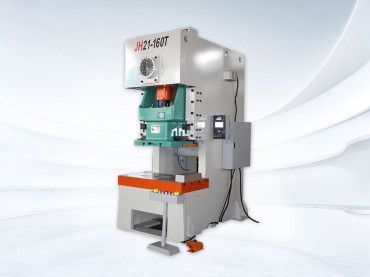
Punch presses are mechanical equipment widely used in metal processing, manufacturing, and various production lines. They perform operations such as cutting, punching, and forming on materials like metal and plastic through impact or pressure. Characterized by high efficiency, precision, and reliability, punch presses play a vital role in modern manufacturing. Their applications span diverse fields, from traditional automotive manufacturing to the production of modern electronic devices.
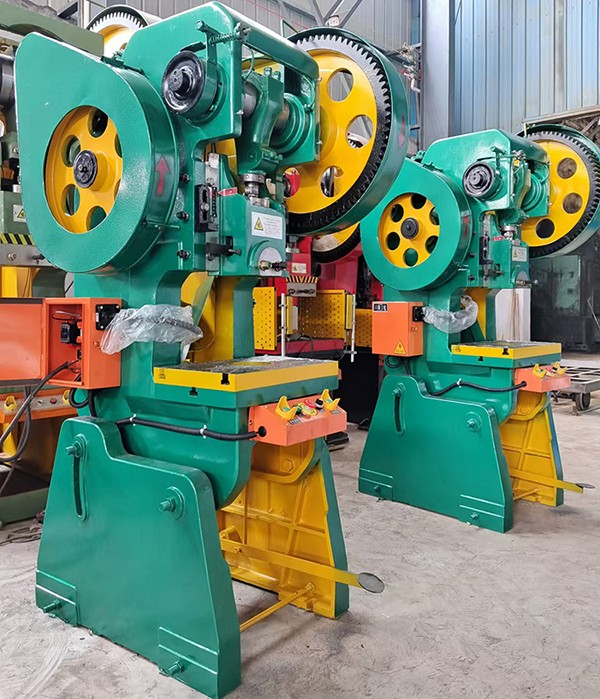
One of the primary advantages of punch presses is their exceptional production efficiency. Compared to manual operations or other traditional equipment, punch presses can complete large volumes of repetitive machining tasks at significantly faster speeds. Capable of continuous operation, they are well-suited for batch production and large-scale manufacturing, substantially enhancing the automation level of production lines.
Modern presses incorporate advanced automated control systems, enabling functions such as automatic loading/unloading, automatic positioning, and automatic feeding. This reduces manual intervention, lowers labor intensity, and boosts overall production efficiency. Particularly in high-volume production scenarios, presses can produce thousands of parts within a short timeframe.
Punch presses excel in high-volume and large-scale production. Their stable operational performance maintains high efficiency, ensuring effective control over processing time and delivery cycles for each product. With minimal processing time per part, punch presses meet production targets during periods of high demand.
Another key advantage of punch presses is their exceptional machining accuracy. Their operating principles and precision mechanical design enable high-speed operation while ensuring each part meets standard quality requirements. High-precision punch presses deliver extremely fine holes and clean cut edges, guaranteeing dimensional accuracy, shape integrity, and quality consistency for parts and products.
Punch presses precisely punch holes and make cuts according to workpiece design specifications, guaranteeing consistency in hole positioning and shape. For components with stringent dimensional requirements, punch presses achieve micron-level accuracy, ensuring finished parts perfectly match design drawings.
Punch presses also perform cutting without generating burrs, resulting in smoother finished parts and eliminating the need for post-processing. Particularly in automotive manufacturing and electronics, precision punching significantly enhances surface quality and assembly accuracy.
Punch presses' efficiency and automation capabilities substantially lower production expenses. While the initial investment is relatively high, long-term cost savings are achieved through increased productivity and reduced human error.
Punch presses enable automated operation, reducing reliance on manual labor. This yields significant savings in labor costs, particularly during high-volume production. Technicians only need to perform basic machine setup and maintenance, with minimal intervention required during routine operation.
The high processing precision and stable operation of punch presses minimize material waste. Through precise calculations and automatic adjustments, they effectively minimize defective products and enhance material utilization efficiency.
Modern presses feature modular designs that allow rapid die changes based on production needs and simplify maintenance. Their efficient operation boosts equipment utilization rates while reducing downtime and maintenance periods, thereby lowering production line operating costs.
Beyond performing common functions like punching holes, cutting, and stamping, press brakes offer numerous additional capabilities. Depending on production requirements, press brakes can be equipped with different dies and attachments to expand their application scope.
Punch presses can perform not only single-function punching and cutting but also achieve various processing methods like bending, forming, stretching, and shearing by changing dies. This makes them widely applicable across numerous manufacturing sectors, including automotive, home appliances, aerospace, and electronics.
By swapping dies, press brakes can rapidly adjust their processing methods to meet production demands for different specifications and shapes. This provides exceptional flexibility for customized small-batch production.
Modern press brakes can simultaneously complete multiple processes, such as composite operations like stamping and riveting. This enables the completion of several processing steps in a single operation, enhancing production efficiency and reducing equipment investment.
Operational safety is another significant advantage of presses. Modern press equipment incorporates advanced safety protection systems, including guard covers, emergency stop buttons, and automatic detection systems, effectively preventing operator injuries. These comprehensive safety features ensure secure operation.
Presses typically feature safety guard covers and warning devices, maintaining a safe distance between operators and machinery to prevent accidents caused by improper operation. Additionally, many presses incorporate automatic locking mechanisms to prevent workpiece or tool displacement during processing.
Modern presses integrate intelligent monitoring and alarm systems. Upon detecting anomalies or malfunctions, the system triggers immediate alerts and halts machine operation. This significantly reduces equipment damage risks and lowers accident probabilities.
In summary, punch presses hold a pivotal position in modern manufacturing due to their multiple advantages: high efficiency, precision, reliability, and environmental friendliness. They not only enhance production efficiency, ensure processing quality, and reduce production costs but also meet diverse complex processing demands through their versatility. With continuous technological advancements, the application scope of punch presses will continue to expand, making them indispensable equipment across various industries.
 Address:Room 1202, Detaitang Building, No. 118 Huaguang Road, Zhangdian District, Zibo, Shandong
 WhatsApp:+8615653328535
 Wechat: +8615965331535
  E-mail:zs@sdsmachinery.com