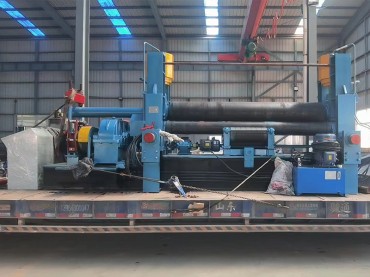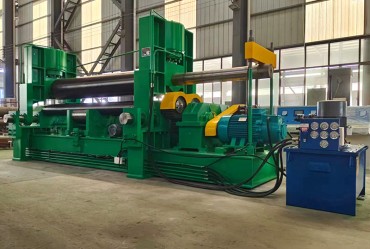
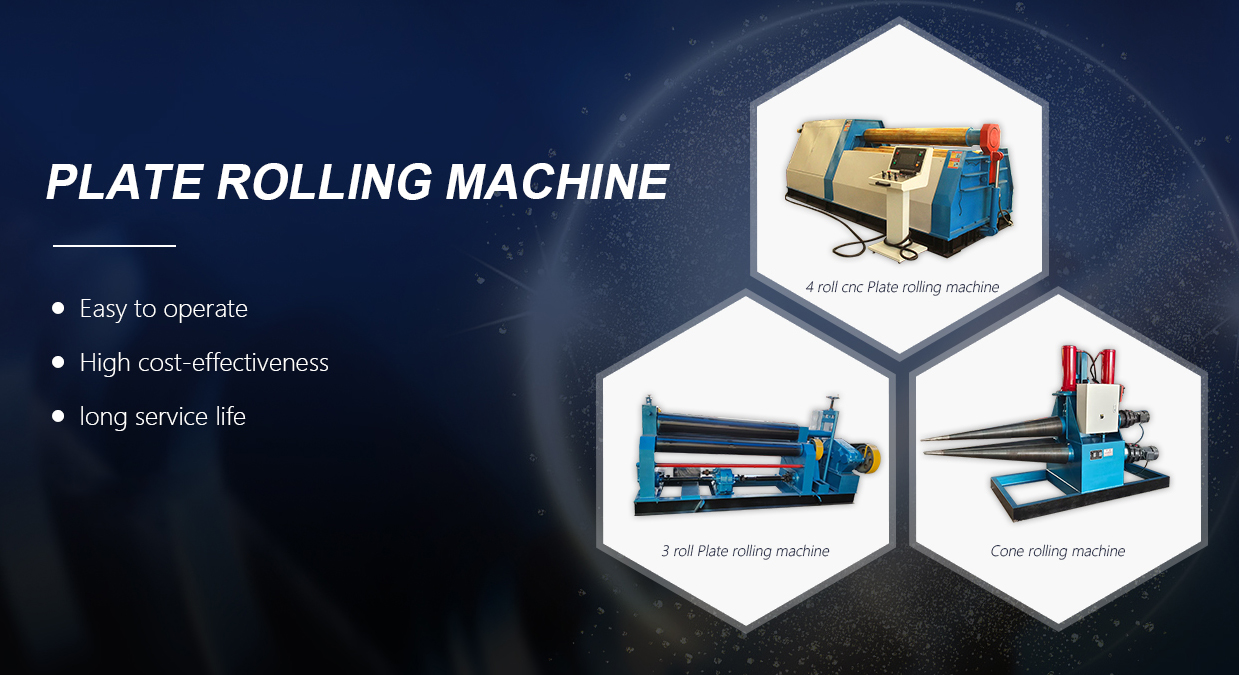
A hydraulic plate rolling machine is a mechanical device that utilizes a hydraulic system as its power source to bend and form metal plates. It drives the working rollers via hydraulic cylinders, causing plastic deformation of the plate between the rollers to achieve workpieces with predetermined shapes, such as circular, curved, or conical components. This equipment finds extensive application in metal structure manufacturing, pressure vessel production, pipe processing, and related fields.
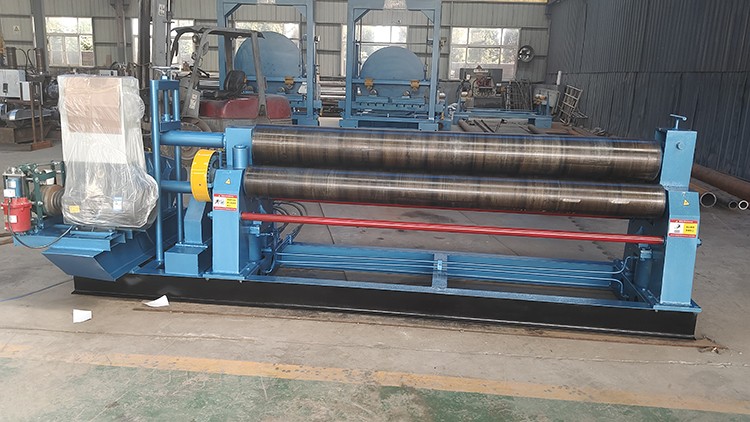
(1) Loading and Centering: Operators position the metal plate between the machine's working rolls, typically comprising an upper and lower roll. Mechanical or hydraulic centering devices ensure precise alignment of the plate relative to the rolls, preventing skewing or misalignment during rolling.
(2) Pre-bending and Rolling: The hydraulic system drives the upper roll downward, applying pressure to bend the plate. Pre-bending is first performed at both ends to eliminate straight edges. Subsequently, the plate continuously passes through the roll gap via rotational movement, progressively forming into cylinders or arcs with the desired curvature.
(3) Circularity Adjustment and Unloading: When the plate approaches the target shape, fine adjustments eliminate ovality or local irregularities. Upon completion, the hydraulic system raises the upper roll to remove the formed workpiece.
(1) Powerful Drive: The hydraulic system delivers stable high-pressure fluid and high torque output, suitable for rolling thick plates or high-strength materials like stainless steel and alloy steel. Hydraulic transmission incorporates overload protection; when load exceeds preset limits, the system automatically relieves pressure to prevent equipment damage.
(2) Precise Control: Hydraulic servo valves and position sensors enable micrometer-level displacement control of the working rollers, ensuring rolling accuracy. For instance, when rolling thin plates, bending angles and circularity can be precisely controlled to minimize springback effects.
(3) Flexible Operation: Hydraulic Plate Rolling Machines typically support manual, semi-automatic, and fully automatic modes. Operators can select appropriate modes based on workpiece requirements and adjust rolling parameters like pressure, speed, and stroke. Some models also support asymmetric rolling for complex shapes.
(4) Wide Adaptability: The equipment processes various metals including carbon steel, aluminum, copper, and plates of different thicknesses and widths. By replacing rollers or adjusting settings, it can form workpieces ranging from small tubing to large storage tanks.
(1) Metal Structure Manufacturing: Used to produce architectural steel structures, bridge components, and towers. For instance, in large venue construction, Plate Rolling Machines form curved beams and arched supports, enhancing structural aesthetics and stability.
(2) Pressure Vessel Industry: Employed in chemical and energy sectors for manufacturing gas storage tanks, reactors, and boiler drums. Plate rolling machines ensure drum roundness and weld joint alignment precision, meeting pressure vessel safety standards.
(3) Pipeline and Duct Fabrication: Used to produce oil pipelines, ventilation ducts, and chimneys. Equipment can roll pipe fittings of varying diameters, ensuring flush interfaces and reducing installation resistance.
(4) Shipbuilding and Vehicle Manufacturing: In shipbuilding and automotive industries, used for rolling hull plates, vehicle chassis, and body components. The high-precision control of hydraulic plate rolling machines enhances workpiece consistency and reduces subsequent assembly workload.
(1) Pre-Operation Inspection: Verify all equipment components are intact, hydraulic oil level is normal, and piping shows no leaks. Check that the working roll surface is clean, free of rust or damage. Set appropriate pressure and speed parameters based on plate characteristics.
(2) Safe Operation: Operators must wear protective gear such as gloves and safety goggles. Avoid placing hands near the roll gap during rolling. Equipment must be fitted with an emergency stop button for immediate shutdown during abnormal conditions.
(3) Regular Maintenance: Periodically replace hydraulic oil and filters to maintain fluid cleanliness. Inspect hydraulic cylinder seals and pipe joints to prevent leaks. Lubricate work rolls and transmission components to reduce wear. Calibrate the control system regularly to ensure parameter accuracy.
(4) Troubleshooting: Common issues include insufficient hydraulic pressure, roller movement desynchronization, or control system failure. Low pressure may result from pump wear or valve blockage; inspect and replace components as needed. Roller desynchronization can be resolved by adjusting hydraulic valves or sensors. For control system failures, examine electrical circuits and program settings.
Hydraulic plate rolling machines, as vital equipment in metal forming, play a crucial role in industrial production due to their powerful drive, precise control, and broad adaptability. Proper operation and maintenance not only extend the equipment's service life but also ensure processing quality and workplace safety. With technological advancements, hydraulic plate rolling machines will continue to evolve, providing more efficient solutions for the manufacturing industry.
 Address:Room 1202, Detaitang Building, No. 118 Huaguang Road, Zhangdian District, Zibo, Shandong
 WhatsApp:+8615653328535
 Wechat: +8615965331535
  E-mail:zs@sdsmachinery.com