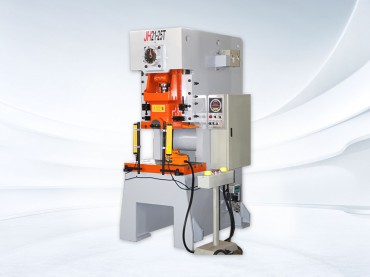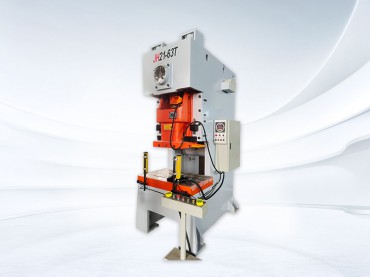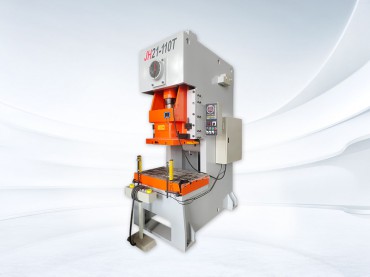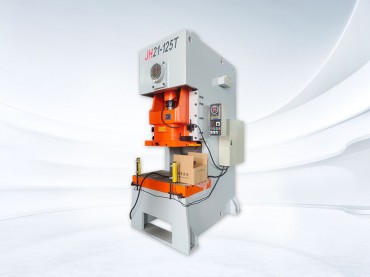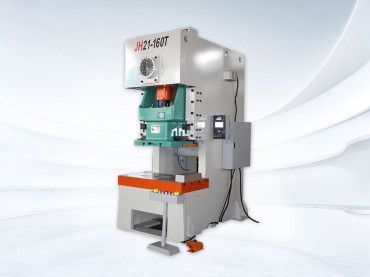
In modern manufacturing, mechanical presses serve as core equipment in numerous production lines due to their efficient stamping capabilities and precise operational performance. Widely used in metal processing, these machines play a vital role across various industries including automotive manufacturing, home appliance production, electronic component fabrication, and other metalworking sectors.
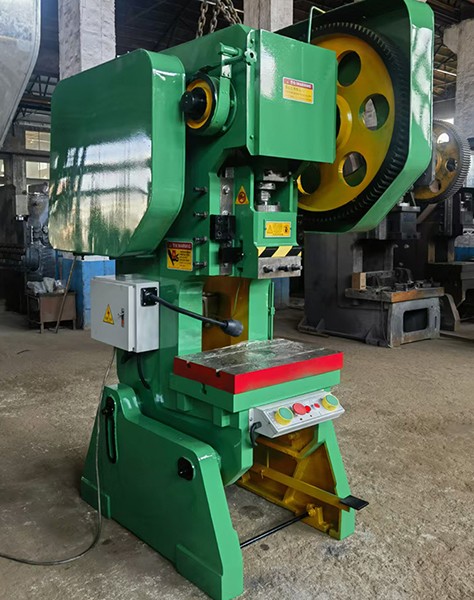
A mechanical press is a machine tool used for stamping and forming metal sheets, profiles, or other materials. It primarily applies mechanical force through tools (such as punches) to the material, enabling operations like cutting, bending, stretching, and embossing. The press operates based on a power transmission system, converting electrical energy from a motor into the mechanical force required for stamping via components like crankshafts and flywheels.
Typically, a mechanical press consists of a frame, worktable, punch, ram, flywheel, crankshaft, and other components. Driven by the ram, the punch descends at high speed, exerting immense pressure on the workpiece to induce plastic deformation and complete various stamping processes.
The fundamental principle involves an electric motor driving the flywheel, which transmits power through the crankshaft to enable the ram's vertical movement along guide rails. During downward ram motion, the punch exerts immense pressure on the workpiece to perform operations like punching, cutting, or bending. The specific process is as follows:
(1) Power Transmission: The motor supplies power, which is transmitted to the ram through mechanical components like the flywheel, crankshaft, and connecting rod.
(2) Ram Movement: The ram moves vertically up and down, driven by the motor. This movement is typically perpendicular to the worktable.
(3) Pressure Application: Connected to the punch, the ram applies pressure to the workpiece during downward movement, achieving the forming operation.
(4) Return Stroke: After completing the stamping operation, the ram ascends, separating the workpiece from the punch to prepare for the next cycle.
Mechanical presses typically offer high precision and repeatability, enabling rapid, high-volume stamping operations. They are particularly suited for metal processing in large-scale production.
Mechanical presses are widely used across various sectors, playing a critical role in metal fabrication, automotive manufacturing, home appliance production, and electronic component assembly.
Mechanical presses serve as the core equipment in the metal fabrication industry. They are commonly employed for sheet metal forming operations such as punching, cutting, stretching, and bending. In mass production, mechanical presses efficiently execute these complex processes. Within automotive manufacturing, they stamp components like body frames, doors, and hoods. Through precise stamping techniques, they enhance production efficiency while ensuring part quality.
The home appliance manufacturing industry also extensively utilizes mechanical presses, particularly for producing metal components like housings and panels. Mechanical presses enable high-precision cutting and forming, meeting the stringent aesthetic and structural demands of appliance production. In the manufacturing of refrigerators, washing machines, air conditioners, and other appliances, mechanical presses are employed to stamp housings, inner liners, and other parts. Precise stamping processes not only boost production efficiency but also reduce labor costs and material waste.
Mechanical presses also find extensive application in the electronics sector, primarily for processing electronic components like battery casings, connectors, and plugs. The production of these small precision parts demands stringent stamping requirements, which mechanical presses meet through their high precision and repeatability. In electronics manufacturing, mechanical presses stamp battery casings and other small metal components—such as phone cases and computer enclosures—ensuring part accuracy and quality.
In the construction and decoration industries, mechanical presses perform operations like cutting and bending metal sheets. Their applications are extensive, encompassing both the processing of structural building materials and the production of decorative panels and trim. Within construction, mechanical presses manufacture door and window frames, metal wall panels, and similar components. In the decoration sector, they process metal trim, grilles, and other decorative elements.
- High Efficiency: The high-speed stamping capability of mechanical presses enables them to complete large-scale stamping tasks in a short time, making them particularly suitable for mass production.
- High Precision: Through advanced control systems and precision mechanical structures, mechanical presses ensure consistent quality and high accuracy in every stamping operation, meeting product quality requirements.
- High Automation Level: Mechanical presses can be integrated into automated production lines, further enhancing production efficiency and reducing manual intervention.
- Adaptability: Whether for batch production or customized orders, mechanical presses flexibly accommodate diverse processing demands.
As indispensable equipment in modern manufacturing, mechanical presses play a pivotal role across multiple industries due to their efficiency, precision, and flexibility. From metal fabrication to electronics manufacturing and home appliance production, they significantly drive improvements in production efficiency and quality. With ongoing technological advancements, the functionality of mechanical presses will continue to evolve, bringing greater innovation and development opportunities to various sectors in the future.
 Address:Room 1202, Detaitang Building, No. 118 Huaguang Road, Zhangdian District, Zibo, Shandong
 WhatsApp:+8615653328535
 Wechat: +8615965331535
  E-mail:zs@sdsmachinery.com