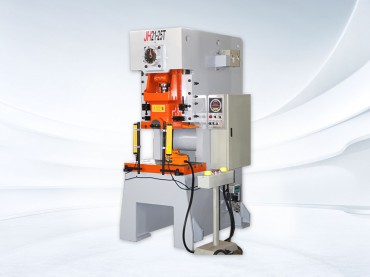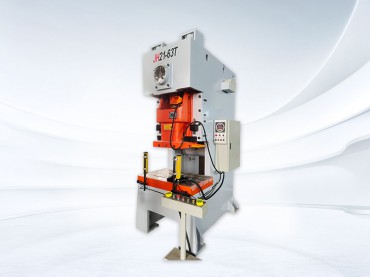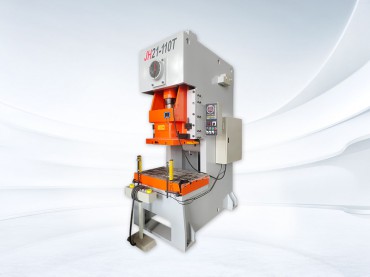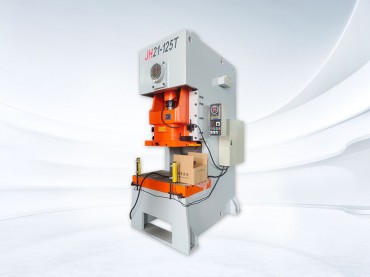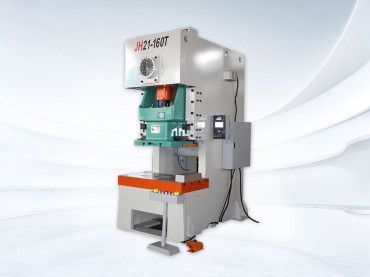
Against the backdrop of modern manufacturing continuously advancing toward higher efficiency, greater precision, and larger-scale operations, the role of various metalworking equipment within industrial systems has become increasingly prominent. Among these, the power press stands as a foundational processing machine with a long history and extremely broad application scope, spanning multiple industries including mechanical manufacturing, automotive, home appliance production, architectural hardware, and electronics manufacturing. Characterized by its mature structure, high production efficiency, and strong adaptability, it has become an indispensable piece of equipment in metal forming processes.
Power press is a machine that utilizes mechanical, hydraulic, or pneumatic methods to generate punching force. It employs dies to perform blanking, forming, or processing operations on metal sheets. Its fundamental principle involves converting power into vertical reciprocating motion, where the ram drives the die to apply instantaneous high pressure to the workpiece, thereby completing the processing cycle.
Based on power source, presses are categorized into mechanical, hydraulic, and pneumatic types. By control method, they are further divided into conventional and CNC presses. Regardless of type, their core function remains efficient, repeatable, and stable stamping of materials within short cycles.
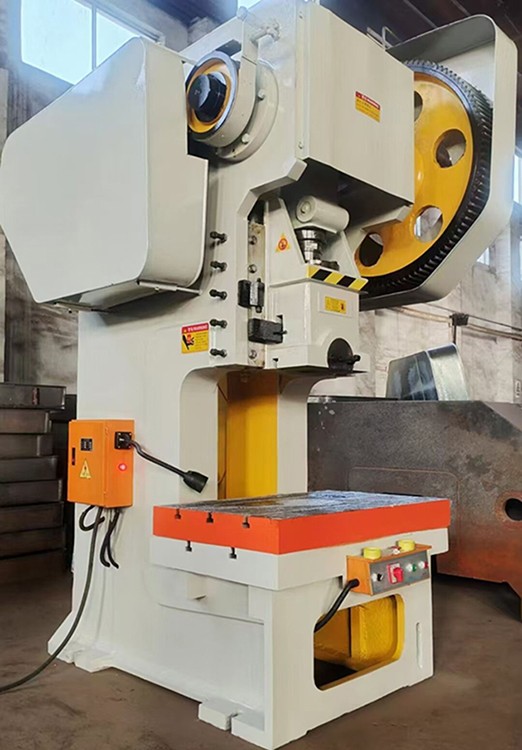
The most fundamental and common application of power presses is metal blanking and cutting. Through coordinated dies, presses can rapidly punch steel plates, aluminum sheets, stainless steel plates, and other materials into required shapes and dimensions for subsequent assembly or further processing.This method offers high efficiency and dimensional consistency, widely used in the mass production of hardware components, structural parts, and fasteners. It serves as a crucial means for achieving large-scale manufacturing in modern industry.
Beyond simple blanking, power presses can perform shallow drawing, flanging, rib pressing, and forming operations. With properly designed dies, power presses can execute multiple forming actions in a single pass, imparting specific structures and strengths to metal sheets.
On certain production lines, presses often work in conjunction with power presses, shears, and other equipment to complete complex component processing tasks, enhancing overall production efficiency.
Within the automotive industry, power presses serve as core equipment for processing body structural components and parts. Numerous components—including door inner panels, brackets, reinforcing ribs, and connecting plates—undergo blanking and forming via presses.Power presses deliver high processing speeds and repeatability, meeting the automotive sector's stringent demands for high-volume, consistent parts. This capability significantly impacts vehicle quality and assembly efficiency.
Within the home appliance and electronics sectors, power presses primarily process housings, brackets, mounting plates, and internal structural components. Metal parts produced by power presses are indispensable in products like refrigerators, washing machines, air conditioners, distribution boxes, and electronic cabinets.
Through optimized die design, power presses enhance production cadence while maintaining surface quality and reducing labor costs. They serve as foundational equipment for achieving automation and scale in home appliance manufacturing.
Within the construction sector, power presses are extensively employed to produce door and window hardware, steel structural connectors, support components, and various decorative metal fittings. This processing method not only achieves high efficiency but also ensures uniform product specifications, facilitating on-site installation and standardized project management.
In the hardware manufacturing domain, power presses are indispensable tools. Components such as hinges, angle brackets, hangers, and fasteners are predominantly produced in bulk using these machines.
(1) High Production Efficiency: Power presses achieve stamping and forming in minimal time with high precision, significantly outperforming traditional manual stamping.
(2) Simple Operation: Compared to other processing equipment, power presses offer straightforward operation requiring only basic program setup.
(3) Wide Processing Range:Power presses can process various materials and accommodate products of different sizes, producing components in diverse shapes.
(4) Excellent Stability: Compared to other equipment, power presses offer superior stability and reliability. Their high stability ensures consistent processing quality.
Overall, stamping power presses are versatile, mature fundamental metalworking equipment covering critical processes like blanking, forming, and cutting. From automotive manufacturing to home appliance production, from construction engineering to hardware fabrication, power presses remain an indispensable link in industrial production chains. As manufacturing continues to upgrade and processing demands grow increasingly diverse, power presses will evolve toward automation, precision, and efficiency. They will continue providing stable, high-efficiency processing support for modern industry, fulfilling their irreplaceable foundational role.
 Address:Room 1202, Detaitang Building, No. 118 Huaguang Road, Zhangdian District, Zibo, Shandong
 WhatsApp:+8615653328535
 Wechat: +8615965331535
  E-mail:zs@sdsmachinery.com