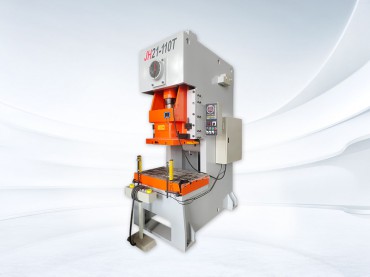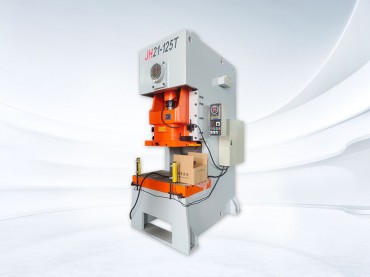
With the continuous advancement of manufacturing, precision and high-efficiency equipment plays an increasingly vital role in enhancing productivity and product quality. As a device widely applied across multiple sectors including metal processing, automotive manufacturing, and electronics, the pneumatic punch press has become one of the core pieces of equipment in modern industrial production due to its efficient and precise operational characteristics.
A pneumatic power press is a mechanical device powered by compressed air, extensively employed in metal forming, stamping, cutting, and other processing techniques. Compared to traditional mechanical and hydraulic presses, pneumatic power presses utilize gas pressure to drive operations, completing stamping tasks through rapid vertical movement of the punch. Key characteristics include rapid response, smooth operation, and stable pressure, making them ideal for production lines demanding high precision and speed.
Typically, a pneumatic punch press consists of components such as cylinders, air supply units, stamping mechanisms, and control systems. The cylinder provides power, driving the punch through air pressure. The control system regulates stamping speed, pressure, and stroke by adjusting air pressure and flow rate.
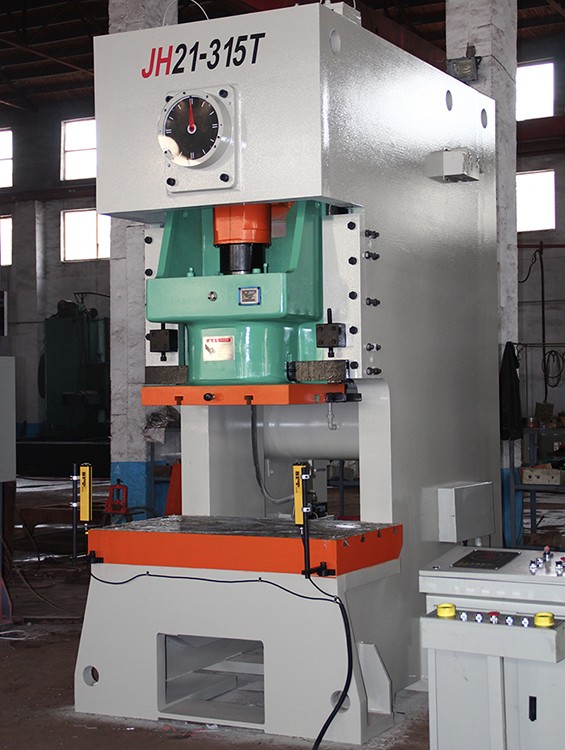
The working principle of pneumatic power press is relatively straightforward. First, compressed air is supplied from an external source (usually an air compressor). Upon entering the cylinder, the air drives the piston to generate a downward impact force. This force propels the punch downward at high speed, performing operations such as punching, cutting, and stretching on the workpiece.
During operation, the control system continuously monitors air pressure and adjusts air flow and pressure as needed. This flexible regulation mechanism enables the press to maintain stable performance across diverse processing tasks, thereby enhancing machining precision and production efficiency.
Pneumatic power presses find their most extensive application in the metal processing sector. They are utilized for stamping, cutting, bending, stretching, and other processes, suitable for processing various metal materials, particularly sheet metal. Through pneumatic power presses, manufacturers achieve efficient production processes while ensuring high precision and quality in their products.
Within the automotive sector, pneumatic power presses primarily serve component production and processing. For instance, body structural parts, engine components, and other precision-machined parts undergo stamping and cutting via pneumatic power presses. These components typically demand strict dimensional tolerances and surface quality, which pneumatic power presses reliably meet.
pneumatic power presses also play a vital role in the electronics sector. They are employed in the production of electronic components, precision connectors, and the stamping and cutting of circuit boards. The high precision and speed of pneumatic power presses enable large-scale manufacturing of small, intricate electronic components within this industry.
In the home appliance sector, pneumatic power presses are extensively used for manufacturing metal casings, internal frames, buttons, and other components. Given the industry's diverse product range and rapid product cycles, the flexibility and quick response capabilities of pneumatic power presses make them essential tools on production lines.
- High Efficiency: pneumatic power presses operate at high speeds, typically achieving a high number of strokes per minute, significantly boosting production efficiency.
- Stable Performance: Utilizing pneumatic drive ensures consistent impact force and minimal vibration during operation, guaranteeing high machining precision.
- Simple Structure: pneumatic power presses feature relatively straightforward designs, facilitating maintenance and operation. Compared to hydraulic systems, pneumatic systems require fewer components, reducing failure rates.
- Space-Saving: With compact dimensions, pneumatic power presses suit production environments with limited space, improving production line space utilization.
- High Flexibility: Air pressure and flow rates are adjustable, enabling adaptation to diverse process requirements and offering superior flexibility.
With their efficient, stable, and precise operation, pneumatic power presses hold a vital position in modern industrial manufacturing. They are widely used across metalworking, automotive production, electronics, and other sectors, providing robust support for enhancing production efficiency and product quality. Despite certain limitations, pneumatic power press will continue to play a vital role in future production environments as technology advances. For manufacturers, selecting the appropriate pneumatic punch press not only boosts production efficiency but also enhances product quality and reduces production costs, thereby securing a competitive edge in an increasingly competitive market.
 Address:Room 1202, Detaitang Building, No. 118 Huaguang Road, Zhangdian District, Zibo, Shandong
 WhatsApp:+8615653328535
 Wechat: +8615965331535
  E-mail:zs@sdsmachinery.com