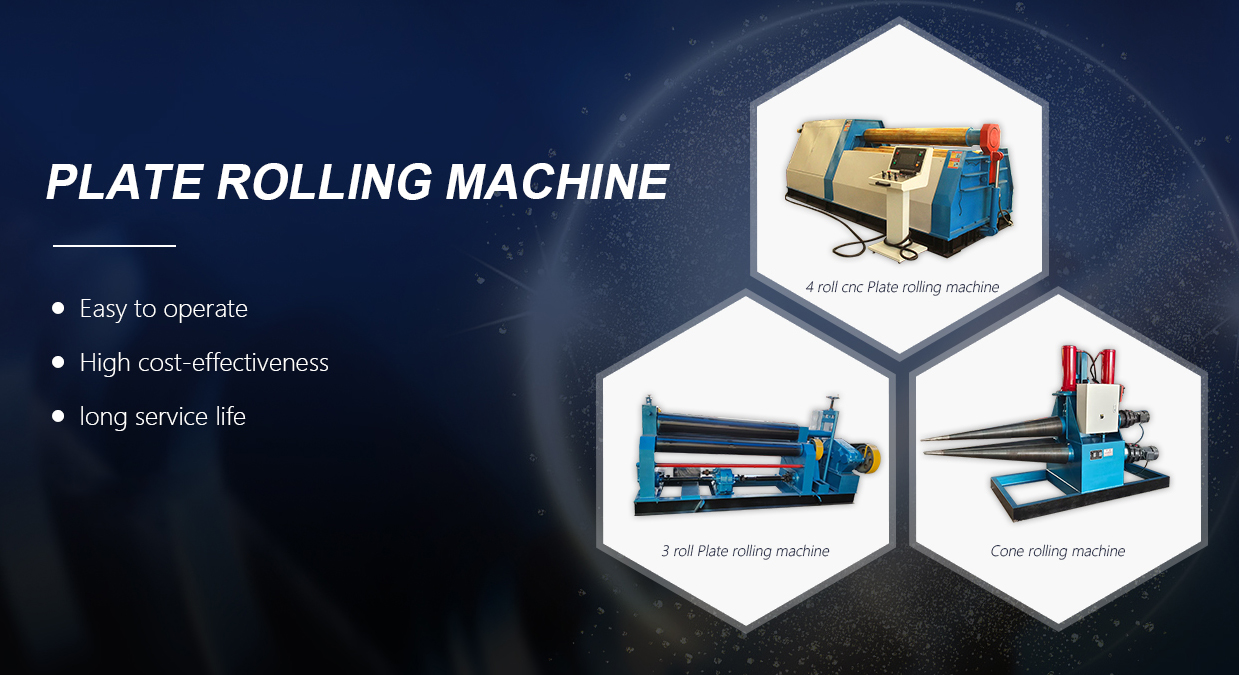
With the continuous advancement of modern industry, particularly the rapid growth in sectors such as construction, shipbuilding, aerospace, and machinery manufacturing, the steel plate rolling machine has emerged as a vital metal processing equipment, playing a crucial role in various industrial production processes. It is widely used for curling and shaping metal sheets like steel plates, aluminum plates, and copper plates, serving as indispensable foundational equipment across numerous industries.
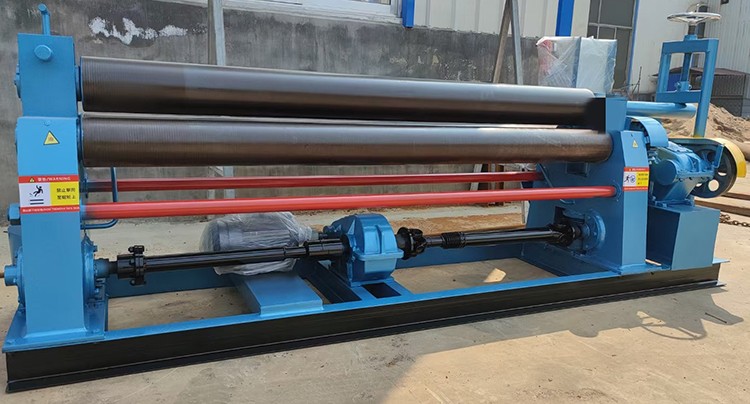
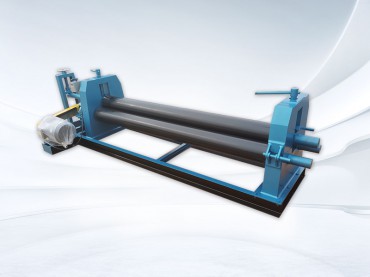
A steel plate rolling machine is a device that processes metal sheets into circular or other curved shapes through bending force. Its operation is based on the physical principle of “compressive deformation.” Utilizing a three-roll, four-roll, or other structured roll system, it gradually bends the metal sheet into the desired shape by applying pressure from the rolls.
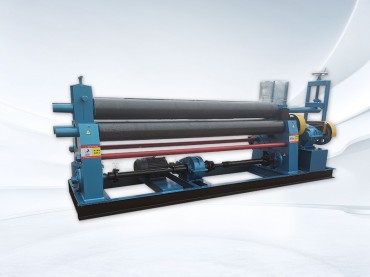
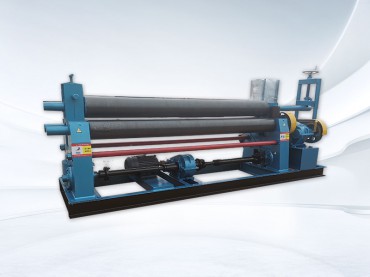
The three-plate rolling machine is the most common type, primarily consisting of three rolls: one upper roll and two lower rolls. The upper roll clamps the metal plate and drives its bending through rotation. The two lower rolls support and bend the sheet from both sides. The typical operation involves feeding the sheet beneath the upper roll, where it is progressively curved into a circular or other required shape through the coordinated action of the lower rolls.
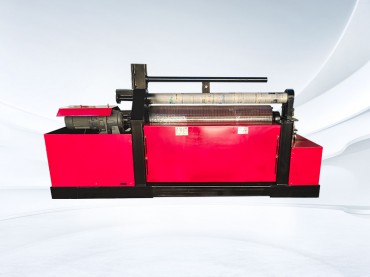
The four-roll plate bending machine offers greater precision than the three-roll type. In addition to the three rollers similar to the three-roll machine, it incorporates an additional support roller, typically positioned between the upper and lower rollers. This extra support roller enhances bending force and improves bending accuracy, resulting in products with more precise dimensions and shapes.
With technological advancements, CNC technology has been progressively integrated into plate rolling machine design. CNC plate rolling machines utilize advanced computer control systems to precisely regulate all operational parameters—including roller speed, angle, and pressure—enabling more complex and high-precision bending operations. The primary advantage of CNC plate rolling machines lies in their capability to process metal sheets of diverse specifications, thicknesses, and materials, coupled with higher automation levels and production efficiency.
Modern steel plate rolling machines utilize CNC technology to precisely adjust curling pressure based on parameters such as metal material, sheet thickness, and width, ensuring products meet required shape and dimensional specifications. This precise control is particularly crucial when manufacturing complex-shaped metal structures.
Some high-end steel plate rollers not only perform basic rolling but also handle multiple operations like punching, slotting, and welding, offering broader application scenarios. This enables more efficient processing workflows across various industrial sectors.
Advanced plate rolling machines have made significant strides in automation and intelligence. Integrated with automated control systems, they enable fully automatic operation and interlock with other production equipment to achieve automated production line control.
Plate rolling machines typically endure immense working pressures, necessitating robust structural designs and high-strength materials to ensure long-term stable operation. This durability is especially critical when processing high-hardness, heavy-gauge metal plates.
In construction, plate rolling machines fabricate large structural components, steel columns, beams, frames, roof panels, and more. Rolled metal plates provide structural support, ensuring building strength and stability.
Shipyards employ plate rolling machines to process large structural components like hulls, ship bodies, and bulkheads. These parts must withstand immense pressures from water and wind, demanding exceptionally high precision in plate rolling.
In industries such as chemical processing, power generation, and nuclear energy, steel plate rolling machines are used to manufacture various types of pressure vessels, pipelines, and storage tanks. For these containers, rolling precision directly impacts safety and production efficiency.
The aerospace sector demands exceptionally high standards for metal sheet rolling. Steel plate rolling machines can process components meeting these requirements, including aerospace structural parts, missile casings, and satellite components.
In machinery manufacturing and home appliance sectors, plate rolling machines process metal casings, frames, ductwork, and other components. Curving metal sheets is an indispensable process, particularly in producing home appliances and air conditioners.
As a vital piece of equipment in the metal processing industry, steel plate rolling machines have become indispensable tools across major manufacturing sectors due to their precise rolling capabilities, high-efficiency production performance, and broad application range. With continuous technological advancements, modern steel plate rolling machines have made significant strides in automation and intelligence, providing robust support for enhancing production efficiency, reducing costs, and improving product quality. Whether in construction, shipbuilding, aerospace, pressure vessel manufacturing, or mechanical engineering, steel plate rolling machines provide critical support for large-scale production, establishing themselves as indispensable infrastructure in modern industrial manufacturing.
If you are interested in rolling machines, please contact us. We will recommend suitable equipment and provide a quotation.
 Address:Room 1202, Detaitang Building, No. 118 Huaguang Road, Zhangdian District, Zibo, Shandong
 WhatsApp:+8615653328535
 Wechat: +8615965331535
  E-mail:zs@sdsmachinery.com