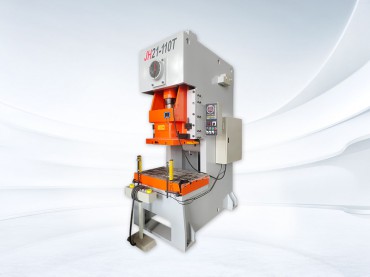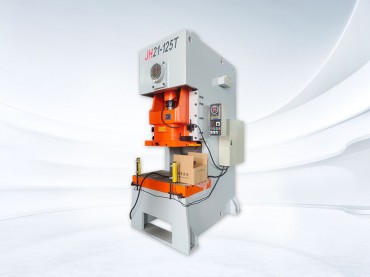
In the metalworking industry, the performance of stamping equipment directly impacts production efficiency and finished product quality. As the manufacturing sector increasingly pursues automation, high efficiency, and green production, pneumatic punch presses have become a key choice for many enterprises in light to medium-duty stamping processes due to their simple structure, rapid response, ease of operation, and low energy consumption. As a stamping device powered by compressed air, pneumatic presses play an irreplaceable role in thin-sheet processing, hardware manufacturing, electronic component forming, and small-part batch processing. This article comprehensively explores the multiple advantages of pneumatic presses, covering structural principles, performance benefits, safety features, and application value.
Pneumatic punch presses primarily consist of cylinders, pneumatic valve assemblies, frames, slides, workbenches, and control systems, featuring a simpler overall structure than traditional mechanical presses. The absence of complex gear transmission mechanisms ensures higher operational stability, lower failure rates, and simplified daily maintenance, significantly reducing upkeep costs. This makes pneumatic presses particularly suitable as standard stamping equipment for enterprises, enabling continuous and efficient operations.
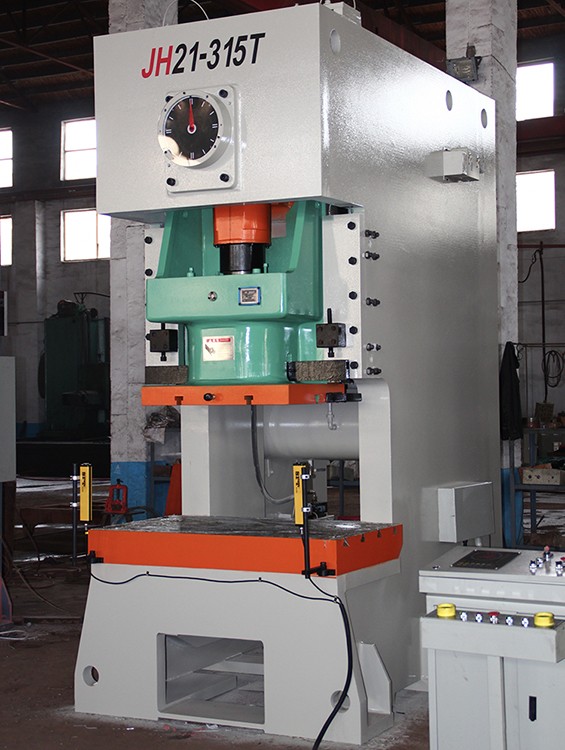
Pneumatic punch presses utilize compressed air to directly drive the ram, offering rapid response and agile operation. Compared to mechanical presses, they demonstrate clear advantages in cycle speed and startup response time. Key features include:
(1) Quick startup and braking, ideal for rhythmic production;
(2) Capability for high-speed continuous stamping, boosting productivity;
(3) Lightweight operation requiring minimal training.
For applications like electronic hardware, small-part processing, punching, and cutting, pneumatic presses substantially boost efficiency, making them essential equipment for many small and medium-sized factories to increase production capacity.
Safety is paramount in stamping operations. Pneumatic punch presses inherently incorporate higher safety features:
Requires simultaneous pressing of both buttons to start, preventing accidental single-hand activation.
The ram automatically retracts during air supply interruptions or malfunctions, preventing hand-pinching accidents.
Equipment automatically halts when hands enter hazardous zones.
Compared to mechanical punch presses, pneumatic presses offer smoother braking and more reliable protection, substantially lowering safety risks. This makes them ideal for small-part processing enterprises requiring continuous stamping operations.
Punching force is controlled by air pressure, allowing flexible adjustment:
Low air pressure → Low punching force
High air pressure → High punching force
This adaptability makes it ideal for multiple processes:
Punching, cutting, pressing, riveting, bending, forming.
Businesses avoid purchasing multiple machines for different tasks, saving space and investment costs.
Powered by compressed air, pneumatic presses consume significantly less energy than electrically driven models. Key advantages include:
- Low energy usage reduces electricity costs
- Oil-free operation eliminates contamination
- Minimal operational noise
- Emissions are air, enhancing environmental sustainability
For businesses prioritizing eco-friendliness, safety, and clean production, pneumatic presses offer an exceptionally favorable choice.
With its lightweight structure, high responsiveness, and process adaptability, the pneumatic punch press is widely used in: hardware manufacturing, electronic component processing, furniture accessory stamping, stationery production, automotive small parts forming, instrument parts processing, and small metal sheet punching, trimming, and bending. Whether for sheet metal punching, small hardware components, or progressive die stamping production, the pneumatic punch press meets diverse needs.
Compared to mechanical and hydraulic punch presses, pneumatic presses offer lower purchase costs, making them the preferred choice for many small and medium-sized enterprises seeking rapid expansion and efficiency gains. Their low investment, quick return on investment, ease of maintenance, and low failure rate make them particularly suitable as standard stamping equipment for multi-process and multi-line production lines.
Pneumatic punch presses can be customized with automatic feeders, tooling, quick-change devices, and robotic inspection systems to effortlessly achieve semi-automated or fully automated production. This enhances product consistency and manufacturing efficiency, making them ideal for large-scale mass production facilities.
Featuring a simple structure and minimal wear, key components boast extended lifespans with low failure rates and high stability, making them suitable for prolonged continuous operation. With proper maintenance, the equipment can operate reliably for years, helping businesses sustain long-term production capacity.
In summary, pneumatic punch presses offer multiple advantages including simple operation, rapid response speed, adjustable punching force, high safety, low energy consumption, stability and reliability, broad adaptability, and controllable costs. They are currently widely adopted as cost-effective stamping equipment in the hardware industry and small parts processing sector. As manufacturing evolves toward automation and environmental sustainability, pneumatic presses will demonstrate their value across more sectors, providing robust support for businesses seeking to increase production capacity, reduce costs, and enhance product quality.
If you are interested in pneumatic presses, please contact us. We will recommend suitable machines and provide quotations.
 Address:Room 1202, Detaitang Building, No. 118 Huaguang Road, Zhangdian District, Zibo, Shandong
 WhatsApp:+8615653328535
 Wechat: +8615965331535
  E-mail:zs@sdsmachinery.com