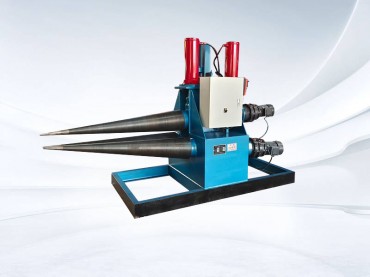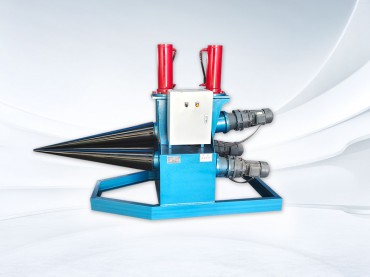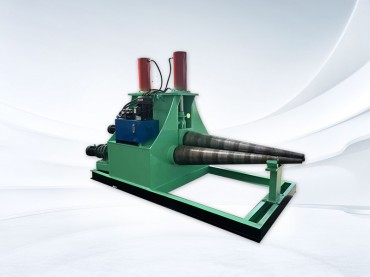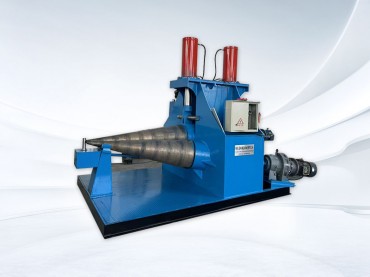
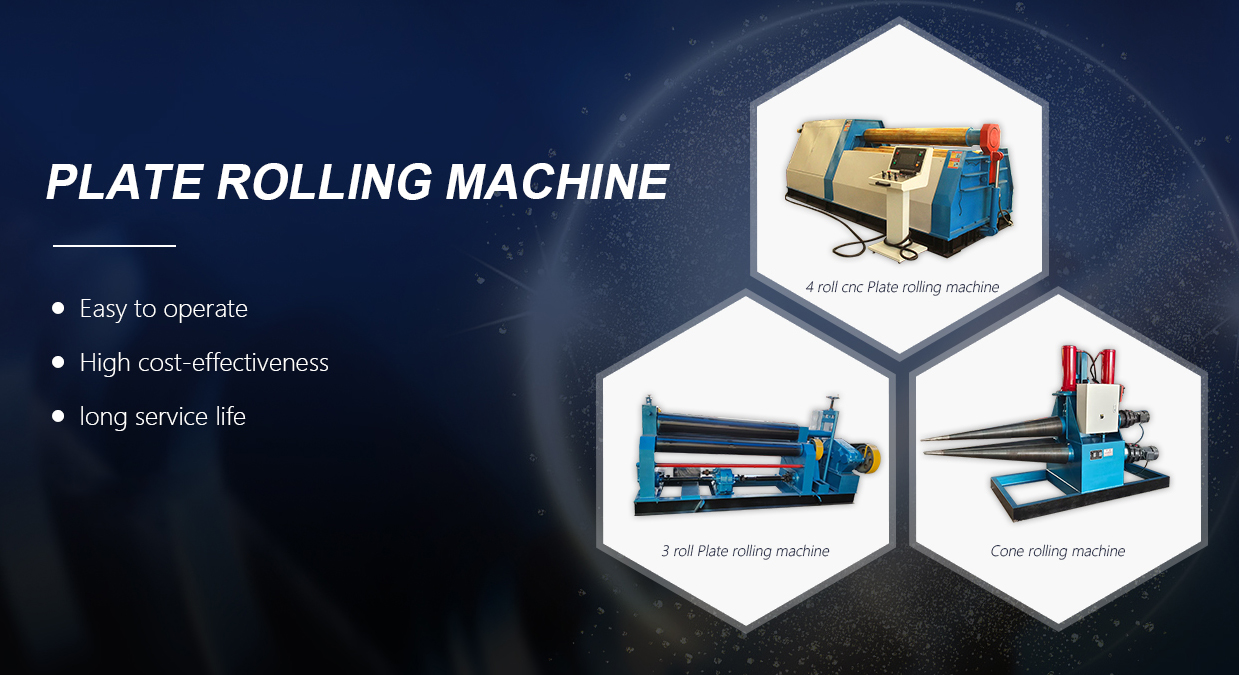
In modern industrial production, metal processing equipment plays a crucial role. Among these, the hydraulic cone rolling machine, as a specialized device, serves an irreplaceable function in fields such as pipe manufacturing and pressure vessel production. This article will comprehensively introduce the hydraulic cone rolling machine, detailing its basic functions, preparatory work, operational steps, and usage advantages.
Hydraulic cone rolling machines utilize hydraulic systems to drive rolling rollers. Through differential adjustment, independent pressure application, lateral movement, and other methods, they form metal plates into conical structures with varying taper angles. Key features include:
- Capable of rolling large/small-end cones, butt-weld cones, and precision tapered cylinders;
- Compatibility with diverse materials including carbon steel, stainless steel, and aluminum plates;
- High automation enabling integrated multi-process operations such as pre-bending, full-circle rolling, and shaping;
- Robust hydraulic thrust delivering consistent forming results with safe and stable operation.
Before commencing rolling, operators must complete the following preparations to ensure smooth processing:
- Verify adequate oil level in the hydraulic station,
- Inspect oil lines and fittings for leaks,
- Confirm roller surfaces are free of cracks and debris,
- Ensure electrical control system functions normally.
- Sheets must be flat without severe dents,
- Material type and thickness must meet process requirements,
- Sheet edges must be free of significant burrs (to prevent roller scratches during rolling).
Set roller positions based on cone dimensions, including:
- Upper roller downward pressure,
- Lower roller lateral swing distance,
- Taper adjustment parameters,
- Rolling length and roundness correction positions.
Proper preparation effectively reduces processing errors and improves cone forming quality.
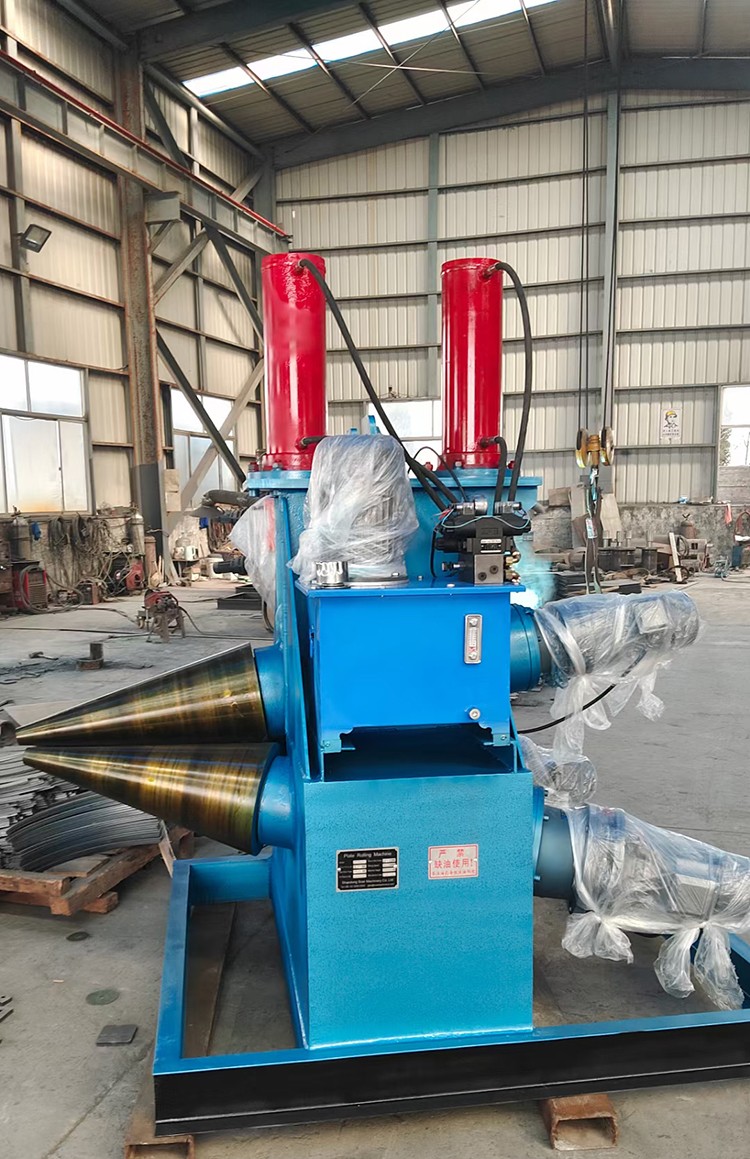
The following standard operating procedure uses a common hydraulic three-roll cone rolling machine as an example.
Align the small or large end of the plate against the lower roll according to process requirements and position it at the set location. Key considerations:
- Align the plate with the positioning line
- Prevent slippage or misalignment
- Position the plate in the rolling direction
Hydraulic cone rollers form the taper through independent side roll adjustment:
- Increase the roll-down amount on the small-end side
- Decrease the roll-down amount on the large-end side
- Gradually adjust to achieve uniform taper
Precise taper setting is critical for forming accuracy.
Pre-bending eliminates straight edges at both ends that cannot be naturally formed. Key steps: Start the equipment at low speed, use the upper roll to press down for pre-bending, carefully control the pressing amount to avoid excessive deformation. After pre-bending, proceed to the formal rolling stage.
Initiate main roll rotation: Control side rolls to apply pressure incrementally, adjust reduction rate segment by segment according to taper requirements, maintain stable rolling speed, and continuously inspect the roundness of the tapered ends. This stage requires experienced judgment to ensure smooth sheet forming without wrinkles.
After basic cone formation, perform: roundness correction, taper fine-tuning, and seam alignment calibration. Forming operations significantly enhance product fit and appearance.
After equipment stops: Release rollers and slowly unload the workpiece.
Inspect the entire cone for: roundness errors, taper deviations, wrinkles or indentations, and weld joint misalignment.
If welded joints are required, adjust the roll closing position beforehand.
Hydraulic cone rolling machines are large-scale machinery; strict adherence to safety protocols is mandatory.
(1) Operators must undergo professional training; unauthorized operation by untrained personnel is prohibited.
(2) Hands must never be placed within the roller area during processing to prevent entanglement accidents.
(3) Roller position adjustments are strictly forbidden while the equipment is running; adjustments must be performed only when the machine is stopped.
(4) Safety protective gear, such as gloves, safety shoes, and hard hats, must be worn at all times.
(5) Keep the area around the equipment clear of debris to prevent interference with the machine's operational path.
(6) Immediately stop the machine and inspect it upon detecting abnormal noises or vibrations to prevent equipment damage or scrap parts.
Hydraulic cone rolling machines offer significant advantages for cone forming:
- High forming precision: Stable hydraulic control minimizes errors
- User-friendly operation: High degree of automation
- High efficiency: Rapid forming speed and short cycle times
- Suitable for thick plate processing: Robust hydraulic power
- Excellent product consistency: High repeatability precision
- Wide applicability: Capable of forming cones from diverse materials and specifications
Its high reliability and stability establish it as the primary equipment in modern cone forming industries.
The hydraulic cone rolling machine is a highly efficient, precision-grade conical cylinder forming device. However, its maximum processing capacity and product quality can only be achieved through correct operation and strict adherence to process procedures. For enterprises, standardized operational training, proper equipment maintenance, and scientific process management are all crucial means to enhance production efficiency and reduce production costs.
 Address:Room 1202, Detaitang Building, No. 118 Huaguang Road, Zhangdian District, Zibo, Shandong
 WhatsApp:+8615653328535
 Wechat: +8615965331535
  E-mail:zs@sdsmachinery.com