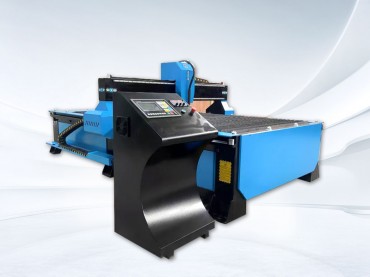
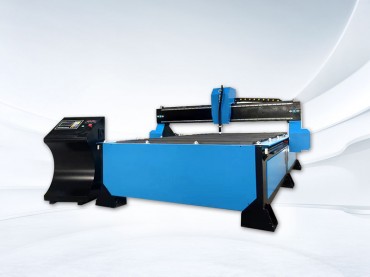
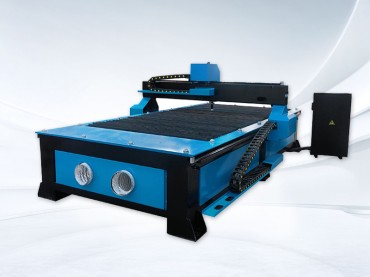
In the metal processing industry, plasma cutting machines have become indispensable core equipment due to their efficient and precise cutting capabilities. However, with the continuous improvement of product quality requirements in the manufacturing industry, how to improve the cutting quality of plasma cutting machines through systematic optimization has become the key to enhancing the competitiveness of enterprises. This article will focus on five dimensions: equipment parameters, consumables management, gas control, intelligent systems, and environmental optimization. It will deeply analyze the five core techniques for improving the quality of plasma cutting machines, and help enterprises achieve a dual leap in cutting accuracy and efficiency.
1.Accurate parameter configuration: building a mathematical model for cutting quality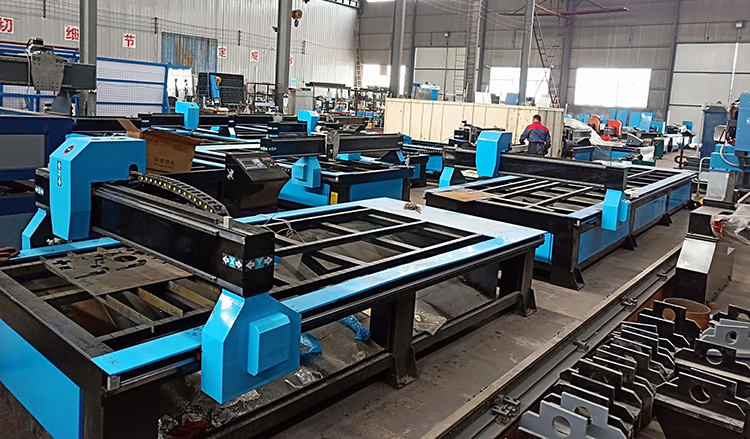
Cutting parameters are the direct factors affecting the quality of plasma cutting machines, and their optimization requires the establishment of a five dimensional correlation model of "material thickness current velocity gas", which can be dynamically adjusted to achieve the best cutting effect.
1.1 Coordinated Control of Current and Voltage
The current intensity directly affects the energy density of the arc and needs to be accurately matched according to the material type and thickness:
Carbon steel cutting: The current is calculated based on the thickness x 40A/mm (400A is required for 10mm carbon steel), and the voltage is set to 1.2-1.5 times the current value to ensure arc stability.
Stainless steel cutting: The current is reduced by 20%, and the voltage is increased to 1.8 times the current value to prevent chromium from oxidizing and forming a black oxide layer.
Aluminum alloy cutting: The current is controlled at 60% of carbon steel, combined with high-purity nitrogen gas, and the voltage is set at 1.5 times the current value to reduce slag adhesion.
1.2 Dynamic adjustment of cutting speed
The cutting speed needs to form a non-linear matching relationship with the current. The reference speed is calculated using the formula V=K × I/t (where K is the material coefficient, I is the current, and t is the thickness), and then fine tuned by ± 10% based on the actual effect
Excessive speed: resulting in incomplete melting defects and wavy patterns on the cutting surface.
Slow speed: causing the heat affected area to expand and increasing the risk of material deformation.
Dynamic compensation: When cutting rounded or sharp corners, the system automatically slows down by 30% -50% to prevent overburning.
1.3 Layered control of gas flow rate
The gas system needs to establish a three-layer flow model of "main gas auxiliary gas protective gas":
Main cutting gas (nitrogen/oxygen): flow rate is configured at 0.8-1.2m ³/h · kW to ensure stable arc.
Auxiliary gas (air/carbon dioxide): with a flow rate of 30% -50% of the main gas, used for cooling the cutting torch and blowing off slag.
Protective gas (argon): used in precision cutting, with a flow rate controlled at 0.2-0.5m ³/h to form an inert protective layer.
2.Consumables lifecycle management: optimization of the entire process from selection to replacement
The status of consumables directly affects the stability of cutting quality, and a full lifecycle management system of "selection use replacement" needs to be established to achieve precise control through digital tools.
2.1 Selection of nozzle and electrode matching
The combination of nozzle and electrode needs to be dynamically adjusted according to the cutting material and thickness:
Standard cutting: Double layer coaxial nozzle is selected, with the inner nozzle focusing the arc and the outer nozzle forming a gas protection layer, suitable for cutting 5-20mm carbon steel.
Fine cutting: using a rotating nozzle, energy concentration is achieved through 360 ° rotating airflow, and the cutting surface roughness can be reduced to below Ra6.3 μ m, suitable for cutting 1-10mm stainless steel.
Thick plate cutting: using segmented nozzles and multi-stage gas channel design to enhance penetration, the verticality of the section can reach 90 °± 1 ° when cutting steel plates of 25mm or more.
The electrode material should be selected according to the cutting frequency:
High frequency cutting: Using tungsten electrodes containing 2% -4% hafnium element, the high temperature resistance is three times higher than that of pure tungsten electrodes, and the lifespan is extended to 800-1000 hours.
Low frequency cutting: Pure tungsten electrodes can be used, reducing costs by 40% but shortening the lifespan to 200-300 hours.
2.2 Intelligent monitoring of consumable wear and tear
Establish a consumable wear prediction model and collect the following data in real-time through sensors:
Electrode diameter: When the diameter is reduced to 70% of the original size, a replacement warning is triggered.
Nozzle inner hole: When the inner hole expands by more than 15%, the roughness of the cutting surface will increase by 2 levels.
Conductive nozzle temperature: When the temperature continues to exceed 65 ℃, the increase in resistance leads to unstable arc.
By using IoT technology to upload data to the cloud and combining it with machine learning algorithms to predict the remaining lifespan of consumables, on-demand replacement can be achieved, reducing unplanned downtime.
2.3 Standardized process for consumables replacement
Develop the "Five Step Method for Consumables Replacement" operation standard:
Power and gas outage: Cut off the power and gas supply of the plasma cutting machine, and wait for the cutting torch to cool down to below 40 ℃.
Cleaning and disassembly: Use specialized tools to disassemble old consumables and clean the slag inside the cutting torch.
Appearance inspection: Check for cracks, deformations, and other defects in the new consumables to ensure that the O-ring seal is intact.
Installation and debugging: Tighten the screws according to the torque value specified in the manual, conduct an arc voltage test to confirm that the installation is in place.
Parameter reset: Adjust the parameters of the plasma cutting machine according to the new consumable type for trial cutting verification.
3.Gas Quality Control System: Eliminating Hidden Killers in Cutting Processes
Gas purity and stability are key factors affecting cutting quality, and a closed-loop control system needs to be constructed from the three links of supply, purification, and transportation.
3.1 Purity guarantee of gas supply
Nitrogen supply: Using PSA pressure swing adsorption nitrogen generator, purity ≥ 99.995%, dew point ≤ -60 ℃, ensuring no oxidation on the cutting surface.
Oxygen supply: Choose a liquid oxygen vaporization device with a purity of ≥ 99.95% and a pressure fluctuation of ≤± 0.02MPa to prevent cutting speed fluctuations.
Mixed gas: Equipped with a dynamic mixing device, nitrogen, hydrogen, and argon are mixed in proportion to meet the cutting needs of special materials.
3.2 Deep treatment of gas purification
Install a three-stage purification system at the gas inlet:
Primary filtration: removes particles with a diameter greater than 5 μ m, with a filtration efficiency of 99%.
Intermediate drying: A combination of a refrigerated dryer and an adsorption dryer is used to reduce the dew point to below -40 ℃, preventing moisture from causing unstable arcs.
Precision filtration: using a 0.01 μ m precision filter element to remove oil vapor and small particles, ensuring gas purity.
3.3 Dynamic adjustment of gas transportation
Pipeline design: 316L stainless steel pipeline is used, with the inner wall polished to Ra0.8 μ m or less to reduce gas flow resistance.
Pressure control: Install automatic pressure regulating valves and gas storage tanks to ensure that the gas pressure fluctuation range is ≤± 0.01MPa.
Flow monitoring: Install a quality flow meter to display gas flow in real-time and adjust it in conjunction with cutting parameters.
4.Intelligent Control System Upgrade: Empowering Plasma Cutting Machines with Autonomous Optimization Capability
Modern plasma cutting machines require integrated intelligent control technology to achieve parameter adaptive adjustment and quality closed-loop control through data-driven methods.
4.1 Automatic Arc Voltage Tracking System
Real time adjustment of cutting torch height through arc voltage feedback to maintain constant arc length:
Tracking accuracy: ± 0.1mm, suitable for uneven board surfaces.
Dynamic response: Response time<50ms, quickly compensate for material deformation.
Pre adjustment function: Automatically switch preset arc voltage values based on material thickness, reducing manual debugging time.
4.2 Intelligent perforation control technology
Adopting a combination of pulse perforation and progressive perforation:
Pulse perforation: The material is gradually melted by high-frequency pulse current, reducing slag splashing and increasing the perforation success rate to 99%.
Progressive perforation: dynamically adjust the perforation height and current according to the material thickness to prevent excessive electrode wear during thick plate perforation.
Perforation detection: equipped with infrared sensors to monitor the perforation status in real time, automatically pause and alarm when abnormal.
4.3 Quality Data Analysis Platform
Build a cutting quality big data system to achieve the following functions:
Data collection: Record 100+dimensional data such as parameter settings, cutting time, and cross-sectional quality for each cutting.
Association analysis: Mining the correlation between parameters and quality through machine learning to generate optimization suggestions.
Predictive maintenance: Predict the risk of malfunctions based on the operating data of the plasma cutting machine and arrange maintenance plans in advance.
5.Standardization of working environment: creating a stable foundation for precision cutting
The impact of environmental factors on cutting quality is often underestimated, and a standardized working environment needs to be constructed from three aspects: temperature and humidity, ventilation, and power supply.
5.1 Precise control of temperature and humidity
Temperature range: 15-30 ℃, temperature fluctuation ≤ ± 2 ℃ (precision cutting workshop).
Humidity control: Relative humidity ≤ 65% to prevent electrical components of the plasma cutting machine from being affected by moisture and short circuiting.
Constant temperature system: equipped with industrial air conditioning and temperature and humidity sensors to achieve automatic adjustment.
5.2 Optimization of Ventilation and Dust Removal System
Local exhaust: negative pressure is formed in the cutting area to suction away cutting smoke and dust, with an exhaust volume of ≥ 3000m ³/h.
Efficient filtration: Equipped with HEPA filter, the filtration efficiency of 0.3 μ m particles is ≥ 99.97%, ensuring that the dust concentration in the workshop is ≤ 5mg/m ³.
Airflow organization: Adopting a top-down and bottom-up approach to avoid airflow interference during the cutting process.
5.3 Power Quality Assurance System
Uninterruptible power supply: Equipped with an online UPS, it can provide continuous power supply for more than 15 minutes in case of power failure to prevent data loss.
Power compensation: Install reactive power compensation devices to achieve a power factor of ≥ 0.95 and reduce voltage fluctuations.
Harmonic control: Active filters are used to reduce the total harmonic distortion (THD) to<5%, ensuring stable operation of the plasma cutting machine.
Improving the quality of plasma cutting machines is not a single technological breakthrough, but requires the establishment of a five in one quality control system consisting of "parameters consumables gases intelligence environment". By implementing five core techniques including precise parameter configuration, consumables lifecycle management, gas quality control system, intelligent control system upgrade, and standardized working environment, enterprises can achieve significant results such as improving cutting accuracy by more than 30%, reducing defect rate by 50%, and increasing equipment overall efficiency (OEE) by 20%. In the context of the transformation of manufacturing towards intelligence and precision, mastering these core skills will become a key bargaining chip for enterprises to win market competition.

 Address:Room 1202, Detaitang Building, No. 118 Huaguang Road, Zhangdian District, Zibo, Shandong
 WhatsApp:+8615653328535
 Wechat: +8615965331535
  E-mail:zs@sdsmachinery.com