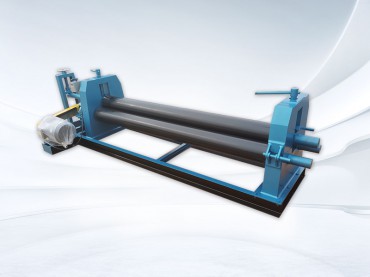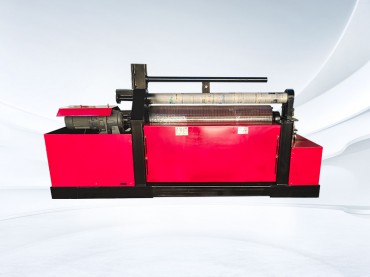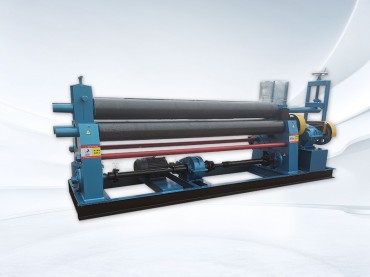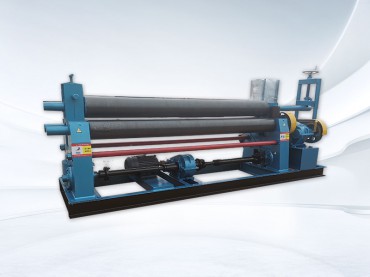
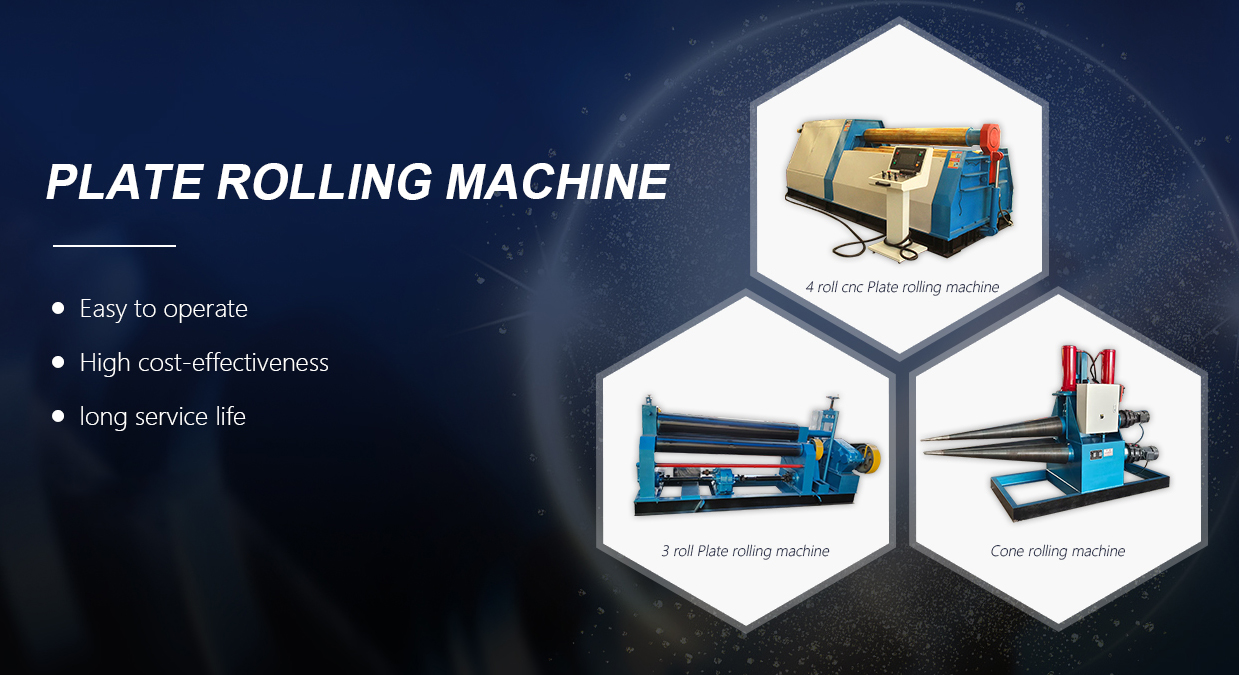
Plate Rolling machines are essential equipment widely used in the metal processing industry, primarily for curling metal sheets into circular or curved shapes. Plate rolling machines are extensively applied in construction, shipbuilding, boiler manufacturing, pressure vessels, and metal structures, serving as indispensable equipment in sheet metal processing. Based on their operating principles and structural configurations, plate rolling machines are typically categorized into three types: three-roll plate rolling machines, four-roll plate rolling machines, and two-roll plate rolling machines. Each type possesses distinct characteristics and suitable applications.
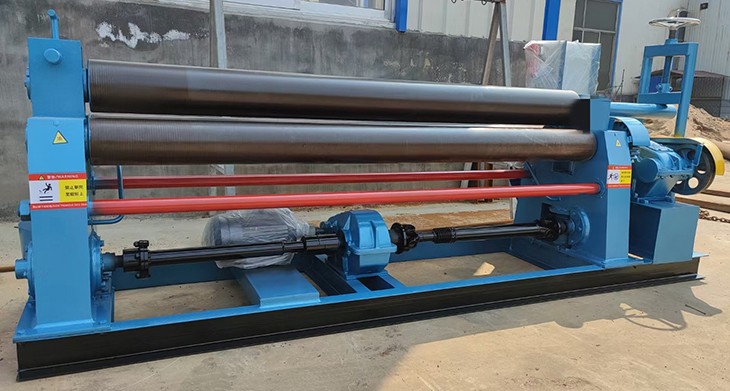
The three-roll plate rolling machine is the most common type, featuring three sets of working rolls: an upper roll and two lower rolls. Positioned centrally, the upper roll is flanked by the two lower rolls below. By controlling the gap and pressure between the upper and lower rolls, the metal plate gradually bends under the combined effects of heating and pressure. The degree of plate rolling is primarily adjusted by altering the spacing between the upper and lower rolls.
- Simple Operation: The three-roll plate rolling machine offers relatively straightforward operation, suitable for most conventional rolling processes.
- Lower Cost: Due to its relatively simple structure, the manufacturing cost of a three-roll plate rolling machine is lower, making it suitable for general small and medium-sized enterprises.
- Versatility: Capable of processing both thin and thick plates, particularly suited for producing large-diameter cylinders or circular components.
Three-roll plate rolling machines are applicable across various small-to-medium-sized metal processing industries, especially in applications with relatively low demands, such as:
- Shipbuilding: rolling and forming metal plates for hull structures.
- Construction industry: Production of steel structures and metal roofing panels.
- Boiler manufacturing: rolling of metal plates for boiler shells.
The four-roll plate rolling machine consists of four rollers: two upper rollers and two lower rollers. Its defining feature is the independent vertical adjustment capability of both upper and lower rollers. The working principle relies on the coordinated action of upper and lower rollers, guided by a precision control system to smoothly roll metal plates into circular or curved shapes.
- Enhanced Precision and Stability: The four-roller configuration enables precise control of both upper and lower rollers, delivering superior accuracy and stability during the rolling process.
- Suitable for Thick Plates: Capable of processing thicker, harder metal plates, particularly effective for high-precision and large-scale plate rolling.
- High Automation: Modern four-roll plate rolling machines are typically equipped with CNC systems, enabling intelligent operation and suitability for batch production.
Four-roll plate rolling machines are widely used in industries requiring high-precision and large-sized products, especially in fields with stringent metal sheet quality demands. Common applications include:
- Pressure Vessel Manufacturing: Producing metal shells for large-scale equipment like boilers and pressure vessels.
- Oil and gas industry: Fabricating metal materials for large storage tanks and pipelines.
- Heavy machinery manufacturing: Curling large-span steel structures.
As the name implies, a two-roll rolling machine features only two primary rollers—an upper roller and a lower roller. By adjusting the gap of the lower roll, the upper roll presses the metal plate into the desired shape under the action of the lower roll. Unlike three-roll and four-roll plate rolling machines, the double-roll plate rolling machine is simpler to operate but has a more limited scope of application.
- Simple Structure: The dual-roll plate rolling machine features a relatively straightforward design, making it easy to maintain and operate. It is suitable for applications where high curling precision is not required.
- Suitable for Thin Sheet Processing: Primarily designed for processing thinner metal sheets, the dual-roll plate bender is not suitable for handling thick, heavy metal plates.
- Low Cost: The manufacturing and maintenance costs of dual-roll plate benders are relatively low, making them ideal for small businesses and non-high-precision applications.
Double-roll plate rolling machines are typically employed in light industrial or small-scale processing applications with modest requirements, particularly suited for low-cost, low-complexity production needs. Common applications include:
- Advertising and display industries: For manufacturing advertising panels or decorative metal sheets.
- Lightweight metal products: Such as metal cylinders, pipes, and similar components during production.
- Small structural part manufacturing: Metal components for small machinery or building structures.
- Three-roll plate rolling machine: Suitable for small to medium-sized processing, thin to medium-thick plates
- Four-roll plate rolling machine: Thick plates, large-diameter products, high precision requirements
- Two-roll plate rolling machine: Light metal product processing
- Three-roll rolling machine: Simple structure, lower cost, easy to operate
- Four-roll plate rolling machine: High precision, high stability, suitable for large-sized plates
- Two-roll plate rolling machine: Simple and efficient, low cost, easy maintenance
- Three-roll plate rolling machine: Highly adaptable, widely used for low-precision requirements
- Four-roll plate rolling machine: High precision, suitable for high-demand processing
- Two-roll plate rolling machine: Suitable for thin plate processing, low cost
Selecting the appropriate plate rolling machine primarily depends on the following factors:
- Plate thickness and strength: Choose the suitable machine type based on the thickness and strength of the metal plate to be processed. Thicker metal plates require a four-roll or three-roll plate rolling machine.
- Processing precision: For high-precision requirements, prioritize four-roll plate rolling machines, especially in scenarios demanding batch production and high quality.
- Production scale and cost: For small-scale production or cost-sensitive operations, two-roll and three-roll plate rolling machines offer greater cost-effectiveness.
- Automation Requirements: For high automation or CNC system needs, four-roll plate rolling machines typically offer greater advantages, enhancing production efficiency and machining precision.
As a crucial piece of equipment in the metal processing industry, plate rolling machines primarily come in three types: three-roll plate rolling machine, four-roll plate rolling machine, and two-roll plate rolling machine. Each type possesses distinct advantages and application domains, requiring users to select the most suitable equipment based on actual needs. With ongoing technological advancements, the functionality and performance of plate rolling machines continue to improve. The future will see more efficient, intelligent equipment entering the market, providing stronger support across various industries.
 Address:Room 1202, Detaitang Building, No. 118 Huaguang Road, Zhangdian District, Zibo, Shandong
 WhatsApp:+8615653328535
 Wechat: +8615965331535
  E-mail:zs@sdsmachinery.com