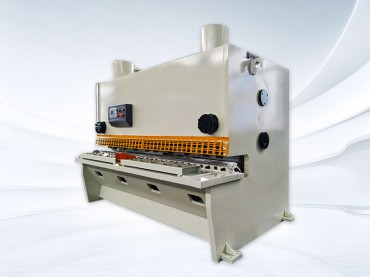
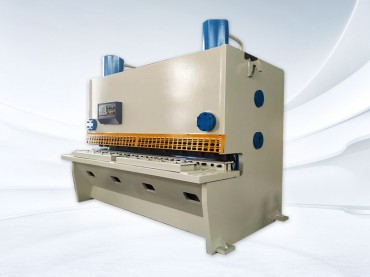
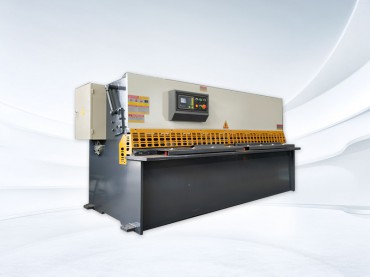
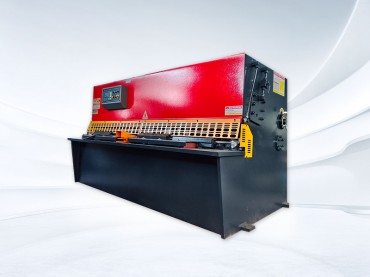
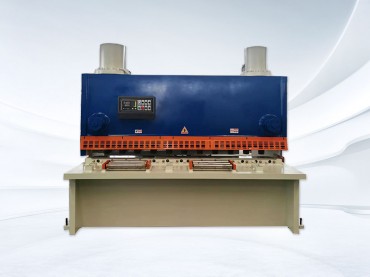
In the field of metal sheet processing, the performance of the shearing machine, as the core equipment, directly affects the cutting quality, production efficiency, and cost control. With the advancement of Industry 4.0, traditional mechanical shearing machines are no longer able to meet the demands of high-precision and flexible production. CNC shearing machines, with their advantages in intelligence and automation, are becoming the preferred choice for industry transformation and upgrading. This article will deeply analyze the core logic of selecting a CNC shearing machine from five dimensions: precision control, efficiency improvement, operational convenience, process adaptability, and long-term cost-effectiveness.
1.Precision control: spanning from millimeter level to micrometer level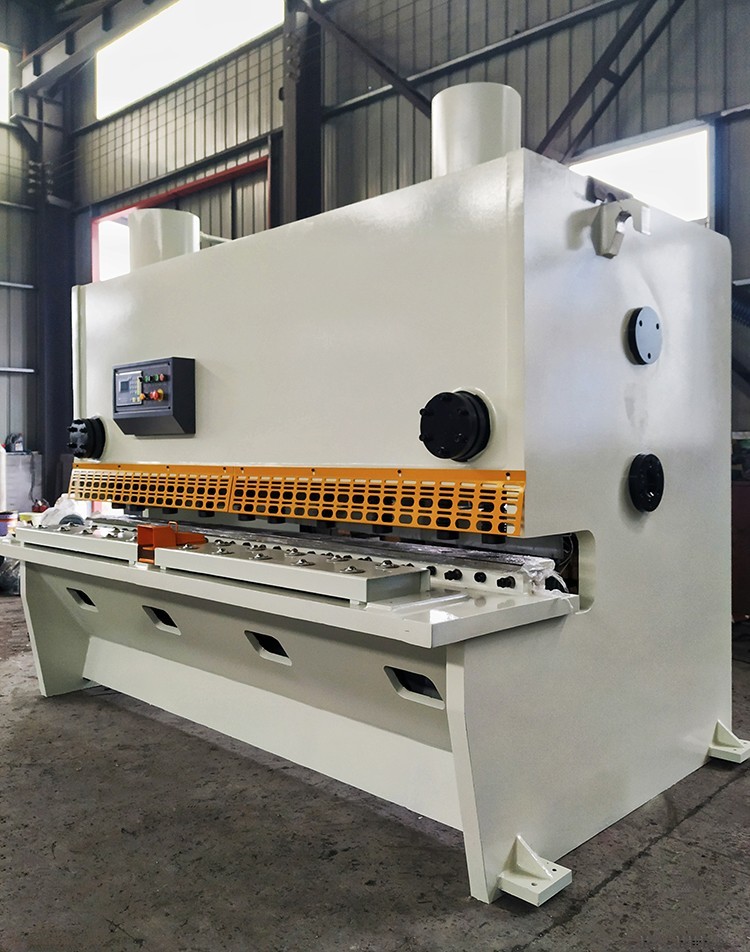
1. Fully closed-loop CNC system: the "smart brain" for error compensation
The CNC shearing machine is equipped with high-precision servo motors and grating rulers to build a fully closed-loop control system. Unlike traditional open-loop systems, fully closed-loop systems can monitor the position of the slider in real time and automatically correct errors through a numerical control system. For example, when the mechanical transmission deviates by 0.05mm due to wear, the system will immediately adjust the servo motor output to ensure that the actual cutting position is completely consistent with the design size, with an accuracy of ± 0.02mm, meeting high-end manufacturing needs such as aerospace and precision instruments.
2. Dynamic compensation technology: the "adaptive ability" to cope with material deformation
Metal sheets may undergo slight deformation during the cutting process due to stress release. Traditional shearing machines lack real-time feedback mechanisms, which can easily lead to wavy cutting edges or dimensional deviations. The CNC shearing machine dynamically monitors the cutting force and material deformation through pressure sensors and displacement sensors, and automatically adjusts the cutting speed and pressure parameters to achieve "cutting while compensating". For example, when cutting 3mm thick stainless steel, the system can sense material rebound in real time, reduce cutting speed by 10%, and increase pressure by 0.5 tons to ensure that the perpendicularity of the incision is ≤ 0.5 °.
3. Multi axis linkage control: precise carving of complex contours
Traditional shearing machines can only achieve linear cutting, while CNC shearing machines can complete cutting of circular, rectangular, irregular holes, and complex contours through X/Y/Z three-axis linkage control. For example, cutting a circular workpiece with a diameter of 500mm, traditional equipment requires multiple positioning, and the cumulative error may reach 1mm or more; The CNC shearing machine is programmed to form in one go, with a roundness error of ≤ 0.1mm, and does not require additional molds, significantly reducing tool costs.
2.Efficiency improvement: transition from single machine operation to intelligent production line
1. High speed cutting and automated loading and unloading: doubling the production capacity per unit time
The CNC shearing machine is driven by a high-speed servo motor, with a slider speed of up to 200mm/s. Coupled with an automatic feeding device, it can achieve continuous cutting. For example, when cutting 1mm thick carbon steel plates, CNC equipment only takes 8 seconds for a single cutting cycle (including feeding, positioning, and cutting), while traditional equipment takes 15 seconds, resulting in nearly double the efficiency. If an automated production line is integrated, the overall production efficiency can be increased by more than 50%.
2. Quick mold change and program storage: "flexible production" with multiple varieties and small batches
Traditional shearing machines require manual adjustment of limit blocks and tool alignment when replacing molds, which takes more than 30 minutes and relies on worker experience; The CNC shearing machine stores cutting programs for different workpieces through the CNC system. When changing molds, only the program needs to be called, and parameter switching can be completed within 5 minutes.
3. Intelligent Material Scheduling and Surplus Management: Maximizing Material Utilization
The CAM software that comes with the CNC shearing machine can automatically optimize the cutting plan, simulate different cutting paths through algorithms, and select the plan with the highest material utilization rate. For example, when cutting 100 sheets of 2m × 1m boards, the utilization rate of traditional manual cutting is about 85%, while intelligent cutting can reach 92%, saving more than 20% of material costs annually. In addition, the system can record the size and location of leftover materials, and prioritize their use during subsequent processing to further reduce waste.
3.Convenience of operation: the transition from skill dependence to "foolproof" operation
1. Graphic programming interface: lowering the threshold for operation
Traditional shearing machines require workers to manually input coordinate parameters, which demands high skills from operators; The CNC shearing machine adopts touch screen graphical programming, and the operator can directly import CAD drawings. The system automatically generates cutting paths without complex training.
2. Remote monitoring and fault diagnosis: reducing downtime
The CNC shearing machine supports the industrial Internet function, which can remotely monitor the equipment status through mobile phones or computers, and receive real-time warning information. For example, when the system detects an abnormal temperature in the servo motor, it will automatically shut down and send an alarm message to maintenance personnel to avoid prolonged shutdown caused by equipment damage. According to statistics, remote monitoring function can shorten equipment failure response time by 70% and reduce annual downtime by more than 50 hours.
3. Data driven process optimization: the "digital twin" of continuous improvement
The CNC shearing machine can record processing data for each batch (such as cutting speed, pressure, material thickness, energy consumption), and generate process optimization reports through big data analysis. For example, if the system finds that when cutting a certain specification of board, increasing the speed from 150mm/s to 180mm/s does not reduce the quality of the cut and reduces energy consumption by 10%, it will automatically recommend this parameter as the default setting. This closed-loop management of "data decision optimization" can help enterprises continuously reduce production costs.
4.Process adaptability: Expansion from single cutting to composite processing
1. Multi process integration: One device replaces multiple traditional devices
CNC shearing machines can achieve various processes such as cutting, punching, indentation, marking, etc. by replacing cutting tools or accessories. For example, after configuring the punching mold, hole processing can be completed simultaneously with cutting to avoid secondary positioning errors; After configuring the indentation device, it can provide positioning marks for subsequent bending processes, reducing the transfer time between processes. This "multi-purpose" feature can reduce the number of workshop equipment, save space and investment costs.
2. Special material processing: covering from ordinary metals to composite materials
Traditional shearing machines are prone to unstable quality when processing special materials such as high-strength steel and titanium alloys due to rapid tool wear and insufficient cutting force; The CNC shearing machine can stably process 6mm thick high-strength steel (yield strength ≥ 800MPa) or 2mm thick titanium alloy by dynamically adjusting cutting parameters (such as reducing speed, increasing pressure, optimizing tool path). In addition, CNC equipment can achieve non-destructive processing of non-metallic sheets such as aluminum honeycomb panels and carbon fiber composite materials through ultrasonic cutting or laser cutting attachments.
5.Long term cost-effectiveness: balancing short-term investments with long-term returns
1. Equipment lifespan and maintenance costs: high reliability reduces full lifecycle expenses
The CNC shearing machine adopts a high rigidity body (such as a closed structure) and imported core components, with a design life of over 15 years. At the same time, the CNC system can monitor the equipment status in real time, warn potential faults in advance, and reduce sudden maintenance costs.
2. Energy consumption optimization: the "energy-saving pioneer" of green manufacturing
The CNC shearing machine can reduce energy consumption by more than 30% through energy recovery technology and intelligent energy-saving mode. For example, when cutting 1mm thick carbon steel plates, CNC equipment consumes 0.2 kWh of electricity per cutting, while traditional equipment requires 0.3 kWh of electricity. Calculated based on processing 100000 times per year, the annual energy savings reach 10000 kWh, saving about 8000 yuan in electricity costs.
3. Labor cost savings: the "hidden benefits" of automation replacing manual labor
High degree of automation, one operator can manage 2-3 devices simultaneously, while traditional devices require one person per device. Calculated at an annual labor cost of 100000 yuan per person, if there are 10 devices in the workshop, using CNC equipment can save more than 500000 yuan in annual labor costs. In addition, automated production reduces human operational errors, further reducing scrap rates and rework costs.
Choosing a CNC shearing machine is not only an equipment upgrade, but also a reconstruction of production mode and business logic. From millimeter level precision to intelligent nesting, from flexible production to green manufacturing, CNC technology is redefining the standards of sheet metal processing. For enterprises pursuing high precision, high efficiency, and low cost, CNC shearing machines are not only a "weapon" to enhance competitiveness at present, but also a "ticket" to the future Industry 4.0 era. With technological iteration, CNC shearing machines will develop towards higher precision, speed, and intelligence, continuously empowering the manufacturing industry.

 Address:Room 1202, Detaitang Building, No. 118 Huaguang Road, Zhangdian District, Zibo, Shandong
 WhatsApp:+8615653328535
 Wechat: +8615965331535
  E-mail:zs@sdsmachinery.com