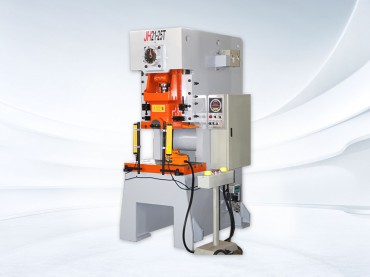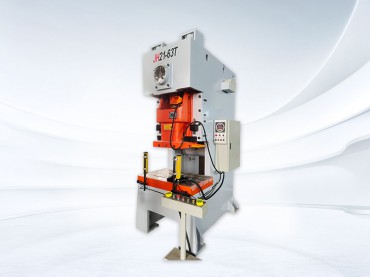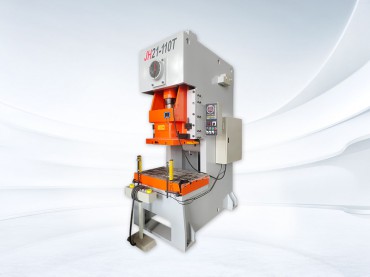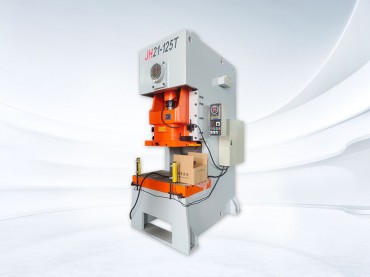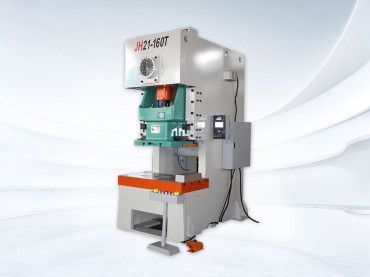
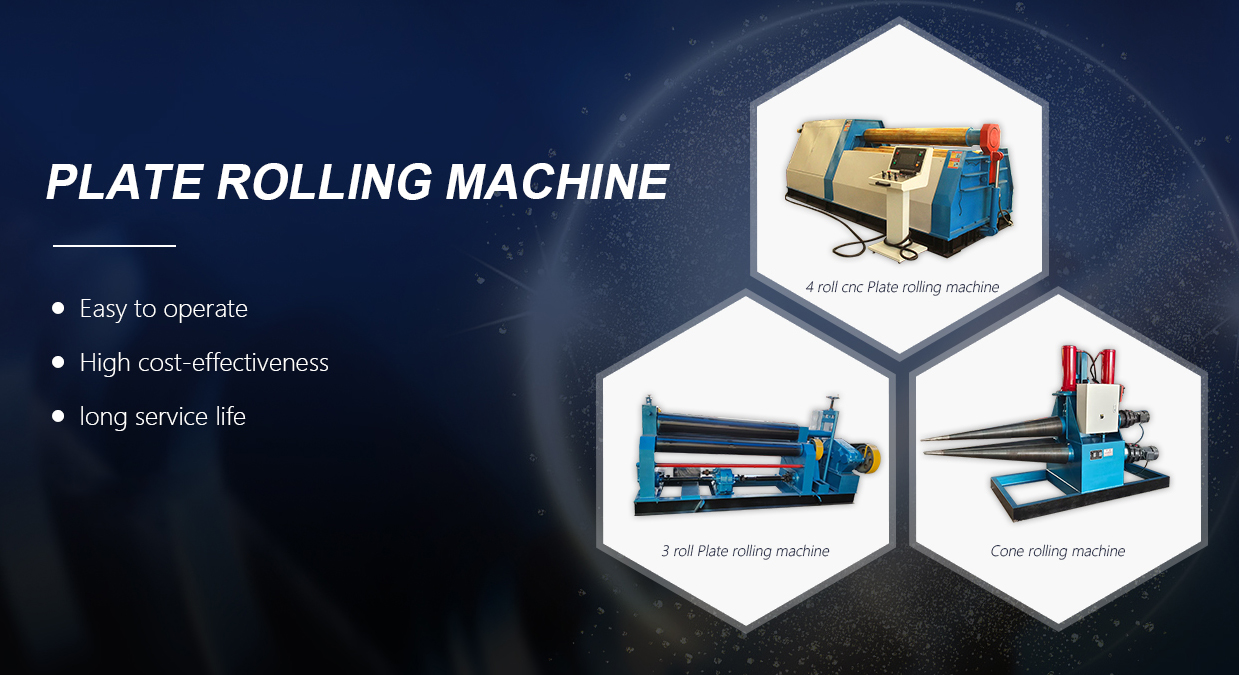
A mechanical punch press is a device used for processing sheet metal or other materials, widely applied across various manufacturing sectors. It processes materials under high pressure using dies and punches, commonly employed for punching holes, shearing, forming, and other processes. Due to its high efficiency, precision, and stability, the mechanical punch press has become an indispensable piece of equipment in industries such as metal fabrication, automotive manufacturing, and home appliance production.
A mechanical press is a device that mechanically drives a punch to perform stamping operations. Its core principle involves an electric motor driving a flywheel or crankshaft system to convert mechanical energy into impact force. This force is then transmitted through dies and punches to apply high pressure on the material surface, causing plastic deformation to achieve tasks like punching, cutting, bending, and other processing operations.
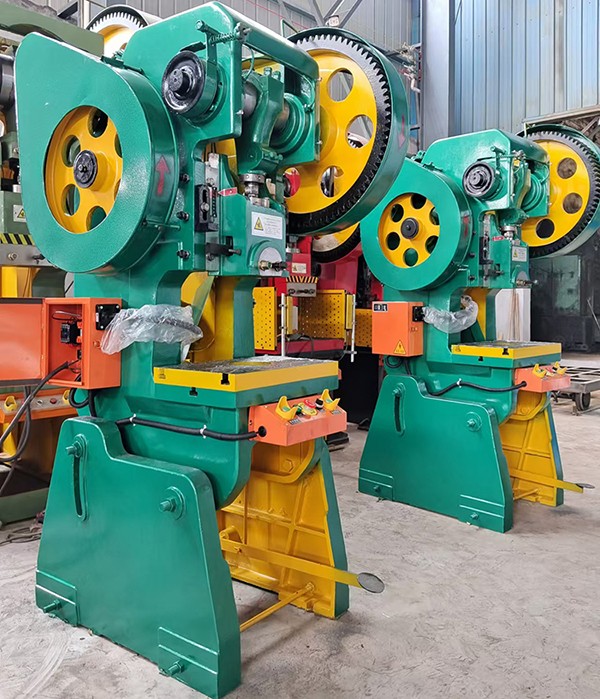
- Feeding: The workpiece (typically a metal sheet) is fed onto the machine's worktable.
- Die Positioning: The die is secured to the worktable via a positioning device, ensuring precise alignment with the workpiece.
- Stamping Process: The motor drives the flywheel or crankshaft system, generating mechanical force that is transmitted through the punch to the workpiece, completing tasks like punching holes or cutting.
- Unloading: After stamping, the workpiece is removed, ready for subsequent processing or rework.
Mechanical punching machines primarily employ two drive systems:
- Crank-driven: Utilizes a crankshaft and flywheel system, suitable for low-frequency stamping operations, commonly found in small to medium-sized punching machines.
- Direct Drive: An electric motor directly drives the punch, suitable for high-frequency, high-speed stamping operations, offering superior efficiency and precision.
As highly efficient metalworking equipment, mechanical punching machines offer the following advantages:
Mechanical punching machines achieve rapid processing speeds, completing large-volume tasks in minimal time. Their efficiency advantage is particularly pronounced in high-volume production.
Mechanical punching machines deliver high precision in stamping processes, enabling fine punching, cutting, and forming. They are suitable for products requiring high processing accuracy, such as automotive components and appliance housings.
Mechanical punching machines feature robust structural design and stable operation, making them suitable for long-term continuous use. Their high stability ensures consistency in production processes and product quality.
Mechanical punching machines can be flexibly adjusted for different dies and materials, accommodating diverse stamping requirements. By changing dies, they process workpieces of various sizes and shapes, suitable for fabricating all types of metal materials.
Modern mechanical punching machines feature automated feeding systems and automatic scrap removal systems, reducing manual intervention, boosting production efficiency, and lowering operational costs.
Mechanical punching machines find extensive use across multiple industries, primarily including the following sectors:
Mechanical punching machines are indispensable equipment in metal processing, widely used for stamping various metal sheets. Their primary applications include punching, cutting, forming, and bending. Particularly in automotive manufacturing and home appliance production, mechanical punching machines are employed to produce components, housings, and other metal parts.
- Automotive Industry: Mechanical punching machines are used to produce automotive components, including body panels, doors, and engine parts.
- Home Appliance Industry: Mechanical punching machines manufacture housings and internal structural components for appliances like refrigerators, washing machines, and air conditioners.
- Electronics Industry: They perform precision machining of electrical components and accessories, such as phone cases and keyboards.
In aerospace, mechanical punching machines fabricate aircraft components and internal/external aircraft fixtures. They process high-strength alloy materials to ensure components meet stringent precision and strength requirements.
Mechanical punching machines also play a vital role in shipbuilding and heavy industry, primarily used to manufacture metal components for ship hulls and casings for heavy machinery. Given the need for mass production of these parts, the high efficiency and precision of mechanical punching machines effectively reduce production costs and enhance manufacturing capacity.
In the packaging industry, mechanical punching machines process various materials like cardboard, plastic film, and aluminum foil to produce packaging boxes, bottle caps, sealing strips, and more, ensuring product packaging quality and production efficiency.
Mechanical punching machines are also widely used in the construction industry, particularly in steel structure manufacturing and metal material processing, for creating metal components and connectors. These components are typically used in structural support and connection elements of buildings.
- High Efficiency: Mechanical punching machines can complete large-scale stamping tasks in a short time, making them particularly suitable for mass production.
- High Precision: Mechanical punching machines enable precision processing within a high accuracy range, meeting the demands of industries with stringent product quality requirements.
- Cost-Effectiveness: For high-volume production, mechanical punching machines offer low per-unit processing costs, enhancing overall production efficiency.
- Structural Robustness: Mechanical punching machines feature durable designs suited for prolonged, high-load operational environments.
As highly efficient and precise processing equipment, mechanical punching machines have become core machinery in the metalworking industry. They play vital roles across sectors including automotive manufacturing, home appliance production, aerospace, shipbuilding, and construction. With ongoing technological advancements, mechanical punching machines will evolve toward higher efficiency, greater precision, and lower energy consumption, continuing to provide robust support for innovation and development in manufacturing.
 Address:Room 1202, Detaitang Building, No. 118 Huaguang Road, Zhangdian District, Zibo, Shandong
 WhatsApp:+8615653328535
 Wechat: +8615965331535
  E-mail:zs@sdsmachinery.com