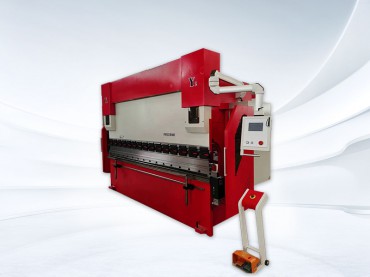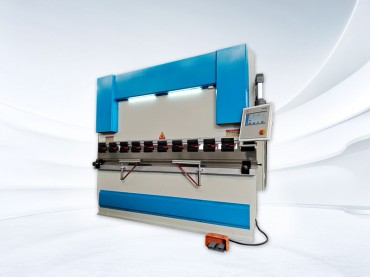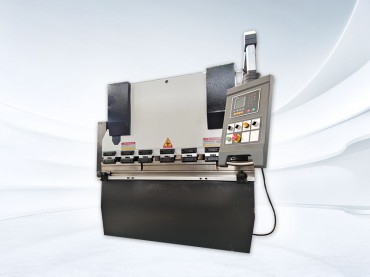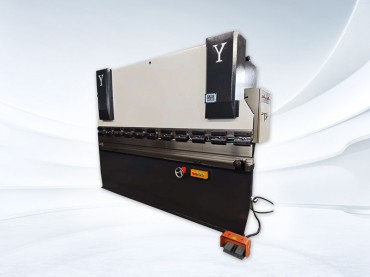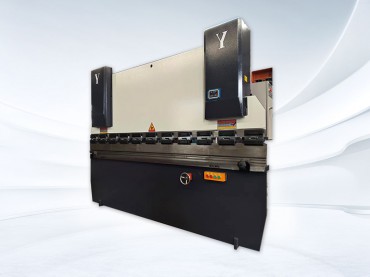
In the modern sheet metal processing industry, hydraulic bending machines serve as critical equipment for metal forming, widely applied in mechanical manufacturing, architectural steel structures, automotive components, electrical cabinet bodies, home appliance housings, and the production of various metal parts. With their stable output force, controllable processing precision, and adaptability to complex and diverse workpieces, hydraulic bending machines have become indispensable core equipment in industrial manufacturing. To comprehend the underlying mechanism of their efficient forming capabilities, a comprehensive analysis is required—from the power system and structural composition to the operational logic of the actual bending process.
Hydraulic bending machines accomplish bending tasks through several key modules, including:
- Hydraulic System: Supplies the high-pressure hydraulic fluid required for bending, serving as the core power source of the entire machine.
- Cylinder and Piston: Utilizes hydraulic fluid pressure to drive the ram's vertical movement.
- Ram (Upper Die): Mounts the upper die to apply pressure and complete the bending of metal.
- Work Table (Lower Die): Supports the workpiece and secures the lower die.
- CNC System (Optional): Enables precise control over bending angle, ram stroke, and backgauge position.
- Backgauge System: Ensures accurate positioning of the metal sheet, enhancing repeatability in processing.
These components collectively form a stable, controllable, and highly repeatable bending processing platform.
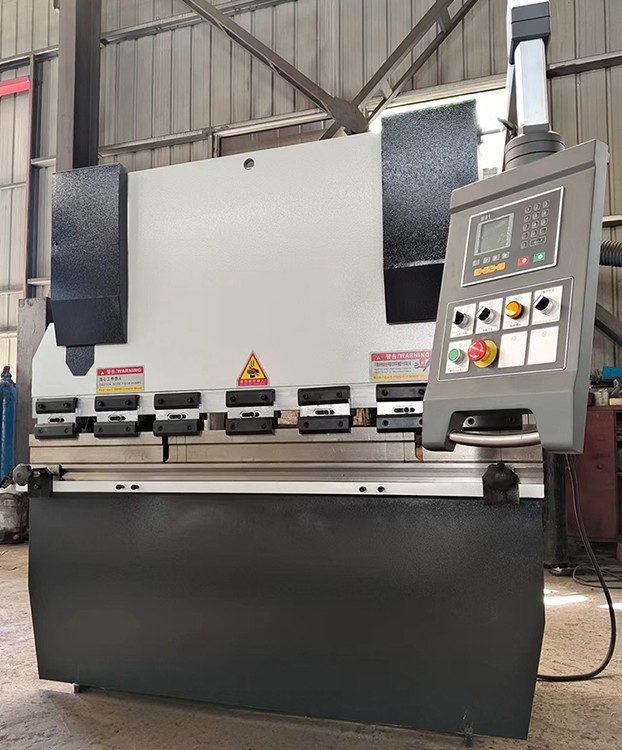
The ability of hydraulic bending machines to deliver substantial and precise bending force stems from the “hydraulic transmission principle.” Its core logic can be summarized as follows: Utilizing pressure generated by hydraulic fluid within a sealed space to drive the cylinder and ram movement, thereby compressing the metal sheet between the upper and lower dies to form the specified angle and shape.
The specific operational sequence is as follows:
Upon equipment startup and entry into the bending program, the hydraulic pump activates, forcing hydraulic fluid into the main cylinder. The hydraulic system then applies stable, uniform pressure to the cylinder according to preset pressure and flow parameters. The incompressible nature of hydraulic fluid enables efficient power transmission and ensures smooth ram movement.
Under high-pressure hydraulic oil, the piston inside the cylinder is forced downward, driving the ram (upper die) to move downward. This entire motion is regulated in real-time by a proportional servo valve or synchronous valve to maintain synchronization between the left and right cylinders, preventing uneven loading and workpiece angle errors. For high-end CNC bending machines, the system also employs linear encoder position feedback control. This transmits real-time position data back to the CNC system, forming a fully closed-loop control loop that ensures consistent bending angles.
Bending formally begins the instant the ram contacts the metal sheet. As pressure steadily increases, the sheet deforms between the upper and lower dies, progressively forming the desired angle and shape.
The bending process depends on:
- Die configuration (V-dies, U-dies, special dies, etc.)
- Sheet thickness and material properties
- Bending angle programmed into the CNC system
- Ram stroke and pressure settings
The hydraulic system delivers continuous, stable output, ensuring smooth and controllable bending action.
When the bend reaches the preset angle or pressure, the system automatically stops downward pressure and initiates the return stroke. At this point, the directional valve reverses, directing hydraulic fluid back to the reservoir. The ram rises under the combined force of the cylinder's return pressure and its own weight, returning to the initial position. This entire process takes only a few seconds to complete a standard bend.
For multi-bend operations, the back gauge system automatically moves to the next preset position during the bending interval, providing precise positioning for subsequent bends. This process is fully controlled by the CNC system, significantly enhancing efficiency and repeatability.
Hydraulic bending machines dominate industrial applications due to their unique performance advantages:
The hydraulic system effortlessly generates pressure ranging from tens to thousands of tons, suitable for metal sheets of various thicknesses and materials.
Integrated with CNC systems, linear encoder feedback, and servo valve control, it achieves ±0.01mm ram positioning accuracy with exceptionally stable bending precision.
Processing capabilities span from thin sheets (0.5mm) to thick plates (over 20mm), encompassing ordinary steel, stainless steel, and aluminum sheets, with extensive industry coverage.
Equipped with multiple safety features including overload protection, light curtain safety, emergency stop, and stroke limits, while maintaining low entry barriers and user-friendly operation.
By changing dies, the bending machine can perform: V-bends; U-bends; multi-angle bends; tapered bends; box bends
This makes it the core equipment for sheet metal fabrication shops.
Hydraulic bending machines are utilized in nearly all metal structure production, including:
Kitchen and bathroom fixtures, appliance housings;Distribution cabinets, electrical enclosures;Steel structural components;Automotive sheet metal parts;Industrial chassis and cabinets;Ventilation ducts, air conditioning housings;Hardware products and metal furniture;Engineering machinery covers.
Whether for single-piece custom orders or batch processing, hydraulic bending machines deliver production tasks with consistent efficiency and reliable precision.
As core equipment in modern sheet metal processing, hydraulic bending machines operate on the fundamental physics of hydraulic transmission. However, through continuous enhancements with CNC systems, position feedback technology, precision dies, and intelligent control, they have evolved into highly efficient, precise, and reliable metal forming tools. With the advancement of smart manufacturing, hydraulic bending machines are continuously upgrading toward automation, digitalization, and energy efficiency, making their value in industrial manufacturing increasingly prominent.
 Address:Room 1202, Detaitang Building, No. 118 Huaguang Road, Zhangdian District, Zibo, Shandong
 WhatsApp:+8615653328535
 Wechat: +8615965331535
  E-mail:zs@sdsmachinery.com