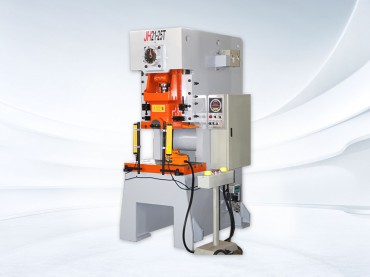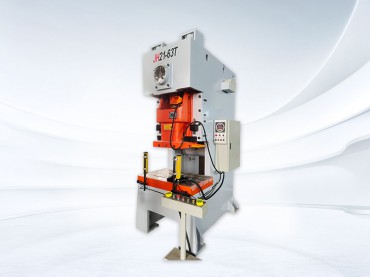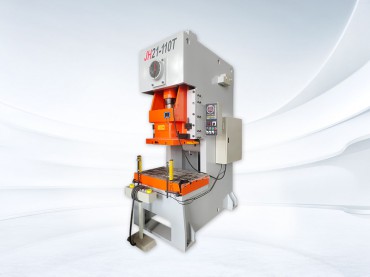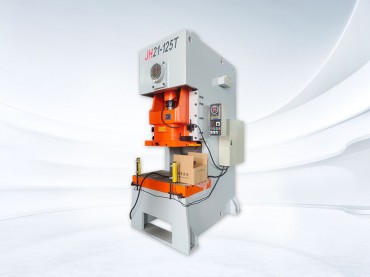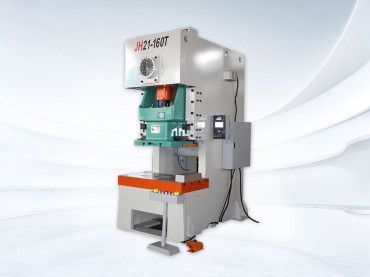
Pneumatic punch presses are highly efficient machines that utilize compressed air as their power source, driving a ram through a cylinder to perform stamping operations. Comprising a pneumatic system, control system, and actuator, they rely on air pressure to execute processes such as punching, blanking, bending, and embossing. These machines are widely used in metal processing, electronics manufacturing, and home appliance component forming industries. Compared to traditional mechanical presses, pneumatic presses offer significant advantages including low energy consumption, minimal noise, and enhanced operational safety. This has led to a rapid increase in their adoption by small and medium-sized factories in recent years.
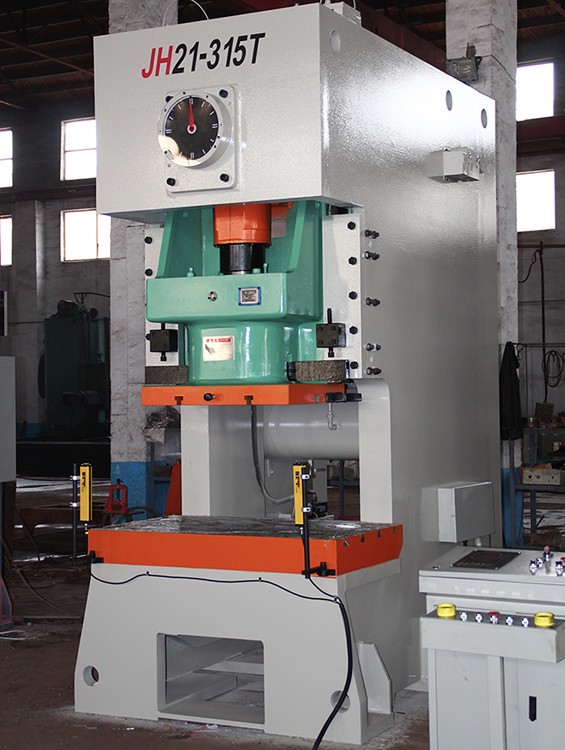
A pneumatic punch press is a mechanical device that utilizes compressed air to drive a ram for stamping operations. It is widely applied in metal processing, electronic component forming, and plastic product cutting. Compared to traditional mechanical presses, its core advantages include:
(1) Power Source: Utilizes compressed air supplied by an air compressor at 0.5–0.8 MPa (megapascals) (refer to GB/T 7932-2017 “Technical Specifications for Pneumatic Equipment”), resulting in lower energy consumption and zero pollution.
(2) Structural Features: Composed of cylinders, solenoid valves, control circuits, and dies, featuring compact size and low noise levels, making it suitable for precision processing.
(3) Application Scenarios: Suitable for thin sheet punching (e.g., 1–3mm steel plates) and small-part batch production, achieving efficiency of 200–500 strokes per minute.
Pneumatic punch presses operate based on pneumatic transmission principles, with core components including: cylinders, pistons, connecting rods, crankshafts, slides, and dies.
An air compressor delivers compressed air into the cylinder. The piston undergoes linear motion under pneumatic pressure, providing power to the entire press.
The piston's linear motion is transmitted to the crankshaft via the connecting rod, inducing circular rotation. The crankshaft transfers power to the flywheel, maintaining a stable and continuous rhythm for the ram's movement.
The crankshaft drives the ram to reciprocate vertically along guide rails. During downward stroke, the die contacts the sheet metal and applies pressure to perform operations like punching, shearing, or forming. Upon upward stroke, the workpiece separates from the die, preparing for the next cycle.
Pneumatic punch presses feature relatively straightforward operation, typically controlled via buttons for start, stop, and emergency stop functions. Workers can master operation after minimal training, reducing skill requirements and boosting productivity. Their simplified control systems also facilitate maintenance and repairs.
Utilizing pneumatic drive enables rapid cylinder movement, resulting in a high punching frequency for pneumatic presses. Compared to some traditional presses, they can complete more punching operations per unit time. This is highly advantageous for large-scale production and enterprises demanding high production efficiency, effectively boosting output.
Pneumatic punch presses are typically equipped with multiple safety devices. For instance, light curtain protection monitors the work area during operation, immediately halting the press if foreign objects enter to prevent operator injury. Additional safety features include dual-hand operation buttons, requiring both buttons to be pressed simultaneously to activate the press, thereby eliminating risks associated with single-handed operation.
While pneumatic punch presses cannot match the precision of high-accuracy CNC presses, they can meet standard stamping part requirements with proper design and manufacturing processes. Optimizing cylinder structure, guide rail precision, and transmission system design effectively controls stamping process errors, ensuring dimensional accuracy and consistent quality of stamped parts.
Pneumatic punch presses can accommodate various die types based on different stamping process requirements. Whether simple punching dies or complex forming dies, they can be installed and used on pneumatic presses. This adaptability enables processing of workpieces with diverse materials and shapes, offering a broad application range.
Pneumatic punch presses utilize compressed air as their power source. Compared to traditional hydraulic punch presses, they eliminate the need for large quantities of hydraulic oil, thereby reducing environmental pollution from oil leaks. Furthermore, pneumatic presses exhibit relatively low energy consumption. In today's era of increasingly tight energy resources, this characteristic gives them a distinct advantage.
In electronic component manufacturing, pneumatic punch presses are used for stamping various electronic connectors, chip leads, and similar parts. Their high-precision stamping capabilities ensure dimensional accuracy and quality of electronic components, meeting the electronics industry's demands for miniaturization and precision.
The manufacturing of automotive components represents a key application area for pneumatic punch presses. They are employed to stamp sheet metal parts for vehicle bodies, engine components, seat frames, and more. Through diverse die designs, these presses can produce automotive parts of various shapes and dimensions, enhancing production efficiency and product quality.
In home appliance production, pneumatic punch presses are used to stamp components like housings and panels for refrigerators, air conditioners, and washing machines. Their rapid stamping speed and excellent forming results meet the mass production demands of the home appliance sector.
Pneumatic punch presses are indispensable for processing hardware products. They can stamp various hardware accessories, tools, locks, and more. Through different dies and stamping techniques, they produce hardware items of diverse shapes and applications.
In toy manufacturing, pneumatic punch presses are used to stamp toy components made of plastic, metal, and other materials. Their simple operation and high precision ensure the quality and safety of toy parts.
Pneumatic punch presses have become an ideal choice for small and medium-sized enterprises as well as precision parts processing industries due to their simple operation, high safety, low cost, and fast efficiency. With the advancement of smart manufacturing, pneumatic presses are evolving toward greater stability, energy efficiency, and automation, delivering more efficient and reliable production solutions for the metal processing industry.
 Address:Room 1202, Detaitang Building, No. 118 Huaguang Road, Zhangdian District, Zibo, Shandong
 WhatsApp:+8615653328535
 Wechat: +8615965331535
  E-mail:zs@sdsmachinery.com