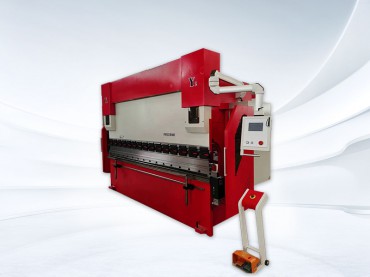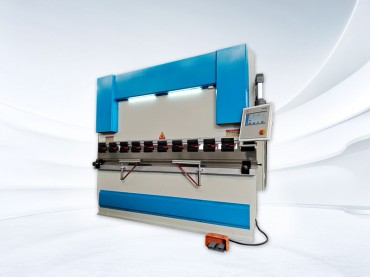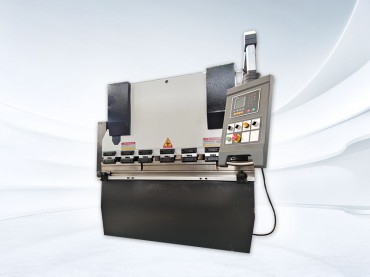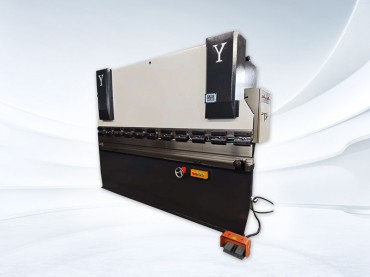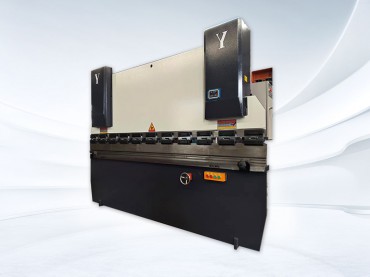
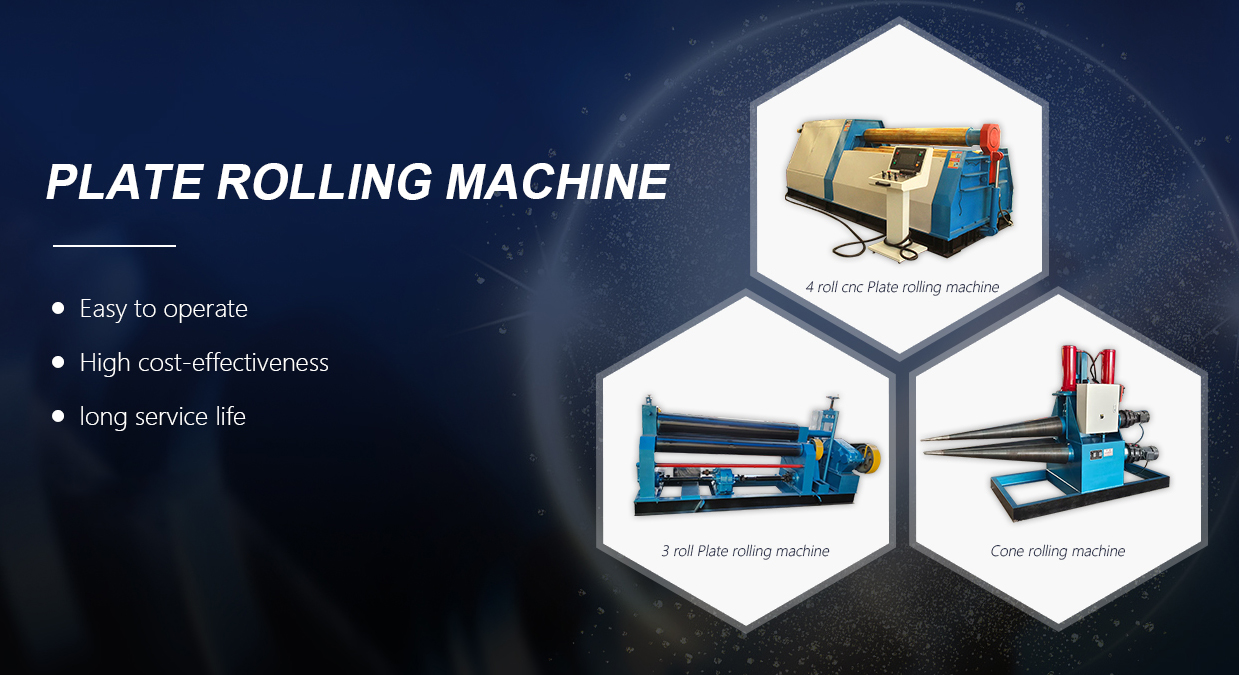
In the modern sheet metal processing and metal manufacturing sectors, the bending machine stands as one of the indispensable core pieces of equipment. Whether in architectural structural components, automotive parts, appliance housings, or within high-end manufacturing industries like aerospace and shipbuilding, the bending machine plays a crucial role. By applying external force to metal sheets, it induces plastic deformation within the constraints of dies, thereby achieving the desired angles and shapes.
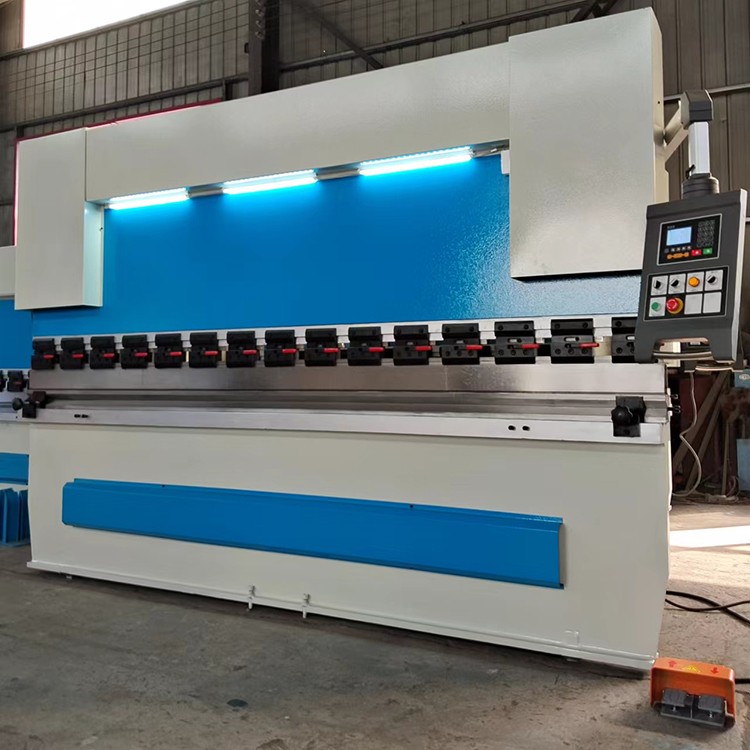
A bending machine is a mechanical device that applies pressure to metal sheets via dies, inducing bending deformation in the material. Through the relative motion of upper and lower dies, it transforms flat sheet metal into workpieces with specific angles or shapes. Capable of both straight bending and complex multi-angle, multi-curved forming, bending machines are vital equipment in metal forming processes.
The operational principle of bending machines can be summarized as the “die forming principle.” During processing, the upper die, driven by the power system, moves downward to engage with the lower die fixed on the worktable. This applies pressure to the metal sheet, inducing plastic deformation to form the workpiece at the predetermined angle.
(1) Clamping Stage: After the operator starts the machine, the system first slowly lowers the upper die to contact and secure the metal sheet, preventing material movement during forming.
(2) Bending Stage: As the upper die continues downward, the sheet undergoes plastic deformation between the upper and lower dies. The bending angle gradually forms as the die stroke progresses. Precise control of the bending angle is achieved by adjusting the depth of the upper die's descent.
(3) Holding Pressure Stage: After bending completion, the system briefly maintains pressure to ensure the material fully conforms to the die and prevent springback.
(4) Return Stroke Stage: The upper die returns to its initial position via hydraulic cylinders or servo motors, concluding one bending cycle.
The bending machine's control system continuously monitors upper die travel, pressure levels, and angle changes to guarantee processing precision and stability.
(1) Frame: The main structural body, typically welded from high-strength steel plates. It supports the ram, worktable, and hydraulic system, ensuring rigidity and stability during operation.
(2) Ram: The core component driving the upper die's vertical movement. Typically powered by a hydraulic cylinder or electric servo system, it controls movement speed and stroke precision.
(3) Workbench: The lower die is mounted on the workbench, which bears the reaction forces during bending and serves as the critical support for forming the workpiece.
(4) Dies: The dies are the “heart” of the bending machine, consisting of an upper die (punch) and a lower die (die cavity). Different die shapes enable processing of workpieces with varying angles and forms, such as V-shaped, U-shaped, or Z-shaped.
(5) Transmission and Hydraulic System: The hydraulic system uses oil pressure to drive piston movement, thereby lowering the upper die. Mechanical systems rely on crank and flywheel mechanisms for transmission.
(6) Control System: Modern bending machines predominantly employ CNC systems, enabling angle programming, automatic compensation, and synchronous control, significantly enhancing machining precision and efficiency.
The evolution of bending machines has progressed from mechanical to hydraulic, and subsequently to servo-electric control systems.
(1) Mechanical bending machines: Utilizing flywheel and crank mechanisms to drive upper die movement, these feature simple structures but offer relatively lower precision and safety, and are now gradually being phased out.
(2) Hydraulic bending machines: Employing hydraulic cylinders as the power source, they deliver smooth and powerful pressure output while supporting multi-point synchronous control, making them the most commonly used bending equipment today.
(3) Servo-Electric Bending Machines: Directly drive the upper die via servo motors, offering rapid response, high precision, and low energy consumption. They represent the intelligent direction of bending machine development.
(4) CNC Bending Machines: Allow presetting of bending angle, stroke, speed, and other parameters. Equipped with automatic compensation functions, they feature simple operation and are suitable for batch and precision production.
bending machines are widely used across multiple sectors including metal fabrication, construction engineering, automotive manufacturing, aerospace, electrical equipment, and home appliances.
- In the construction industry, they process roof panels, curtain wall structures, door and window frames, etc.;
- In automotive manufacturing, they shape body panels, fuel tanks, and chassis structural components;
- In sheet metal workshops, bending machines serve as core equipment for achieving precise bends in products like enclosures, cabinets, and distribution boxes.
bending machines not only boost production efficiency but also enhance product aesthetics and structural precision, making them indispensable in metal forming processes.
The working principle of bending machines embodies the organic integration of mechanical structure and material mechanics. Through precise coordination between dies, they transform flat metal sheets into functional and aesthetically pleasing structural components. With the continuous advancement of automation and smart manufacturing, modern bending machines are evolving toward higher precision, energy efficiency, and intelligent capabilities.
 Address:Room 1202, Detaitang Building, No. 118 Huaguang Road, Zhangdian District, Zibo, Shandong
 WhatsApp:+8615653328535
 Wechat: +8615965331535
  E-mail:zs@sdsmachinery.com