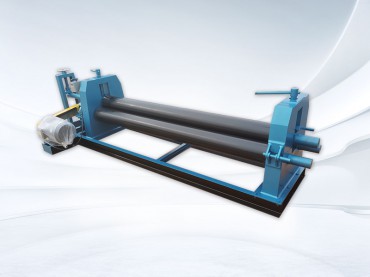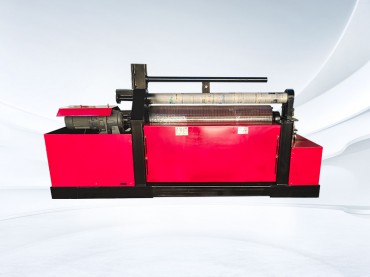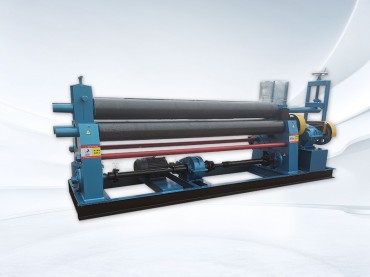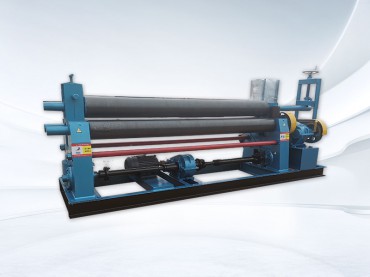
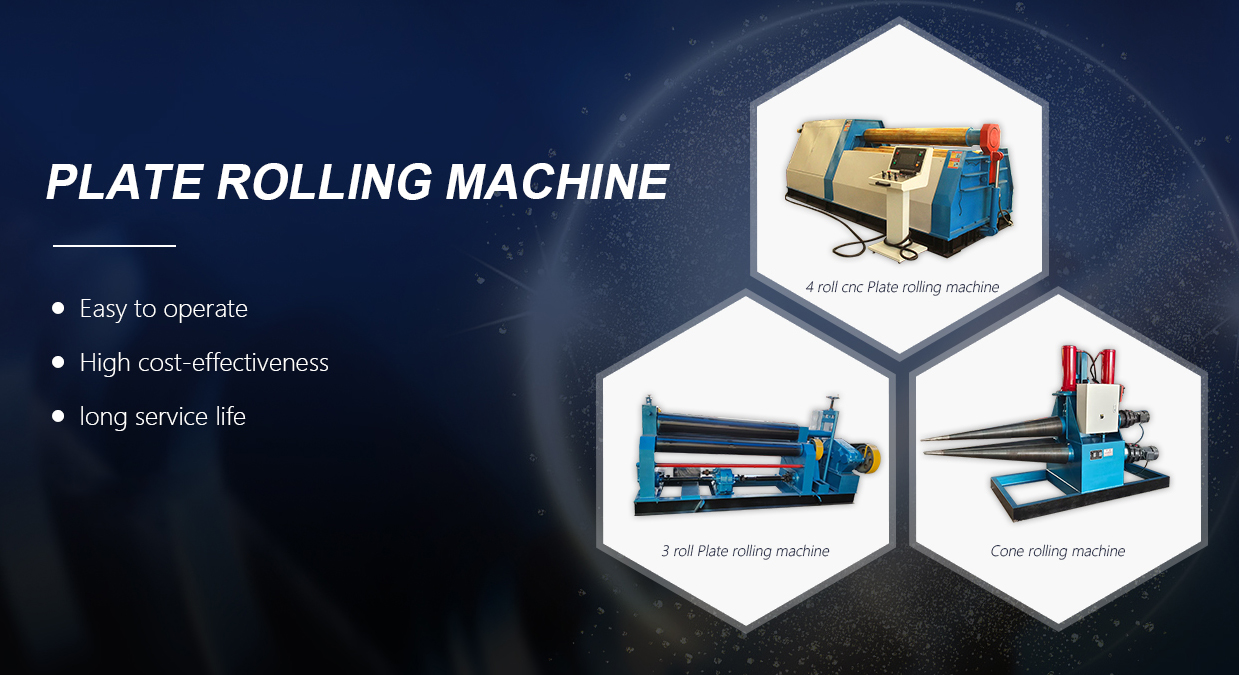
In the modern metal processing and equipment manufacturing sector, the four-roll plate rolling machine is a high-precision, high-efficiency key device widely used in industries such as shipbuilding, pressure vessels, bridge construction, pipeline manufacturing, and mechanical engineering.
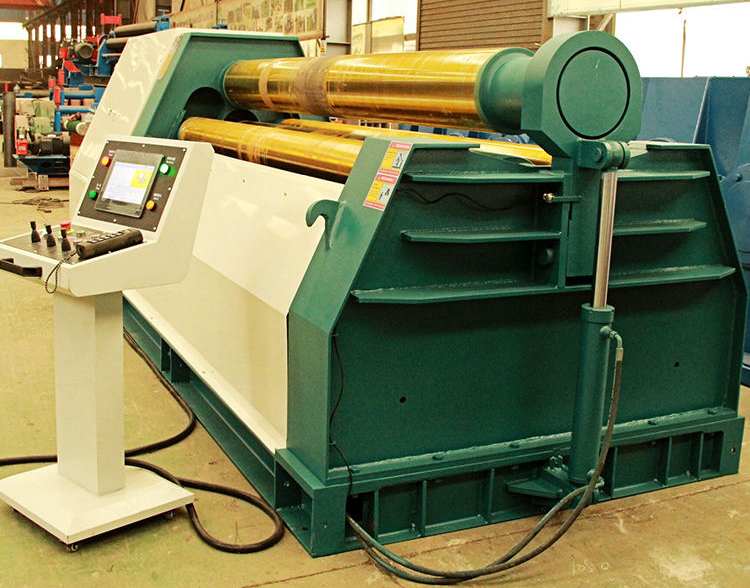
(1) Working Rolls: The four-roll plate rolling machine features four working rolls: the upper roll, lower roll, and two side rolls. The upper roll is positioned at the top of the equipment and typically serves as the drive roll. Driven by a motor via a reducer, it can move vertically to control the rolling pressure on the plate and adjust the rolling radius. The lower roll is located at the bottom of the equipment and functions as the support roll, primarily bearing the weight of the plate and the pressure during the rolling process. The two side rolls are positioned on either side between the upper and lower rolls. They can move horizontally to adjust the plate's position and control the shape of the rolled form.
(2) Drive System: The drive system comprises components such as motors, gear reducers, couplings, and drive shafts, providing power to the working rolls. Through variable frequency speed control and automatic regulation, the system enables forward/reverse rotation and speed switching to meet diverse process requirements.
(3) Hydraulic System: The hydraulic system serves as the “power hub” of the four-roll plate rolling machine. It controls the vertical movement of the upper roll and the horizontal movement of the side rolls via hydraulic cylinders, enabling high-precision pressure regulation. Hydraulic control offers advantages such as responsive operation, accurate positioning, and uniform force distribution, making it particularly suitable for rolling thick plates and high-strength materials.
(4) Control System: Modern four-roll plate rolling machines are typically equipped with PLC control systems or CNC numerical control systems. Operators can input parameters such as plate thickness, rolling radius, and speed via the control panel, enabling the equipment to automatically complete rolling tasks. The control system also incorporates safety features including overload protection, limit switches, and emergency stop devices to ensure equipment and personnel safety.
The four-roll plate rolling machine operates by rolling and rolling the plate using its working rolls. During the rolling process, the plate is placed on the lower roll. The upper roll descends and applies pressure to initiate the initial bend. Subsequently, the two side rolls move inward as required to further adjust the rolling angle, gradually forming the plate into the desired shape. As the working rolls rotate, the plate is continuously rolled, ultimately forming cylindrical or conical workpieces. By precisely controlling the position, speed, and pressure of the working rolls through the control system, the rolling process is accurately managed, yielding high-quality rolled components.
(1) Mechanical Manufacturing: Used to produce housings, cylinders, and other components for various mechanical parts, such as fan housings and gearbox enclosures.
(2) Shipbuilding: Capable of rolling structural components for ship hulls and compartment bulkheads, meeting the demands for large-scale plate rolling in ship construction.
(3) Pressure Vessels: In manufacturing various pressure vessels like boilers and storage tanks, four-roll plate rolling machines form steel plates into cylindrical or conical shells, serving as critical equipment in pressure vessel production.
(4) Bridge Construction: Used to bend steel structural components for bridges, such as arch ribs and box girders, providing high-quality curved elements for bridge construction.
(5) Pipeline Manufacturing: Capable of rolling metal plates into pipes of various specifications, widely applied in pipeline laying for petroleum, chemical, water supply, and drainage industries.
(1) High Rolling Precision: Achieves high rolling accuracy through precise control systems and work roll adjustments, meeting complex shape and dimensional requirements for workpieces.
(2) Strong Adaptability: Capable of rolling metal plates of different thicknesses, widths, and materials, suitable for various types of metals such as carbon steel, stainless steel, and alloy steel.
(3) Convenient Operation: Utilizing an automated control system, operators only need to input relevant parameters on the control panel for the equipment to automatically complete the rolling process. This simplifies and speeds up operation while reducing labor intensity.
(4) High Production Efficiency: The four-roll plate rolling machine operates at high efficiency, rapidly completing plate rolling tasks to boost production output. It is well-suited for large-scale manufacturing operations.
(5) Superior Rolling Quality: During the rolling process, the working rolls apply uniform force to the plate, effectively preventing surface scratches and deformation. This ensures consistent quality in the rolled workpieces.
(1) Equipment Installation: The four-roll plate rolling machine must be installed on a level, solid foundation to ensure stability. Strictly follow the installation manual during setup to guarantee precision in all component installations.
(2) Sheet Preparation: Prior to rolling, sheets must undergo pre-treatment, including removal of surface contaminants such as oil, rust, and other impurities. Inspect the sheet's flatness and dimensional accuracy to ensure compliance with rolling requirements.
(3) Parameter Settings: Configure equipment parameters appropriately based on plate material, thickness, width, and rolling requirements. Adjust settings such as rolling radius, rolling speed, and work roll pressure as needed during operation.
(4) Operator Training: Personnel must undergo specialized training to master equipment operation and safety protocols. Strict adherence to operating procedures is mandatory; unauthorized modifications to parameters or operational sequences are prohibited.
With continuous advancements in mechanical manufacturing technology and CNC systems, four-roll plate rolling machines are evolving toward intelligent, energy-efficient, and high-precision capabilities, establishing themselves as indispensable core equipment in modern manufacturing.
 Address:Room 1202, Detaitang Building, No. 118 Huaguang Road, Zhangdian District, Zibo, Shandong
 WhatsApp:+8615653328535
 Wechat: +8615965331535
  E-mail:zs@sdsmachinery.com