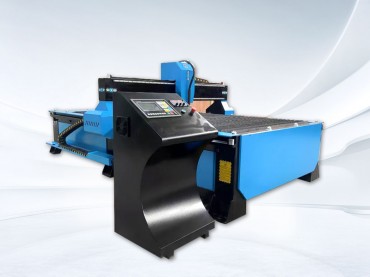
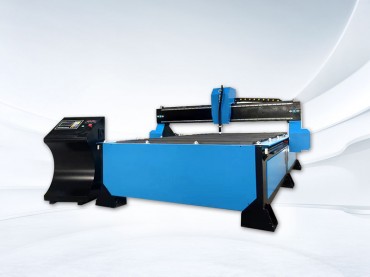
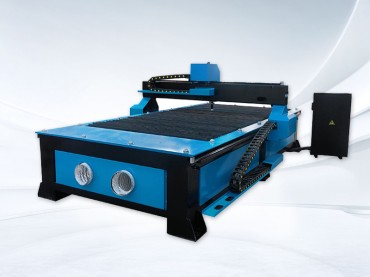
In metal processing, shipbuilding, rail transit and other industrial fields, production efficiency and cutting quality directly determine the market competitiveness of enterprises. The CNC plasma cutting machine, with its high efficiency, precision, and strong adaptability, has become the core equipment for improving production capacity in modern manufacturing industry. Data shows that the use of CNC plasma cutting technology can increase production efficiency by more than 50%, and the technical logic and process innovation behind it are worth exploring in depth.
1、 Technical principle: Precise control of high-temperature plasma arc
The core of CNC plasma cutting machine is to use high-temperature plasma arc to achieve metal melting cutting. Its working principle can be divided into three key stages:
1. Plasma arc generation: The arc is compressed into a thin beam with a diameter of 0.5-3mm using compressed air, forming a high-energy plasma stream with a temperature of 16000-25000 ℃. The energy density of this plasma flow is more than 10 times that of a regular arc, and it can melt metal sheets with a thickness of 5-300mm in 0.1 seconds.
2. Collaborative CNC system: Adopting a closed-loop servo control system, the cutting torch position is fed back in real-time through an encoder, and a positioning accuracy of ± 0.05mm is achieved through G-code programming. This precision control has increased the qualification rate of complex graphic cutting from 75% in traditional flame cutting to 98%.
3. Gas dynamics optimization: Adopting a dual gas supply system (plasma gas+auxiliary gas), the plasma gas is responsible for melting the metal, and the auxiliary gas cools the cutting torch and blows away the slag. Through CFD fluid dynamics simulation, gas flow rate and pressure parameters were optimized to increase cutting speed by 40%.
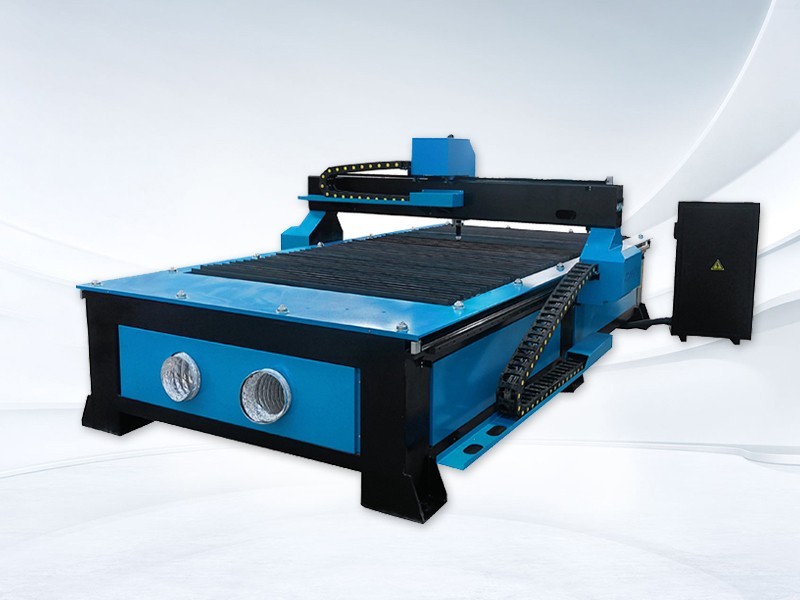
2、 The core mechanism for improving efficiency
1. Exponential increase in cutting speed
The cutting speed of a CNC plasma cutting machine can reach 6000mm/min, which is 5-6 times faster than traditional flame cutting. Taking 20mm thick carbon steel plate as an example:
Flame cutting speed: 800-1000mm/min
Numerical control plasma cutting speed: 4500-5000mm/min
This speed advantage stems from the energy concentration characteristics of plasma arc. Experiments have shown that the energy input per unit area of plasma cutting is three times that of flame cutting, but the heat affected zone is reduced by 60%, thus achieving high-speed operation while ensuring cutting quality.
2. Revolutionary breakthrough in material adaptability
The CNC plasma cutting machine can process all conductive metals such as stainless steel, aluminum, copper, titanium, etc., especially for non-ferrous metals, the cutting efficiency is significantly better than flame cutting. For example:
Cutting 3mm thick stainless steel: plasma cutting speed of 2500mm/min, flame cutting cannot be completed
Cutting 10mm thick aluminum plate: plasma cutting speed 1800mm/min, flame cutting is prone to slag accumulation
This material adaptability enables enterprises to reduce equipment switching time and achieve flexible production of multiple varieties and small batches.
3. Intelligent optimization of process parameters
The modern CNC plasma cutting machine integrates an expert database system that can automatically match the optimal cutting parameters for different materials
Current control: dynamically adjust the current (50-600A) according to the thickness of the board to avoid overload or insufficient energy
Arc voltage regulation: Maintain a constant cutting height (with an error of ± 0.1mm) through an arc voltage feedback system
Perforation technology: Adopting a progressive perforation process, the perforation time of thick plates is shortened from 30 seconds to 8 seconds
A test conducted by a certain enterprise showed that after parameter optimization, the average cutting time per piece was reduced by 22%, and the overall equipment efficiency (OEE) was improved by 35%.
3、 Breakthrough direction of technological innovation
1. Fine plasma cutting technology
By constraining the plasma arc with a rotating magnetic field, a fine plasma cutting technology with a cutting width of only 0.2mm has been developed. This technology achieves a cutting surface roughness of Ra3.2 μ m, close to the level of laser cutting, but the equipment cost is only one-third of that of laser cutting.
2. Underwater plasma cutting technology
By adopting underwater cutting technology, the noise is reduced to below 75dB (traditional air cutting reaches 110dB), and the dust concentration is reduced by 90%. Meanwhile, the water cooling effect further narrows the heat affected zone, making it particularly suitable for fields such as nuclear power and ships that require strict deformation control.
3. Multi axis linkage cutting system
Integrating five axis linkage technology to achieve high-precision cutting of complex surfaces. For example, in the manufacturing of ship propellers, hyperbolic cutting can be completed in one go through five axis linkage, reducing the number of processing steps from 5 to 2 and shortening the production cycle by 60%.
4、 Implementation points and benefit analysis
1. Key indicators for equipment selection
Power supply: Select according to the maximum cutting thickness (e.g. a 300A power supply can cut 60mm carbon steel)
Torch type: Choose water-cooled cutting torch to improve continuous operation capability
Numerical Control System: Prioritize equipping systems that support RTCP (Rotating Tool Center Point) function
2. Scientific construction of maintenance system
Daily inspection: gas pressure, cooling water flow rate, and nozzle wear
Weekly maintenance: clean oxidation slag, check cable connections
Monthly maintenance: replace vulnerable parts, calibrate sensors
3. Quantitative evaluation of economic benefits
Taking a medium-sized enterprise with an annual cutting volume of 1000 tons as an example:
Equipment investment payback period: 18-24 months
Annual cost savings: reduced labor costs by 40%, energy consumption by 25%, and scrap rate by 15%
Capacity improvement: With the same personnel configuration, the annual output can increase by more than 50%
5、 Outlook for Industry Applications
With the transformation of manufacturing towards high-end and intelligent industries, CNC plasma cutting machines are showing three major development trends:
1. Intelligent upgrade: Integrate AI visual recognition system to achieve automatic edge finding, defect detection and other functions
2. Green Manufacturing: Developing environmentally friendly cutting torches with low nitrogen oxide (NOx) emissions
3. Ultra precision machining: achieving 0.1mm level microstructure cutting through pulse plasma technology
The CNC plasma cutting machine has become the core engine for improving production efficiency through technological innovation and process optimization. The efficiency improvement of over 50% is not only due to the performance breakthrough of the equipment itself, but also benefited from the interdisciplinary integration of CNC technology, materials science, fluid mechanics, and other fields. In the future, with the deepening of Industry 4.0, CNC plasma cutting machines will play a more critical role in intelligent manufacturing systems, creating greater value space for enterprises.

 Address:Room 1202, Detaitang Building, No. 118 Huaguang Road, Zhangdian District, Zibo, Shandong
 WhatsApp:+8615653328535
 Wechat: +8615965331535
  E-mail:zs@sdsmachinery.com