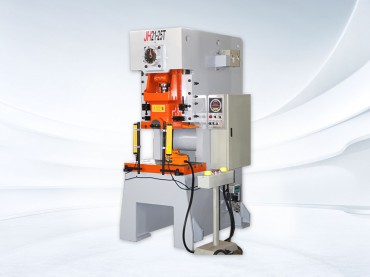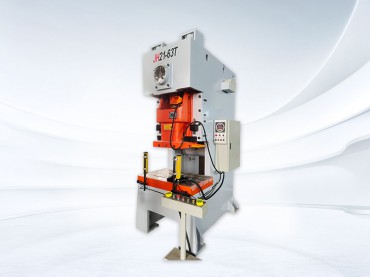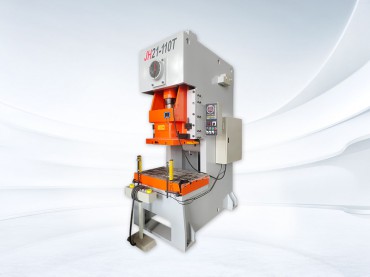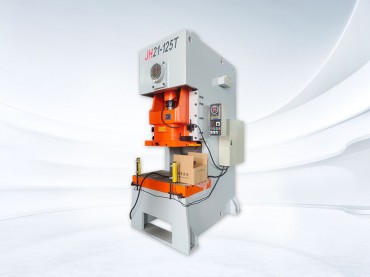
In modern metal processing and manufacturing, mechanical punch presses stand as indispensable core equipment. Renowned for their high speed, precision, and stability, they find extensive application across automotive manufacturing, electronics, appliance casings, hardware products, building materials, and more. Faced with a market flooded with diverse press models and specifications, selecting the most suitable mechanical punch press for specific production needs has become a focal concern for numerous enterprises. This article provides an in-depth analysis from multiple perspectives to assist in scientific selection and precise decision-making.
Mechanical punch presses are commonly used processing equipment primarily designed to perform operations such as punching, shearing, and stretching on sheet metal materials using stamping dies. Based on structural form, they can be categorized into C-type, H-type, rotary, and other types. Selecting the appropriate punch press model requires consideration of the following aspects.
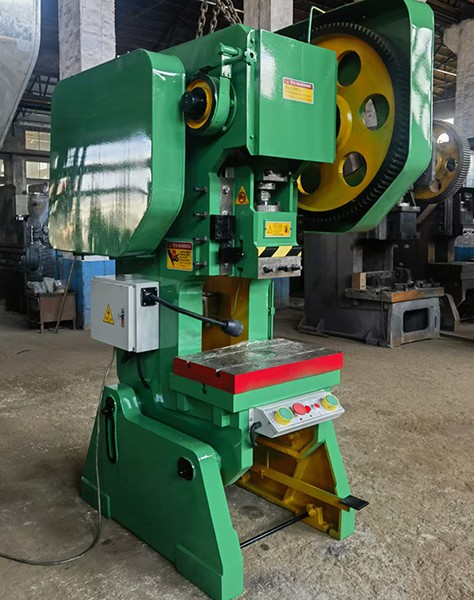
Named for its C-shaped frame, the C-frame punch press is one of the most widely used mechanical punch press types.
- Features:
Simple structure, easy maintenance, and lower cost;
Compact footprint, suitable for small to medium-sized workpieces;
Flexible operation with quick die change.
- Applications:
Primarily used for punching, shearing, bending, and forming operations on thin sheet metal under medium-to-light loads.
- Limitations:
The open side of the C-frame causes uneven force distribution, resulting in relatively low rigidity and susceptibility to minor deformation. Therefore, it is unsuitable for high-precision or thick-plate processing.
- Suitable Enterprises:
Small to medium-sized sheet metal shops, electronic component factories, appliance housing manufacturers, etc., ideal for daily small-batch production and multi-variety processing.
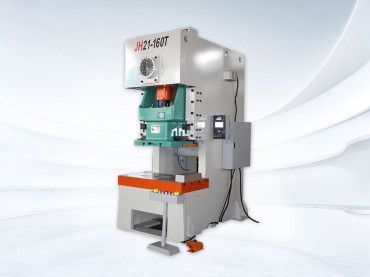
The H-type punch press features a closed-frame structure with balanced force distribution on both sides, offering high stability. It is a high-rigidity, high-precision mechanical punch press.
- Features:
Robust construction with strong impact resistance;
Capable of withstanding high punching forces, suitable for thick plate processing;
High machining precision and extended die life;
Smooth operation with minimal vibration and high safety.
- Applications:
Commonly used for manufacturing automotive components, metal structural parts, large enclosures, and hardware stamping dies.
- Limitations:
Large equipment footprint and higher cost, requiring substantial workshop space and foundation load-bearing capacity.
- Suitable Enterprises:
Ideal for high-load production environments such as large manufacturing enterprises, automotive parts factories, and heavy machinery processing plants.
Also known as a turret punch press, this high-efficiency stamping equipment is designed to boost productivity. It employs multi-station progressive die design to enable automatic feeding and continuous stamping.
- Features:
High processing efficiency with continuous forming capability;
High automation level, reducing labor requirements;
Rapid stamping cycle suitable for batch production;
Excellent product consistency and stable precision.
- Application Scope:
Primarily used for continuous stamping forming of electronic components, precision parts, automotive components, metal fasteners, etc.
- Limitations:
Relatively high equipment cost, complex die design, and significant upfront investment.
- Suitable Enterprises:
Ideal for companies requiring high-volume production of small components with emphasis on efficiency and consistency, such as electronics manufacturers and automotive suppliers.
- For thin sheet metal and light-load workpieces, choose C-frame presses for compact structure and flexible operation;
- For thick plates or high-precision parts, prioritize H-type presses for superior rigidity and stability;
- For high-volume continuous stamping operations, rotary presses are recommended to significantly boost production efficiency.
Different products require varying die heights and stroke lengths. When selecting a press, verify that its stroke length, closed height, and ram adjustment range match the die specifications. Mismatched parameters will compromise processing accuracy and die lifespan.
Beyond processing requirements, evaluate production efficiency and cost. Mechanical punch presses offer lower initial costs and ease of maintenance, but incur higher long-term upkeep expenses. For extended or high-volume production runs, opt for punch press models with superior performance capabilities.
Modern manufacturing increasingly prioritizes automated production. Consider punch presses equipped with feeding systems, automatic die change capabilities, and intelligent control systems (PLC/servo control) to boost efficiency and reduce labor costs.
Prioritize brands with strong market credibility and comprehensive after-sales service systems to ensure equipment reliability and maintenance convenience.
Press rigidity directly impacts processing quality. Assess equipment standards by examining frame materials, welding techniques, and trial run precision.
Verify safety features including dual-hand operation buttons, safety light curtains, emergency stop devices, and overload protection systems to safeguard operators.
Energy-efficient punch presses have become an industry trend in recent years. Selecting models with variable frequency drive systems and low-noise hydraulic systems can effectively reduce energy consumption and noise pollution.
If a company plans to expand production scale in the future, prioritize models that can be retrofitted with automatic feeding devices or robotic arms, leaving room for later automation upgrades.
Selecting the appropriate mechanical punch press is a critical step for enterprises to achieve efficient production and precision manufacturing. Before making a decision, clearly define production objectives and comprehensively evaluate multiple factors including processing requirements, product characteristics, production batch size, budgeted costs, and future development plans. Whether for small-to-medium factories or large manufacturing enterprises, only by choosing the right punch press type can companies enhance production efficiency, reduce costs, and stabilize quality in intense market competition, thereby securing a more advantageous position in the new era of manufacturing.
 Address:Room 1202, Detaitang Building, No. 118 Huaguang Road, Zhangdian District, Zibo, Shandong
 WhatsApp:+8615653328535
 Wechat: +8615965331535
  E-mail:zs@sdsmachinery.com